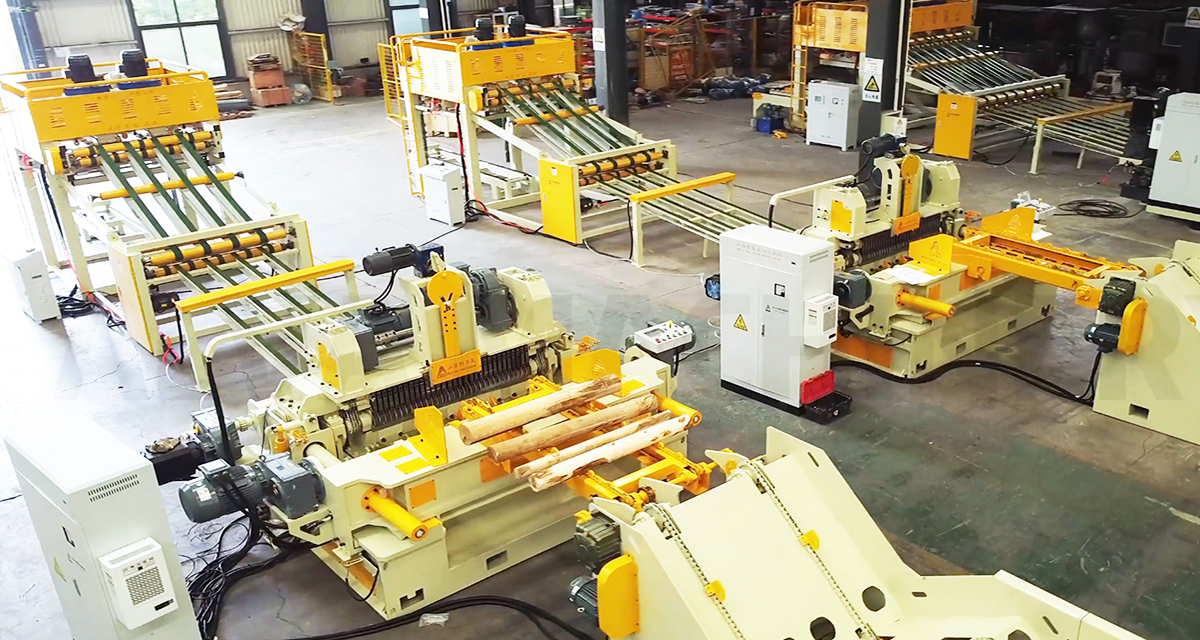
In the woodworking machinery industry, the stability, service life and processing efficiency of equipment directly determine the production efficiency and product quality of downstream enterprises. All of these rely on the excellent performance of core components. As a professional brand deeply engaged in the woodworking machinery sector, Alva has always prioritized the R&D and manufacturing of core components in its strategic layout. With stringent material selection standards, exquisite processing techniques and a comprehensive testing process, Alva has built a core component system characterized by both reliability and efficiency. This article will focus on the core components of Alva's main equipment such as veneer lathes, sawmills and stackers, delve into the ingenuity behind them, and explore the key factors that underpin Alva's quality assurance.
The operating environment of woodworking machinery is complex and variable, facing multiple challenges such as high-frequency vibration, continuous load and wood dust erosion. This places extremely high demands on the material performance, structural design and processing precision of core components. Core components are like the "heart" and "bones" of equipment; their quality runs through the entire life cycle of equipment operation. The rationality of material selection determines the basic durability of components, the sophistication of processing technology ensures the assembly precision and operational stability of components, and a strict testing process builds the final line of defense for component quality. Deeply aware of the decisive role of core components in the overall performance of equipment, Alva has formed a rigorous set of standards covering the entire "material selection-processing-testing" chain through years of technical accumulation, laying a solid foundation for the high-quality operation of every Alva woodworking machine.
Different types of woodworking machinery have distinct functional positioning and technical requirements for their core components, but all undertake key tasks in the core operation process of the equipment. Based on a profound understanding of the entire woodworking process, Alva accurately defines the functional demands of core components for each type of equipment, and carries out targeted R&D and manufacturing to ensure that core components are highly compatible with the overall functions of the equipment.
For veneer lathes, the core task is to precisely and efficiently process logs into continuous veneer sheets. This process places extremely high requirements on the cutting precision, wear resistance and stability of components, making the veneer cutting tool set one of its core components. The cutting edge precision, tool body strength and assembly accuracy of the veneer cutting tool set directly determine the thickness uniformity, surface finish of veneer sheets, as well as the service life of the tool set.
The core function of sawmills is to accurately cut logs or boards, and their core component is undoubtedly the alloy saw blade. The cutting performance, wear resistance and impact resistance of alloy saw blades directly affect cutting efficiency, cut surface flatness, and the replacement frequency of saw blades, thereby influencing the production efficiency and material utilization rate of downstream enterprises.
As a key piece of equipment in automated woodworking production lines, stackers are tasked with the automated stacking and transferring of materials such as wood and boards. Their core component is the transmission system. The transmission precision, load-bearing capacity and operational stability of the transmission system directly determine the operating efficiency, stacking accuracy and operational safety of stackers, serving as a critical guarantee for the smooth operation of automated production lines.
In addition to the above, the core components of various Alva woodworking machinery also include control systems, bearing assemblies, hydraulic systems, etc. These components work in synergy to form the core performance system of the equipment. Alva implements refined control over each type of core component to ensure compatibility and coordination among all components, thus guaranteeing the overall operational quality of the equipment from the source.
Material selection is the first step in core component manufacturing and the key factor determining the upper limit of component quality. Adhering to the philosophy that "material selection is equivalent to quality selection", Alva has established a comprehensive and stringent material selection standard covering raw material screening, supplier evaluation and material verification, rejecting any substandard raw materials from entering the production process. Alva accurately matches material performance to the functional requirements of different core components to maximize the functional value of each component.
During operation, veneer lathe tool sets are in continuous contact with logs for cutting, subject to intense friction, impact and alternating loads. Therefore, they require extremely high levels of hardness, toughness, wear resistance and fatigue resistance. Insufficient material hardness can lead to rapid wear of cutting edges, affecting the processing precision of veneer sheets; insufficient toughness may result in chipping or fracture under impact loads, seriously disrupting production continuity.
To meet this core demand, Alva's veneer lathe tool sets are made of high-quality alloy material with a special chemical composition. This material balances high hardness and excellent toughness, enabling it to effectively resist wear and impact during continuous cutting operations. In the material selection process, Alva conducts strict testing on the chemical composition of the alloy material to ensure that the content of key elements such as carbon, chromium and molybdenum meets precise standards, thus guaranteeing the basic performance of the material from the source.
Meanwhile, Alva has established a rigorous supplier screening mechanism, cooperating only with high-quality alloy material suppliers with profound technical accumulation and a sound quality control system in the industry. Before each batch of raw materials enters the factory, complete material certification documents must be provided. Alva's professional testing team then conducts sampling inspections, verifying whether the material performance meets standard requirements through various methods such as spectral analysis and hardness testing. Any raw materials that fail the inspection are resolutely rejected, eliminating all material-related risks.
The alloy saw blade of a sawmill is the core executive component for cutting operations, and its performance directly determines cutting efficiency and cut quality. During cutting, the saw blade must withstand high-frequency cutting impacts while generating intense friction with wood. Therefore, it needs to possess extremely high hardness, wear resistance, sharpness, as well as good impact toughness. Different types of wood vary in hardness and texture, placing diverse requirements on the adaptability of saw blade materials.
To address the operational characteristics of sawmills and the processing requirements of different wood types, Alva uses high-quality cemented carbide material for the saw blade teeth, paired with premium spring steel for the saw blade base. The cemented carbide material offers exceptional hardness and wear resistance, effectively enhancing the cutting sharpness and service life of the saw blade. Even when cutting high-density hardwood, it can maintain stable cutting performance. The spring steel base, on the other hand, provides excellent toughness and elasticity, effectively absorbing impact loads during cutting and preventing deformation or fracture of the saw blade.
In the material selection process, Alva strictly controls key indicators of the cemented carbide teeth, such as cobalt content and grain size, to ensure that their hardness and wear resistance meet design standards. Comprehensive testing is conducted on the chemical composition and mechanical properties of the spring steel base to verify its toughness, elasticity and fatigue resistance. Additionally, Alva optimizes the saw blade material for different cutting scenarios. For example, saw blades designed for cutting high-density hardwood use cemented carbide material with higher hardness, while those for softwood cutting prioritize material toughness while maintaining wear resistance to improve cutting efficiency.
The stacker transmission system undertakes the core tasks of power transmission, load bearing and precise positioning. Its components include gears, chains, transmission shafts, bearings, etc., which need to achieve smooth and precise transmission under continuous load conditions. Therefore, strict requirements are placed on the strength, wear resistance and dimensional stability of the materials. Inadequate material performance of transmission system components can easily lead to reduced transmission precision, accelerated component wear, and even equipment failures, affecting the operational efficiency of automated production lines.
The gears and transmission shafts of Alva's stacker transmission system are made of high-quality alloy structural steel. After quenching and tempering, this material exhibits excellent comprehensive mechanical properties, effectively enhancing the strength, hardness and toughness of the components to meet the demands of continuous load transmission. The chains are high-strength roller chains, with their chain plates, pins and other components made of premium steel and treated with special heat treatment processes to improve wear resistance and fatigue resistance. The bearings are high-precision deep groove ball bearings or spherical roller bearings, with their rolling elements and inner/outer rings made of high-quality bearing steel to ensure smoothness and precision during transmission.
In the material selection process, Alva conducts rigorous testing on the chemical composition and mechanical properties of the alloy structural steel to ensure that its strength and toughness meet the required standards. Sampling tests are performed on the material hardness and tensile strength of chain components to verify their load-bearing capacity. The material purity and surface roughness of bearings are meticulously inspected to guarantee their transmission precision and service life. Moreover, Alva fully considers the material compatibility of all components in the transmission system, ensuring reasonable fit clearance between different components to minimize wear and energy loss during transmission.
In addition to the above-mentioned equipment-specific core components, general core components such as control systems, hydraulic systems and lubrication systems are also crucial to ensuring the stable operation of Alva woodworking machinery. Alva adheres to stringent material selection standards for these general components, prioritizing high-quality accessories from well-known brands in the industry while conducting targeted customization and optimization based on the functional requirements of its own equipment.
For example, the core components of the control system adopt high-quality PLCs, touch screens and sensors from suppliers strictly audited by Alva. These components offer excellent stability, anti-interference capability and response speed, enabling precise automated control of the equipment. The hydraulic pumps, hydraulic valves, hydraulic cylinders and other components of the hydraulic system are made of high-quality steel and sealing materials to ensure the sealing performance and pressure resistance of the hydraulic system, avoiding issues such as oil leakage and insufficient pressure. The lubricating oil pumps and oil pipes of the lubrication system are made of corrosion-resistant and high-temperature-resistant premium materials, capable of stable operation in complex working environments to provide continuous and effective lubrication protection for core components.
High-quality raw materials form the foundation of core component quality, and exquisite processing technology is the key to transforming raw materials into high-quality components. Relying on advanced processing equipment, mature process systems and professional technical teams, Alva implements refined processing of each type of core component to ensure that the dimensional accuracy, geometric tolerances and surface quality of the components all meet design requirements, providing a guarantee for the precise assembly and stable operation of the equipment.
The processing precision of veneer lathe tool sets directly determines the quality of veneer sheet processing. Therefore, Alva implements strict control over the entire processing process of the tool set through multiple precision processing procedures to ensure that the cutting edge precision, tool body flatness and assembly accuracy meet the required standards.
First, in the tool body blank processing stage, Alva uses a high-precision forging process to forge the alloy material. By reasonably controlling the forging temperature, forging speed and cooling method, the grain size of the material is refined, the compactness and mechanical properties of the tool body are enhanced, and defects such as cracks and air bubbles inside the tool body caused by improper forging processes are avoided. After forging, the tool body blank undergoes annealing treatment to eliminate forging stress, improve the dimensional stability of the tool body, and lay a foundation for subsequent processing.
Next, the process moves to precision machining. Alva uses advanced processing equipment such as CNC milling machines and CNC grinding machines to perform precision machining on the tool body blank, ensuring that the dimensional accuracy and geometric tolerances of key surfaces such as the tool mounting surface and cutting edge surface meet design standards. For the processing of cutting edges, an ultra-precision grinding process is adopted. By using high-quality grinding wheels and precisely controlling the grinding speed and feed rate, sharp and smooth cutting edges are created, ensuring precise cutting of logs during the cutting process and reducing burrs and defects on the surface of veneer sheets.
After processing is completed, assembly process treatment is carried out on the tool set. Alva uses special assembly fixtures to ensure precise assembly positions and reasonable fit clearances between the various components of the tool set. Meanwhile, dynamic balance testing is performed on the assembled tool set to avoid vibration caused by imbalance during high-speed rotation operations, which could affect processing precision and equipment stability. In addition, surface coating treatment is applied to the tool set. Through advanced coating technology, a wear-resistant and high-temperature-resistant coating is formed on the surface of the tool body, further improving the wear resistance and service life of the tool set.
The core of the processing technology for sawmill alloy saw blades lies in the welding quality between the saw teeth and the base, as well as the processing precision of the saw blade tooth profile. Through mature welding processes and fine tooth profile processing, Alva ensures that the alloy saw blade possesses excellent cutting performance and structural stability.
In the welding process between the saw teeth and the base, Alva adopts a high-frequency induction welding process, which offers advantages such as fast welding speed, uniform welding temperature and a small heat-affected zone, effectively ensuring the strength and toughness of the welded joint. Before welding, the welding surfaces of the cemented carbide teeth and the spring steel base undergo rigorous grinding and cleaning to remove oil stains, oxide layers and impurities on the surface, ensuring tight bonding of the welding surfaces. During welding, by precisely controlling the welding temperature, welding time and pressure, the saw teeth and the base are perfectly fused together, avoiding defects such as incomplete welding and weld detachment. After welding, tempering treatment is performed on the welded joint to eliminate welding stress and improve the stability of the welded joint.
Tooth profile processing is another key link in saw blade processing. Alva uses a CNC tooth profile grinding machine to grind the saw blade tooth profile. Through precise CNC programming and grinding parameter control, various types of tooth profiles such as flat teeth, alternate teeth and trapezoidal flat teeth can be processed to ensure that the tooth profile angle, pitch and depth meet design standards accurately. Different cutting scenarios require different saw blade tooth profiles. Alva can custom-process different types of tooth profiles according to customer needs to adapt to the cutting requirements of different wood types, improving cutting efficiency and cut quality.
In addition, Alva also performs straightening and surface polishing treatment on the saw blade. Straightening treatment uses precision straightening equipment to ensure that the straightness of the saw blade meets the standard, avoiding cutting deviations caused by saw blade bending during the cutting process. Surface polishing treatment improves the smoothness of the saw blade surface, reduces the adhesion of wood dust during cutting, and simultaneously lowers the friction resistance between the saw blade and the wood, enhancing cutting efficiency.
The focus of the processing technology for the stacker transmission system lies in the precision processing of components such as gears and transmission shafts, as well as the accurate assembly of various transmission components, ensuring the transmission precision and operational stability of the transmission system.
For gear processing, Alva adopts multiple precision processing procedures including hobbing, shaping, shaving and grinding. First, a gear hobbing machine is used to perform hobbing processing on the gear blank, initially forming the gear tooth profile. Subsequently, a gear shaping machine is used for fine processing of the gear tooth grooves to improve tooth profile precision. For gears with high precision requirements, shaving and grinding processes are also carried out. A gear grinding machine is used to perform ultra-precision grinding on the tooth surface, ensuring that the tooth profile accuracy, tooth direction accuracy and surface roughness of the gear meet design standards. During the gear processing process, Alva strictly controls the processing parameters of each procedure, and real-time monitoring of processing precision is conducted through high-precision testing equipment, with timely adjustments made to processing parameters to avoid processing errors.
Transmission shaft processing adopts precision turning and grinding processes. First, a CNC lathe is used to perform turning processing on the transmission shaft blank to ensure the outer diameter precision, length precision and end face perpendicularity of the transmission shaft. Then, a CNC cylindrical grinding machine is used for grinding processing of key parts of the transmission shaft to improve the surface roughness and dimensional accuracy of the transmission shaft. For structures such as keyways and splines on the transmission shaft, a CNC milling machine is used for precision processing to ensure their positional accuracy and fit accuracy meet the required standards, providing a guarantee for the precise matching with components such as gears and sprockets.
In the transmission system assembly stage, Alva adopts an assembly process combining the "group assembly method" and the "interchangeable assembly method". Components are grouped according to their processing precision levels to ensure reasonable fit clearances between various components during assembly. During the assembly process, high-precision assembly tools and measuring instruments are used to monitor assembly precision in real time, such as the coaxiality of gears and transmission shafts, and the meshing precision of chains and sprockets. Meanwhile, no-load test runs and load test runs are conducted on the assembled transmission system to detect the operational stability, transmission efficiency and noise level of the transmission system, ensuring that the transmission system can operate smoothly and precisely.
To ensure the stability and consistency of core component processing quality, Alva has established a sound process control system, implementing standardized management of each processing procedure. Detailed process documents have been formulated, clarifying the processing parameters, operating specifications, testing requirements and quality standards for each procedure, ensuring that every operator strictly follows the process requirements for operation.
At the same time, Alva has introduced an advanced production management system to conduct real-time monitoring and data traceability of the processing process. By installing sensors on processing equipment, real-time data such as processing parameters and processing time are collected and uploaded to the production management system, enabling managers to grasp production progress and processing quality status in real time. If abnormal processing parameters or quality problems occur, the system can issue timely warnings and trace the problem back to the specific processing equipment, operator and raw material batch, facilitating rapid problem troubleshooting and rectification optimization.
In addition, Alva places great emphasis on the continuous optimization and innovation of processing technology. Regularly, technical teams are organized to review and summarize existing processing technologies, analyze problems and deficiencies in the processing process, and optimize and upgrade processing technologies by integrating advanced processing technologies and equipment in the industry. For example, automated processing equipment is introduced to improve processing efficiency and precision; heat treatment process parameters are optimized to further enhance the mechanical properties of components. Through continuous technological innovation, the processing quality of core components is constantly improved.
Even after stringent material selection and exquisite processing, core components may still develop minor defects during production due to various factors. To ensure that every core component meets quality requirements, Alva has established a comprehensive testing process covering "raw material testing-in-process testing-finished product testing", equipped with a professional testing team and advanced testing equipment. Comprehensive and rigorous testing is conducted on various performance indicators of core components to prevent any substandard components from leaving the factory.
After raw materials enter the factory, Alva first conducts comprehensive testing on them, and only raw materials that pass the inspection are allowed to enter the production process. Corresponding testing methods and equipment are adopted for different types of raw materials to ensure that material performance meets the required standards.
For metal raw materials such as alloy materials and steel, a spectrum analyzer is used to test their chemical composition to ensure that the content of key elements such as carbon, chromium, molybdenum and cobalt meets precise standards. A hardness tester is used to measure their hardness value, verifying the hardness performance of the material. A metallographic microscope is used to observe their metallographic structure, analyzing the grain size and compactness of the material to determine whether the material has defects. For non-metallic raw materials such as plastics and rubber, performance indicators such as tensile strength, elongation at break, temperature resistance and corrosion resistance are tested to ensure that they can meet the usage requirements of the components.
Meanwhile, Alva conducts testing on the appearance quality and dimensions of raw materials, checking whether the raw materials have surface defects such as cracks, air bubbles, depressions and deformation, and whether their dimensions meet procurement standards. Any raw materials that fail the inspection are resolutely rejected, and suppliers are required to provide detailed quality analysis reports. At the same time, the supplier is included in the key monitoring list, and if quality problems occur repeatedly, the cooperation is terminated.
During the processing of core components, Alva implements multi-node in-process testing to promptly detect and resolve quality problems arising during processing, preventing substandard semi-finished products from flowing into the next procedure.
After the completion of each key processing procedure, inspectors conduct sampling inspections or 100% inspections on the components. For example, after the surface milling procedure of the veneer lathe tool body is completed, a flatness tester is used to measure the flatness of the tool body. After the gear hobbing procedure is completed, a gear tooth profile measuring instrument is used to test the tooth profile accuracy of the gear. After the turning procedure of the transmission shaft is completed, precision measuring instruments such as micrometers and dial indicators are used to test the outer diameter precision and length precision of the transmission shaft. Any non-conforming products detected during the testing process are promptly identified and isolated. The technical team analyzes the causes of non-conformity, formulates corrective measures for reprocessing, and if reprocessing is not feasible, the products are scrapped.
In addition, Alva has introduced online testing technology in the processing process. By installing high-precision testing sensors on processing equipment, real-time monitoring of dimensional accuracy and geometric tolerances during processing is conducted. Once deviations exceed allowable ranges, the equipment automatically stops and issues an alarm, prompting operators to adjust processing parameters in a timely manner to ensure stable processing quality.
After the core components are processed, they enter the finished product testing stage, which is the final testing line before components leave the factory. Alva conducts comprehensive and systematic testing on various performance indicators of finished components to ensure that they can meet the requirements of equipment assembly and actual operation.
For finished veneer lathe tool sets, testing items include cutting edge precision, tool body flatness, assembly accuracy, dynamic balance performance and wear resistance. An ultra-precision profilometer is used to test the profile precision of cutting edges to ensure that the cutting edges are sharp and smooth. A flatness tester is used to measure the flatness of the tool body. Special assembly testing fixtures are used to test the assembly accuracy of the tool set. Dynamic balance testing is performed on a dynamic balance testing machine to ensure that the unbalance of the tool set during high-speed rotation meets the standard. A wear testing machine is used to simulate actual cutting working conditions and test the wear resistance of the tool set.
For finished sawmill alloy saw blades, testing items include tooth profile precision, welding strength, straightness, hardness and cutting performance. A gear tooth profile measuring instrument is used to test the tooth profile angle, pitch and depth of the saw blade. A tensile testing machine is used to measure the tensile strength of the welded joint to ensure that the saw teeth and the base are firmly connected. A precision straightening testing device is used to test the straightness of the saw blade. A hardness tester is used to measure the hardness value of the saw blade. Simulated cutting tests are conducted to evaluate the cutting efficiency, cut surface flatness and service life of the saw blade.
For finished components of the stacker transmission system, such as gears, transmission shafts and chains, testing items include dimensional accuracy, geometric tolerances, surface roughness, transmission precision, load-bearing capacity and wear resistance. A coordinate measuring machine is used for comprehensive testing of the dimensional accuracy and geometric tolerances of gears and transmission shafts. A transmission precision testing bench is used to test the transmission precision of the transmission system. A load testing bench is used to evaluate the load-bearing capacity of the components. Wear resistance testing is performed to assess the wear resistance of the components.
In addition to the above performance tests, Alva also conducts strict testing on the appearance quality of finished components to ensure that the component surfaces are free of defects such as cracks, air bubbles, scratches and rust. Finished components that pass the inspection are labeled as qualified and stored in the finished product warehouse. Any finished components that fail the inspection are not allowed to leave the factory, ensuring that every core component sent to the assembly process is of high quality.
Alva deeply understands the importance of testing work for quality assurance. Therefore, it has established a testing team consisting of professional testing engineers and technical personnel. All team members possess rich testing experience and solid professional knowledge, proficient in operating various testing equipment and accurately judging the quality status of components. Meanwhile, Alva continuously increases investment in testing equipment, introducing a series of advanced testing equipment in the industry, such as spectrum analyzers, coordinate measuring machines, gear tooth profile measuring instruments, dynamic balance testing machines and tensile testing machines, providing strong equipment support for precise testing.
In addition, Alva has established a sound testing quality management system, implementing strict control over testing processes, testing methods, testing standards and testing data. Testing personnel must conduct tests in strict accordance with testing standards and operating specifications to ensure the standardization of the testing process and the accuracy of testing results. Meanwhile, detailed records and archiving of testing data are carried out, establishing a testing data traceability system to facilitate subsequent traceability and analysis of component quality. Regular calibration and maintenance of testing equipment are performed to ensure the precision and stability of the testing equipment, avoiding distortion of testing results caused by equipment errors.
Alva's core components, manufactured through stringent material selection, exquisite processing and comprehensive testing, not only possess excellent performance in their own right but also exert a decisive influence on the overall operational performance of woodworking machinery. They are directly related to the stability, service life and processing efficiency of the equipment, ultimately creating greater production value for downstream enterprises.
The quality of core components is the core guarantee for equipment operational stability. Alva's high-quality core components can effectively resist high-frequency vibration, continuous load and dust erosion during woodworking processing, reducing the probability of component failures. For example, high-quality tool sets of veneer lathes can maintain stable cutting performance during continuous cutting operations, avoiding equipment downtime caused by rapid wear or chipping of tool sets. The precision transmission system of stackers enables smooth and precise transmission, preventing interruptions to stacking operations due to transmission failures.
The improvement of equipment operational stability can effectively ensure the continuity of production for downstream enterprises, reduce production downtime caused by equipment failures, and improve production efficiency. Meanwhile, stable equipment operation also reduces maintenance costs and parts replacement costs caused by failures, lowering the production and operation costs of enterprises.
The service life of core components directly determines the overall service life of woodworking machinery. Alva's core components are made of high-quality materials and manufactured using exquisite processing techniques, offering excellent wear resistance, fatigue resistance and corrosion resistance, which can effectively extend the service life of components and, in turn, extend the overall service life of the equipment. For example, high-quality alloy saw blades of sawmills can maintain good cutting performance during long-term cutting operations, with a replacement frequency much lower than that of ordinary saw blades. High-quality transmission components of stackers can operate stably under continuous load conditions, significantly increasing their service life.
Extending the service life of equipment can reduce the frequency of equipment updates for downstream enterprises, lower equipment procurement costs, and improve the return on investment of the equipment. For downstream enterprises, a woodworking machine with a long service life and stable performance can create stable production value for them over the long term, serving as an important guarantee for the sustainable development of the enterprise.
The processing precision of core components directly determines the processing efficiency of woodworking machinery. Alva's core components feature extremely high dimensional accuracy and geometric tolerances, enabling the equipment to achieve precise operations during processing and improving the quality of processed products. For example, high-precision tool sets of veneer lathes can cut veneer sheets with uniform thickness and smooth surfaces, providing high-quality base materials for subsequent plywood production. High-precision alloy saw blades of sawmills enable precise cutting, ensuring flat and burr-free cuts, improving wood utilization rates and the appearance quality of processed products. The precision transmission system of stackers enables stable stacking and precise positioning of materials, enhancing the efficiency of warehousing and transportation.
The optimization of processing efficiency and the improvement of product quality can help downstream enterprises enhance the market competitiveness of their products, expand market share, and improve the economic benefits of the enterprise. Meanwhile, precise processing also reduces material waste, improves wood utilization rates, and lowers the production costs of the enterprise.
The quality of core components not only affects the performance of the equipment but is also closely related to the operational safety of the equipment. In the design and manufacturing process of core components, Alva fully considers the operational safety of the equipment. Through high-quality materials and exquisite craftsmanship, the structural stability and reliability of components are enhanced, avoiding safety accidents caused by component failures. For example, the firm assembly and stable performance of veneer lathe tool sets can prevent safety hazards such as tool set detachment during high-speed rotation. The precise control and stable operation of the stacker transmission system can avoid safety accidents such as material collapse during stacking operations.
Enhancing equipment safety can effectively ensure the personal safety of operators and create a safe working environment. For downstream enterprises, a safe production environment is a prerequisite for the sustainable development of the enterprise, reducing economic losses and reputational damage caused by safety accidents.
From stringent material selection to exquisite processing and comprehensive testing, every production link of Alva's core components embodies the philosophy of "ingenious manufacturing". Alva has always firmly believed that high-quality products stem from the pursuit of perfection in every detail. Therefore, in the R&D and manufacturing process of core components, Alva has always adhered to a rigorous, focused and excellence-oriented attitude, continuously improving the quality of core components.
Meanwhile, Alva places great emphasis on technological innovation. On the basis of inheriting traditional exquisite craftsmanship, Alva continuously introduces advanced technologies and concepts in the industry to optimize and upgrade core components. For example, intelligent processing equipment is introduced to improve the processing precision and efficiency of core components; new materials and coating technologies are developed to enhance the wear resistance and service life of core components; the structural design of components is optimized to improve the adaptability and transmission efficiency of core components.
Alva's "ingenious manufacturing" is reflected not only in the quality of core components but also in the profound understanding and satisfaction of customer needs. Alva deeply understands the processing needs and scenario characteristics of different downstream enterprises, developing and manufacturing core components that meet customer needs in a targeted manner, and providing customized equipment solutions for customers. Meanwhile, Alva has established a sound after-sales service system, providing customers with comprehensive services such as installation, commissioning, maintenance and replacement of core components to ensure the long-term stable operation of customer equipment.
In today's increasingly competitive woodworking machinery industry, quality has become the core competitiveness for enterprises to establish a foothold in the market. Through strict control over core components, Alva has forged the excellent quality of woodworking machinery, winning wide recognition and trust from downstream enterprises. In the future, Alva will continue to uphold the philosophy of "ingenious manufacturing", continue to deepen the R&D and manufacturing of core components, continuously improve product quality and technical level, and contribute to promoting the high-quality development of the woodworking machinery industry.
Core components are the cornerstone of the quality of woodworking machinery and the concentrated embodiment of an enterprise's technical strength and brand value. Through stringent material selection standards, exquisite processing techniques and a comprehensive testing process, Alva has built a high-quality core component system, providing a solid guarantee for the stable operation, long service life and excellent processing efficiency of the equipment. Guided by the philosophy of "ingenious manufacturing", Alva will continue to inherit and innovate, empowering the development of downstream enterprises with higher-quality core components and more excellent woodworking machinery products, and writing a new chapter in quality manufacturing in the woodworking machinery industry.

 English
 العربية
 Français
 Русский
 Español
 Português
 Deutsch
 italiano
 日本語
日本語 한국어
한국어 Nederlands
 Tiếng Việt
 ไทย
ไทย Polski
 Türkçe
 አማርኛ
አማርኛ ພາສາລາວ
 ភាសាខ្មែរ
 Bahasa Melayu
 ဗမာစာ
ဗမာစာ தமிழ்
தமிழ் Filipino
 Bahasa Indonesia
 magyar
 Română
 Čeština
 Монгол
 қазақ
қазақ Српски
 हिन्दी
 فارسی
فارسی Kiswahili
 Slovenčina
 Slovenščina
 Norsk
Norsk Svenska
 українська
 Ελληνικά
 Suomi
Suomi Հայերեն
 עברית
עברית Latine
 Dansk
Dansk اردو
اردو Shqip
Shqip বাংলা
বাংলা Afrikaans
 Māori
Māori অসমীয়া
 Беларуская мова
 Català


