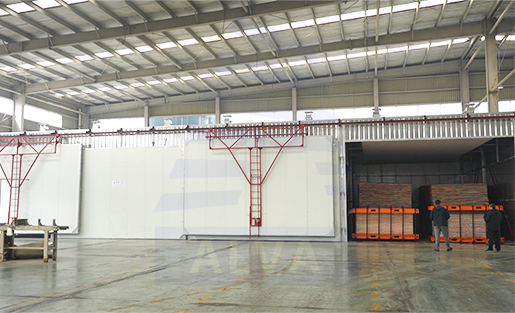
Unpredictable wood moisture routinely ruins expensive projects and destroys profit margins. Commercial woodworking demands absolute precision to deliver durable, high-quality products consistently. Leaving raw lumber to dry naturally is simply no longer a viable strategy for modern producers.
Relying exclusively on ambient weather causes severe inventory bottlenecks. It leaves your valuable stock exposed to sudden seasonal humidity shifts. These shifts trigger deep checking, warping, and devastating material waste. Ultimately, catastrophic product failures directly tie back to inadequate moisture management before milling even begins.
We will objectively break down how transitioning to precise climate manipulation solves these exact challenges. You will learn the specific mechanics behind effective moisture reduction. We will evaluate the critical operational trade-offs between different system types. Finally, we explore the genuine implementation realities for scaling your lumber processing with absolute confidence.
Key Takeaways
A dedicated wood drying chamber reduces moisture content to precise, commercially viable targets (typically 6-9% for indoor use) that air-drying physically cannot achieve in most climates.
Dehumidification (DH) chambers offer superior energy efficiency and lower defect rates for most small-to-midsize operations compared to conventional venting kilns.
Precise moisture control inside the chamber is only half the equation; understanding environmental re-absorption rates post-drying is critical for maintaining lumber integrity.
Procurement decisions should be weighted heavily on energy availability, batch volume predictability, and desired ROI timelines, not just upfront equipment costs.
1. The Commercial Limitations of Air- and Shed-Drying Lumber
Natural air-drying might seem cost-effective initially. However, it carries severe commercial limitations. Relying on the wind and sun introduces unpredictable variables. These uncontrolled variables actively threaten your bottom line. We must examine why traditional methods fall short for modern commercial demands.
Unpredictable Equilibrium Moisture Content (EMC)
Wood constantly interacts with its surrounding air. It absorbs or releases moisture until reaching equilibrium. Natural air-drying bottoms out at your local climate’s Equilibrium Moisture Content. This baseline often hovers between 12% and 15% year-round. Such high moisture levels are entirely insufficient for indoor applications. Modern furniture and flooring standards demand a strict 6% to 9% range. Air-drying simply cannot cross this physical threshold in most geographic regions.
Inventory Bottlenecks
Time is money in any manufacturing business. Air-drying forces you to hold massive physical inventories. You tie up crucial operating capital in giant stacks of green lumber. These stacks often take 6 to 18 months to reach baseline usable states. This slow turnover rate paralyses cash flow. It also limits your ability to pivot when market demands change quickly. You cannot easily rush a batch of air-dried oak to meet an urgent custom order.
Defect Vulnerability
Outdoor or open-shed environments lack precise temperature regulation. They also suffer from stagnant or chaotic airflow. This lack of control leaves wood highly susceptible to severe defects. Sudden seasonal shifts force the outer shell of the lumber to shrink rapidly. The inner core remains swollen and wet. This internal stress causes deep checking and severe warping. Furthermore, warm and damp conditions breed fungal staining. These naturally occurring defects quickly downgrade premium boards into useless scrap.
2. The Mechanics: How a Wood Drying Chamber Achieves Exact Moisture Control
Moving operations indoors changes everything. A Wood Drying Chamber replaces unpredictable weather with calculated physics. These advanced systems allow operators to dictate the exact pace of moisture removal. We must understand how these components work together seamlessly.

Controlled Environment Physics
Effective moisture removal relies on closed-loop manipulation. The system carefully balances temperature, relative humidity, and constant airflow. High-velocity fans push air evenly across every board in the stack. The system raises the temperature to draw moisture out of the core. It simultaneously manages relative humidity to keep the outer shell pliable. This delicate balance safely forces bound water out of the cellular structure. It prevents the wood cells from rupturing or collapsing entirely.
Sensor-Driven Precision
You cannot manage what you do not measure accurately. Modern setups rely heavily on commercial-grade hygrometers. These sensors provide continuous, automated monitoring. Operators drive probes directly into various sample boards. The main controller reads the real-time moisture drop constantly. It then adjusts the schedule dynamically. If the wood dries too fast, the system increases chamber humidity. This sensor-driven precision prevents catastrophic cellular collapse. It guarantees a highly uniform finish across the entire batch.
Targeting Final EMC
Different projects require distinct final moisture targets. A builder in Arizona needs different specifications than a cabinetmaker in Florida. The chamber gives you the power to dial in specific goals. You base these final targets on the end-user's geographic location. You also adjust for the specific product application.
Geographic Region | Product Application | Target Moisture Content (%) |
Desert / Arid Climates | Indoor Furniture & Flooring | 6% - 7% |
Standard Inland Regions | Cabinetry & Millwork | 7% - 9% |
Coastal / Humid Areas | Exterior Doors & Decking | 10% - 12% |
All Regions | Rough Framing Lumber | 15% - 19% |
3. Evaluating Solution Categories: Dehumidification vs. Conventional Kilns
Not all systems use the same technology. Buyers generally choose between two primary mechanisms. You must weigh the operational trade-offs of each system carefully. Here is an objective breakdown to guide your facility planning.
Conventional Heat-and-Vent Kilns
These systems represent the older, traditional approach to rapid lumber processing. They rely on sheer thermal power to drive moisture out.
Mechanism: The system heats the enclosed room intensely. It absorbs escaping water into the hot air. Powerful fans then vent this moisture-laden hot air directly outside.
Pros: They deliver incredibly fast processing cycles. They easily reach extreme temperatures exceeding 160°F. This high heat is absolutely mandatory for setting pitch in softwoods like pine.
Cons: Venting hot air outside wastes massive amounts of energy. The intense heat creates a much steeper learning curve for operators. Minor scheduling errors quickly cause severe surface checking and ruin whole batches.
Dehumidification (DH) Wood Drying Chambers
Dehumidification technology offers a highly refined, modern alternative. A DH Wood Drying Chamber operates closer to a giant, highly efficient heat pump.
Mechanism: The unit uses a heavy-duty compressor to remove moisture from the circulating air. It condenses the water and drains it away safely. The system then recycles the latent heat back into the insulated room.
Pros: This recycling process ensures significantly lower operating costs. The gentler cycle reduces internal stress dramatically. Operators see far fewer critical defects like honeycombing or deep cracking.
Cons: The cycle runs slightly slower than conventional heat. These units also struggle to reach extreme high temperatures. They cannot perform specialized high-heat treatments, though standard pest eradication remains perfectly achievable.
Feature | Dehumidification (DH) | Conventional Heat-and-Vent |
Energy Efficiency | Very High (Recycles heat) | Low (Vents heat outside) |
Drying Speed | Moderate (Gentle process) | Fast (Aggressive process) |
Defect Rate | Very Low | Moderate to High (Requires high skill) |
Max Temperature | Usually up to 130°F - 140°F | Often exceeds 160°F - 180°F |
4. Implementation Realities: Re-Absorption and Operating in Humid Environments
Many operators hesitate before upgrading their processing methods. They worry their perfectly treated lumber will immediately ruin once it leaves the machine. We need to separate stubborn industry myths from actual physical realities.
The Skeptic's Concern
A common question arises during facility planning. Why invest heavy capital if the lumber will simply re-absorb moisture? Many shops lack comprehensive climate control. Job sites often sit in highly humid environments. Skeptics argue the wood will inevitably swell back up. They assume the initial processing effort is a complete waste of time.
Acclimation vs. Re-Absorption
Real-world data thoroughly debunks this widespread fear. Kiln-dried wood chemically alters during the thermal process. The cell walls actually harden and change structure permanently. This permanent alteration creates a natural hysteresis effect. Processed lumber absorbs ambient water at a significantly slower rate compared to "green" wood. It will eventually acclimate to a humid room. However, it will never re-absorb moisture to its original raw state. The internal cellular integrity remains largely intact.
Storage Imperatives
Proper handling post-processing remains strictly necessary. The machinery guarantees a perfect baseline level upon exit. You must then protect this valuable investment actively. Follow these structured post-drying best practices immediately:
Immediate Relocation: Move the freshly processed boards into climate-controlled storage areas immediately after the cooling phase.
Tight Wrapping: If specialized indoor storage is entirely unavailable, tightly wrap the stacks using heavy-duty impermeable tarps.
Rapid Sealing: Apply initial sealers or finishing coats as quickly as possible to block ambient humidity from penetrating the end grain.
Airflow Minimization: Store finished stacks away from open warehouse doors or drafty loading docks.
5. Shortlisting Criteria: Sizing and Sourcing Your Drying Equipment
Scaling your lumber processing requires careful procurement planning. You cannot simply buy the largest unit available on the market. You must align your equipment with your actual facility constraints perfectly.
Volume and Scalability
Start by evaluating your actual monthly throughput demands. Calculate your average board feet or cubic meters accurately. Match the chamber capacity to this verified volume. Avoid over-purchasing massive units. Running a half-empty room disrupts necessary airflow dynamics severely. Consider modular setups instead. Buying two mid-sized units offers better flexibility than one massive room. You can process different species simultaneously without compromising individual schedules.
Power Infrastructure
Site constraints often dictate your final equipment choice. Always evaluate your existing power infrastructure early in the planning phase. Dehumidification systems generally demand less heavy-duty wiring. Smaller DH units typically run perfectly fine on standard single-phase power. They plug into existing commercial electrical panels easily. Conversely, large conventional kilns demand massive energy loads. They almost always require robust 3-phase power upgrades. Some even require dedicated industrial boilers. Factor these critical infrastructure limits into your facility planning.
Conclusion
Transitioning from unpredictable natural methods to precise climate manipulation fundamentally transforms a woodworking business. A well-calibrated unit eliminates costly inventory bottlenecks and slashes material waste. It chemically alters the wood to resist severe re-absorption in humid environments. Ultimately, this equipment is not just an effective tool; it is a mandatory upgrade for any operation requiring verifiable, consistent lumber quality.
Before requesting vendor quotes, evaluate your current workflow realistically. Conduct a thorough site power audit to understand your electrical limits. Calculate your current annual losses stemming directly from air-drying defects. Armed with this data, you can confidently select a system perfectly scaled for your operational demands.
FAQ
Q: How long does a typical cycle in a wood drying chamber take?
A: Cycle times vary heavily based on three main variables. The species density matters greatly; dense oak takes much longer than soft pine. The starting moisture content also dictates the timeline. Finally, Dehumidification systems run gentler, slower cycles, whereas conventional kilns drive moisture out rapidly. A cycle can take anywhere from a few days for thin softwoods to several weeks for thick hardwoods.
Q: Does kiln drying guarantee the wood will never warp?
A: No. It vastly minimizes internal stress, but it does not suspend the laws of physics. Improper storage, severe environmental changes, or poor milling practices can still cause movement. You must store processed boards correctly and seal them promptly to maintain their structural stability.
Q: Can I build my own chamber and just buy the dehumidification unit?
A: Yes. Many commercial DH units are specifically designed for custom-built enclosures. Operators often construct highly insulated rooms using standard polyurethane foam panels. This DIY approach offers a highly scalable and cost-effective entry point for growing operations.
Q: What is the difference between sterilization and drying?
A: Drying removes moisture to stabilize the material for building. Sterilization specifically requires holding the core temperature of the wood at approximately 133°F (56°C) for a specific duration. This intense heat strictly targets and kills invasive pests, ensuring compliance with international shipping rules like ISPM 15 standards.

 English
 العربية
 Français
 Русский
 Español
 Português
 Deutsch
 italiano
 日本語
日本語 한국어
한국어 Nederlands
 Tiếng Việt
 ไทย
ไทย Polski
 Türkçe
 አማርኛ
አማርኛ ພາສາລາວ
 ភាសាខ្មែរ
 Bahasa Melayu
 ဗမာစာ
ဗမာစာ தமிழ்
தமிழ் Filipino
 Bahasa Indonesia
 magyar
 Română
 Čeština
 Монгол
 қазақ
қазақ Српски
 हिन्दी
 فارسی
فارسی Kiswahili
 Slovenčina
 Slovenščina
 Norsk
Norsk Svenska
 українська
 Ελληνικά
 Suomi
Suomi Հայերեն
 עברית
עברית Latine
 Dansk
Dansk اردو
اردو Shqip
Shqip বাংলা
বাংলা Afrikaans
 Māori
Māori অসমীয়া
 Беларуская мова
 Català


