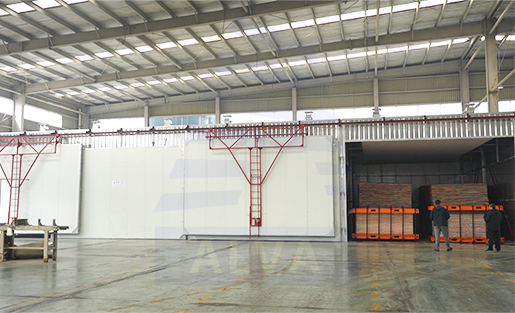
The commercial demand for dimensionally stable, rot-resistant wood is rising rapidly. Consumers increasingly reject toxic chemical treatments. Processors need reliable, scalable methods to meet these changing expectations. Wood naturally absorbs and releases moisture. This causes warping, cracking, and structural failure over time.
Traditional kilns handle basic moisture reduction effectively. However, they do not change how the lumber reacts to ambient humidity later. A Log Carbonization Kiln applies high-heat thermal modification to solve this problem. It permanently alters wood chemistry to lock in its shape.
Evaluating whether this equipment is the right investment requires a deeper look. You must understand the cellular science of thermal modification. Processors must respect strict operational boundaries regarding temperature limits and pre-drying rules. By mastering these variables, you can maximize the stability and actual return on your finished lumber.
Key Takeaways
Cellular Reconfiguration: Carbonization permanently destroys hydrophilic (water-absorbing) hydroxyl groups, fundamentally lowering the wood's Equilibrium Moisture Content (EMC).
Empirical Stability: Independent academic testing (USDA) demonstrates that properly carbonized wood can reduce water absorption by 53% to 58%.
Biological Resistance: Heat degrades hemicellulose—the primary food source for decay fungi—providing natural, chemical-free anti-corrosion properties.
Operational Mandate: A log carbonization kiln is not a substitute for a drying kiln; input wood must be pre-dried to below 20% moisture to prevent structural fracturing and ensure thermal efficiency.
The Temperature Threshold: Maintaining precise control between 180°C and 230°C is critical; exceeding 270°C triggers exothermic reactions that turn lumber into brittle charcoal.
1. The Science of Stability: How Carbonization Alters Wood at the Cellular Level
Thermal modification is not merely an intense drying process. It is a fundamental chemical transformation. We must examine the specific physical changes occurring inside the chamber. Exposing wood to sustained high heat triggers reactions deep within its cellular structure.
First, we see the destruction of hydrophilic groups. Untreated wood acts like a sponge. It contains numerous hydroxyl groups. These molecules easily bind to ambient moisture in the air. When you load timber into a Log Carbonization Kiln and heat it between 180°C and 230°C, a permanent change occurs. The intense thermal energy destroys these water-absorbing hydroxyl groups. The wood loses its natural ability to bind moisture. Its Equilibrium Moisture Content (EMC) drops significantly. It will no longer swell dramatically during humid summers or shrink during dry winters.
Second, the process causes controlled hemicellulose degradation. Wood consists of cellulose, lignin, and hemicellulose. Hemicellulose is the weakest and most reactive component. During carbonization, the heat breaks down this compound. You typically see a 5% to 8% reduction in total hemicellulose volume. This breakdown minimizes internal stress. It locks in long-term dimensional stability without heavily compromising structural integrity.
These claims are not just theoretical. They carry strong empirical backing. Let us look at the mechanism tested by USDA researchers. They evaluated wood species modified through contact-charring methods. The results were highly conclusive. During exhaustive 120-hour submersion tests, the carbonized lumber achieved a massive 53% to 58% reduction in water absorption. The physical cell walls simply refused to let water penetrate.
Step-by-Step Cellular Changes During Carbonization
Thermal Penetration: Heat enters the core of the pre-dried lumber, raising internal temperatures evenly.
Chemical Cleavage: Hydroxyl groups separate from the cellular chains, permanently escaping as vapor.
Polymerization: Lignin complexes cross-link, creating a more rigid, water-resistant cellular matrix.
Nutrient Degradation: Soluble carbohydrates (hemicellulose) break down into simpler, non-nutritive compounds.
2. Core Commercial Advantages of Thermally Modified Lumber
Understanding the cellular science is important. Translating those technical mechanisms into business outcomes is critical. Upgrading your facility with carbonization technology directly impacts product premium. Customers will pay more for lumber offering distinct, verifiable performance upgrades.
One major advantage is predictable machinability. Natural wood contains internal resins and pitch. These substances gum up cutting blades. They also cause fuzzing during milling operations. Carbonization effectively bakes out these natural surface resins. The resulting lumber cuts cleanly. It also features a highly uniform surface. This allows for incredibly even paint and stain absorption. You spend less time sanding and more time finishing.
Another profound benefit is fungal starvation. Most traditional anti-corrosion treatments rely on toxic chemical baths. Carbonization offers a chemical-free alternative. By degrading the internal carbohydrates, the kiln effectively eliminates the nutritional base required for fungal and mold survival. You are essentially starving the decay mechanisms. Microbes simply cannot digest the altered cellular structure.
Finally, carbonized wood delivers exceptional aesthetic value. The heat physically alters the wood throughout its entire thickness. It does not just stain the surface. The process produces deep, uniform color profiles. You can take affordable, fast-growing local timber and make it mimic premium tropical hardwoods. This provides a lucrative value-add. You achieve the look of exotic lumber without the steep ecological footprint or high import costs.
Key Application Markets for Carbonized Wood
Exterior Cladding: Resists weathering and prevents siding from cupping.
Premium Decking: Offers chemical-free rot resistance for barefoot-friendly surfaces.
Outdoor Furniture: Maintains tight joinery despite rain and sun exposure.
Interior Flooring: Provides rich, exotic aesthetics using sustainable local species.
3. Log Carbonization Kiln vs. Traditional Kiln Drying: Distinct Roles
Facility managers often confuse standard drying kilns with carbonization equipment. They serve fundamentally different purposes. Making the right equipment selection requires clarifying these distinct roles. You cannot swap one for the other.
Traditional kilns focus purely on moisture control. They are designed strictly to lower free and bound water. Operators typically aim for a 6% to 8% target moisture range. This process prevents immediate warping. It makes the lumber ready for basic indoor construction. However, standard drying does not change the chemical response of the wood. If you place kiln-dried lumber in a humid environment, it will absorb moisture again. It remains chemically active.
Conversely, a Log Carbonization Kiln focuses on chemical modification. These machines operate in oxygen-starved environments. They reach extreme temperatures that traditional kilns simply cannot handle safely. The goal here is not merely removing water. The goal is permanently altering the material properties of the timber.
The verdict is clear. These two systems are complementary. They are not interchangeable. Carbonization is a secondary, value-add process. It is never your primary drying step. You first use a traditional kiln to stabilize the moisture. Then, you use a carbonization kiln to upgrade the chemical stability of the wood.
Comparison Chart: Traditional vs. Carbonization Kilns
Feature | Traditional Drying Kiln | Log Carbonization Kiln |
Primary Function | Remove free and bound moisture. | Chemically modify cellular structure. |
Temperature Range | 40°C to 90°C. | 180°C to 230°C. |
Oxygen Environment | Open air circulation and venting. | Strictly oxygen-starved (sealed). |
End Product Result | Dry lumber, prone to future swelling. | Stable lumber, resistant to swelling. |
Biological Resistance | Temporary (until moisture returns). | Permanent (food source destroyed). |
4. Implementation Realities: Risks and Operational Constraints
We must acknowledge the implementation hurdles transparently. Trusting this technology requires understanding its limits. A carbonization setup demands strict operational protocols. Failing to respect these boundaries will destroy your lumber batch and waste energy.
The most critical rule is the pre-drying prerequisite. You cannot load wet wood into this equipment. Input material must sit well below 20% moisture. Loading wet wood wastes massive amounts of energy. The kiln will stall its temperature climb as it fights to evaporate the excess steam. More importantly, rapid internal steam expansion severely increases the friability of the final product. It makes the wood brittle and prone to structural fracturing.
Common Mistake: Skipping the primary drying phase to save time. This always results in cracked, unusable carbonized lumber.
Next, operators must understand the 270°C danger zone. The FAO thermal phase principles clearly define safe modification limits. Wood intended for structural or decorative stability must stay under 270°C. Crossing this threshold triggers an aggressive exothermic reaction. The wood begins generating its own heat. It will structurally collapse, turning into industrial charcoal. Precision control is absolutely non-negotiable.
Finally, we must clarify the pest limitation. Carbonized wood is highly resistant to rot and fungi. However, it is not completely immune to insects. USDA data indicates that thermal modification slows termite consumption significantly. The insects prefer untreated wood. Yet, the process does not completely immunize the timber. Termites can and will consume carbonized wood if no other food sources exist. You may still need secondary protections in high-risk termite zones.
Thermal Phases of Carbonization (Action Chart)
Temperature Phase | Reaction Type | Wood Status & Operational Action |
Up to 150°C | Endothermic | Final residual moisture evaporation. Safe zone. |
180°C – 230°C | Endothermic | Target modification zone. Hemicellulose breaks down. |
270°C | Transition | Critical Threshold. Exothermic breakdown begins. |
Above 280°C | Exothermic | Wood collapses into charcoal. Unsuitable for lumber. |
5. Evaluation Criteria: Choosing the Right Log Carbonization Kiln
Selecting the proper equipment requires specific shortlisting logic. Facility managers must look beyond basic capacity specs. The true value of a kiln lies in its control systems and safety mechanisms.
Your first priority is precision temperature zoning. The equipment must feature automated, verifiable temperature sensors. These sensors must hold the internal heat reliably within the 180°C to 230°C window. Even minor hot spots can ruin a batch. Look for kilns that offer multi-point thermal monitoring. The system should adjust airflow and heat distribution automatically to maintain strict uniformity across the entire lumber stack.
Your second priority is assessing oxygen exclusion mechanisms. Carbonization happens at temperatures well above the ignition point of wood. The only thing preventing your lumber from bursting into flames is the lack of oxygen. Assess the sealing integrity of the kiln doors and ventilation valves. High-quality units use heavy-duty silicone or specialized fiberglass gaskets. They prevent accidental combustion and ash formation during the extreme high-heat phases.
Best Practice: Always conduct a cold-smoke pressure test on your kiln seals monthly to ensure zero oxygen leakage.
Finally, evaluate energy recovery systems. High-volume operations face significant energy expenses. During early pyrolysis phases, the heating process generates combustible off-gasses, including carbon monoxide. Advanced kilns capture these gasses. They route them back into the burner to re-burn them. This gas recycling drastically offsets long-term fuel costs. It transforms a highly energy-intensive process into a remarkably efficient, self-sustaining operation.
Conclusion
A properly managed carbonization process offers unparalleled benefits for modern lumber processing. It provides a highly effective, chemically-free tool for maximizing wood stability. However, success depends entirely on how well your facility prepares for the strict process controls required.
Embrace Pre-Drying: Never run wood above 20% moisture through the thermal modification process. It guarantees ruined, brittle timber.
Respect the Threshold: Keep internal temperatures strictly below the 270°C exothermic tipping point to preserve structural integrity.
Leverage the Premium: Market your finished products based on their 50%+ reduction in water absorption and natural fungal resistance.
Audit First: We strongly recommend buyers audit their current primary kiln drying capacity before investing. You must ensure you can reliably hit the pre-drying prerequisite before purchasing carbonization equipment.
FAQ
Q: Can a log carbonization kiln dry wet lumber?
A: No. Heating wet lumber too fast in a carbonization kiln will cause internal steam pressure to fracture the wood. Wood must be pre-dried to at least 10-15% moisture content prior to carbonization.
Q: Does carbonizing wood reduce its structural strength?
A: Yes, marginally. The thermal degradation of hemicellulose causes a slight decrease in density and bending strength (typically 5-8%). It is ideal for cladding, decking, and furniture, but usually not recommended for primary load-bearing structural beams.
Q: Is carbonized wood completely termite-proof?
A: No. While the process eliminates the food source for mold and fungi, academic studies confirm that while termite damage is reduced compared to untreated wood, termites can still consume thermally modified timber. Secondary protections may be required in high-risk zones.

 English
 العربية
 Français
 Русский
 Español
 Português
 Deutsch
 italiano
 日本語
日本語 한국어
한국어 Nederlands
 Tiếng Việt
 ไทย
ไทย Polski
 Türkçe
 አማርኛ
አማርኛ ພາສາລາວ
 ភាសាខ្មែរ
 Bahasa Melayu
 ဗမာစာ
ဗမာစာ தமிழ்
தமிழ் Filipino
 Bahasa Indonesia
 magyar
 Română
 Čeština
 Монгол
 қазақ
қазақ Српски
 हिन्दी
 فارسی
فارسی Kiswahili
 Slovenčina
 Slovenščina
 Norsk
Norsk Svenska
 українська
 Ελληνικά
 Suomi
Suomi Հայերեն
 עברית
עברית Latine
 Dansk
Dansk اردو
اردو Shqip
Shqip বাংলা
বাংলা Afrikaans
 Māori
Māori অসমীয়া
 Беларуская мова
 Català


