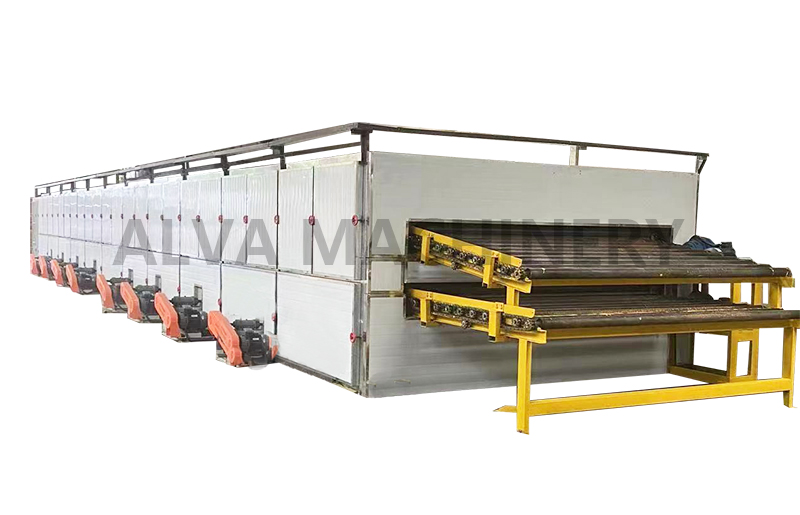
The woodworking industry continues to shift rapidly from traditional lumber processing toward high-yield veneer peeling. Modern rotary peeling extracts up to 92% usable material from a single log. This maximizes resource efficiency across global manufacturing facilities. However, this impressive efficiency introduces a significant manufacturing hurdle. Thin wood sheets face immense physical vulnerability compared to thick solid lumber. Peeler logs produce delicate sheets typically ranging from 0.5mm to 3.0mm. Rapid moisture loss often leads to catastrophic splitting, surface degradation, or severe warping if handled incorrectly.
Are industrial veneer drying systems suitable for these delicate dimensions? Yes, integrating a specialized Veneer Dryer remains mandatory for commercial thin-sheet production. Readers will learn how precise thermodynamic controls prevent brittle failures. We will also explore how advanced mechanical handling systems guarantee perfect structural integrity for downstream gluing.
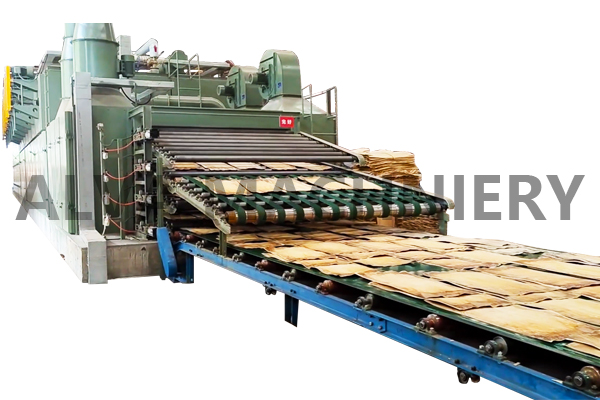
Key Takeaways
Suitability: Industrial veneer dryers efficiently process thin sheets (0.5mm–3.0mm) in minutes, dramatically outperforming natural drying or standard lumber kilns.
Quality Thresholds: Success depends on targeting a strict 6–12% final moisture content (MC) to avoid "bone dry" brittleness or "undercured" delamination.
Equipment Selection: Choosing between roller, wire mesh conveyor, and press dryers dictates the physical integrity and flatness of the final thin veneer.
Risk Mitigation: Advanced dewpoint sensors and anti-deformation mechanical guides are non-negotiable features for minimizing redrying rates and material waste.
The Physics of Drying Thin Wood Sheets: Why Standard Methods Fail
Standard kiln drying works perfectly for dimensional lumber. It completely fails when applied to fragile veneer. Understanding the core physics of moisture evaporation explains this massive capability gap.
Dimensional Vulnerability
Thin sheets lack the physical mass found in standard lumber. Traditional lumber measures one to two inches thick. Veneer measures fractions of a millimeter. Because the wood is so thin, moisture travels a much shorter distance to reach the surface. This creates an extremely steep drying curve. You cannot use low heat over several weeks. Thin sheets require exposure to aggressive temperatures ranging from 350°F to 450°F. They also require intense air velocities hitting 1500 to 3500 feet per minute. Standard kilns simply cannot generate this aerodynamic force.
The "Bone Dry" vs. "Undercure" Dilemma
Processors face a constant balancing act. Wood easily ruins downstream manufacturing if operators miscalculate the target moisture content.
Over-drying (Bone Dry): Driving too much moisture out leaves thin wood incredibly brittle. The surface degrades rapidly. The sheets crack during splicing operations. Furthermore, excessive dryness causes liquid adhesives to penetrate straight through the wood. This starves the glue line and weakens the final panel.
Under-drying (Undercure): Leaving too much moisture inside the wood creates severe manufacturing risks. Trapped moisture survives until the hot-pressing stage. Under immense heat and pressure, this water instantly turns into expanding steam. The steam violently forces the glued layers apart. Operators call these blisters "blows." A single blow causes total adhesive failure.
Variable Initial Moisture Content (MC)
Drying wood would be simple if logs were uniform. They are not. A single log contains vastly different internal moisture levels. Fresh sapwood often carries an initial moisture content between 100% and 130%. Conversely, the inner heartwood might only hold 35% to 40% moisture. When you peel a log, a single batch contains both wet sapwood and drier heartwood. Standard methods cannot adjust for this extreme variability. They either scorch the heartwood or leave the sapwood soaking wet.
Veneer Dryer Configurations for Thin Sheets (Equipment Comparison)
Selecting the correct machinery determines your final product quality. Manufacturers engineer three primary configurations to handle thin wood safely.
Roller Veneer Dryers
This configuration represents the industry standard for high-volume production. Sheets feed continuously between arrays of heated, powered rollers.
Mechanism: The turning rollers physically grip the wood. They pull the sheets forward while transferring intense thermal energy directly into the fibers.
Best For: High-capacity production floors processing standard-to-medium thickness rotary-cut veneers.
Limitations: Operators must execute meticulous maintenance routines. Roller tension must remain perfectly calibrated. Aggressive mechanical handling occasionally splits ultra-thin sheets. Heavily defective wood can also jam the roller paths.
Conveyor / Wire Mesh Belt Dryers
Fragile decorative woods demand gentler handling. Mesh belt systems replace heavy steel rollers with continuous woven wire platforms.
Mechanism: Sheets travel horizontally sandwiched between upper and lower mesh belts. High-velocity hot air circulates continuously. The system balances top and bottom airflow to suspend the wood neutrally.
Best For: Extremely thin sheets, highly fragile burls, and expensive decorative veneers.
Advantages: The mesh practically eliminates mechanical stress. It prevents the notorious "Omega" wave deformation. It stops severe cupping. However, these units occupy a much larger factory footprint. They also operate at slower overall feed speeds.
Contact Plate / Press Dryers
Some applications require perfectly flat dimensional stability above all else. Press drying delivers extreme flatness through mechanical force.
Mechanism: The machine uses heavy, heated metal plates. These plates feature specific parallel exhaust slots. The system applies direct physical pressure across the wood surface, typically ranging from 5 to 70 psi.
Advantages: Press systems excel at forcing steam out quickly. Specific contact-ratio designs prevent the wood from shrinking unevenly. You get exceptionally flat sheets ready for immediate lamination.
Dryer Type | Primary Mechanism | Best Use Case | Key Limitation |
Roller Dryer | Heated powered rollers gripping wood | High-volume, standard rotary sheets | Can split ultra-thin or defective sheets |
Mesh Belt Dryer | Top/bottom wire belts balancing air | Fragile, decorative thin veneers | Requires massive floor footprint |
Press Dryer | Heated metal plates applying 5-70 psi | Applications requiring zero warping | Higher mechanical complexity |
Core Evaluation Criteria for Veneer Dryer Procurement
Purchasing industrial machinery requires strict technical evaluation. You must analyze specific engineering features before upgrading your factory floor. Evaluating a modern Veneer Dryer demands a thorough understanding of thermodynamics and material science.
Inline Moisture and Dewpoint Control
Guessing moisture levels leads to catastrophic failure. Modern processing demands continuous inline telemetry.
You must look for direct-installation dewpoint transmitters. These sensors function completely inside high-temperature zones. Ambient heat often reaches 180°C to 190°C. Avoid systems relying on complex external sampling lines. Sampling lines clog frequently. Probe-heating technology represents an essential feature. Heated probes prevent condensation build-up directly on the sensor surface. This guarantees real-time automated exhaust control. Your exhaust dampers will open and close precisely when needed.
Mechanical Handling and Deformation Prevention
How the machine moves the wood dictates your total waste percentage. You must evaluate feeder mechanisms and internal tracking systems heavily.
Premium models utilize fluid-dynamics-optimized air distribution. The air actually helps float and guide the delicate wood. You should also demand advanced belt-guiding designs. Sine-wave systems stand out as superior engineering. They gently undulate the tension paths. This specifically prevents the veneer from buckling against rigid stops. It massively reduces catastrophic machine jams inside the heat chambers.
Modular Scalability & Build Quality
Your production volume will likely grow. The machinery must scale seamlessly alongside your capacity demands.
Assess whether the manufacturer offers strictly modular heating sections. Industry-standard segments usually measure 2.25 meters in length. A good machine easily expands from four up to eight vertical decks. Furthermore, you must demand premium anti-corrosive materials. Wood vapor becomes highly acidic at peak evaporation temperatures. Normal steel rots quickly in this environment. Specify aluminized metal skins to withstand this intense acidic degradation.
Production Benchmarks: Time, Yield, and Efficiency
Profitable manufacturing relies on predictable output metrics. You need to know exactly how long processes take and where efficiency leaks occur.
Drying Time Expectations
Different cellular structures release water at completely different speeds. You cannot run every species on the same schedule.
Softwoods (Poplar, Pine): These species feature porous, open grain structures. Thin sheets measuring 0.5mm can hit their target MC rapidly. Expect typical cycles lasting only 2 to 5 minutes.
High-Density Hardwoods (Oak, Maple): Dense cellular walls trap moisture aggressively. Pushing the heat too high causes surface burning. You must slow the process down. Hardwood sheets often require 8 to 12 minutes under strictly controlled parameters.
Minimizing Redrying Rates
Historically, poor climatic control plagued the industry. Older facilities regularly suffered 10% to 30% redrying rates. Operators essentially guessed when batches were finished. Wet sheets had to run through the entire machine a second time. This practice destroyed profit margins. Modern automated systems drastically reduce this waste. By relying on inline dewpoint sensors, machines adjust speed dynamically. You save immense thermal energy while dropping redrying rates to single digits.
Energy and Environmental Compliance
Intense heat bakes natural resins out of the wood. This creates highly toxic exhaust fumes known as "blue haze." Proper exhaust automation mitigates these emissions entirely. Accurate temperature controls also prevent severe internal hazards. Unregulated heat causes resin carbonization. This pitch build-up sticks to hot metal surfaces inside the chamber. Eventually, carbonized pitch ignites. Strict thermodynamic control eliminates these catastrophic internal fire risks.
Strategic Next Steps: How to Shortlist Your Solution
Do not buy complex thermal machinery based solely on brochure promises. You must validate the engineering against your specific factory conditions.
Map to Wood Species
Align your vendor shortlist directly with your primary raw material. Resinous softwoods behave entirely differently than dry hardwoods. If you process highly resinous pine, standard vents will clog. You must prioritize advanced air-lock technology. Demand self-cleaning exhaust systems to handle the heavy pitch load.
Thickness-to-Volume Ratio
Analyze your dominant product dimensions. Many modern mills exclusively cut high-volume 0.5mm to 1.5mm sheets. If this matches your operation, avoid heavy roller models. Prioritize continuous mesh-belt systems. Pair them strictly with high-frequency vacuum feeders. Your infeed system should effortlessly sustain 20 or more feeds per minute without tearing the delicate edges.
Request Pilot Testing
Spec sheets rarely tell the whole operational story. Require shortlisted vendors to run physical sample batches. Ship them your specific green veneer. Make them prove their claims under observation. They must deliver consistent final MC readings falling cleanly within the 6% to 12% target window. Verify the physical flatness of the returned samples before signing any procurement contracts.
Conclusion
Veneer dryers act as the foundational backbone of commercial thin-sheet viability. You cannot achieve competitive scale without them.
Focus procurement less on simple heat generation and more on advanced fluid dynamics. Airflow control determines final quality.
Prioritize precision mechanical handling to protect fragile 0.5mm sheets from physical destruction.
Demand real-time dewpoint telemetry. Automated sensors eliminate the guesswork behind historic redrying waste.
Executing this correct investment strategy guarantees perfect structural integrity for downstream gluing and pressing operations.
FAQ
Q: How long does it take to dry a 0.5mm wood veneer sheet?
A: In an industrial dryer, 0.5mm softwoods take approximately 2–3 minutes, while denser hardwoods may take 5–8 minutes, depending on the initial moisture content and operating temperature.
Q: What is the target moisture content for thin wood veneer?
A: The ideal final moisture content for thin veneer ranges between 6% and 12%, ensuring it remains flexible enough for handling while being dry enough to prevent adhesive failure (blows) during hot pressing.
Q: Why do thin wood sheets warp or become wavy during drying?
A: Warping (often referred to as Omega deformation) occurs due to uneven shrinkage when moisture evaporates too rapidly or unevenly. Choosing dryers with top-and-bottom mesh belts or specialized mechanical guiding systems mitigates this issue.

 English
 العربية
 Français
 Русский
 Español
 Português
 Deutsch
 italiano
 日本語
日本語 한국어
한국어 Nederlands
 Tiếng Việt
 ไทย
ไทย Polski
 Türkçe
 አማርኛ
አማርኛ ພາສາລາວ
 ភាសាខ្មែរ
 Bahasa Melayu
 ဗမာစာ
ဗမာစာ தமிழ்
தமிழ் Filipino
 Bahasa Indonesia
 magyar
 Română
 Čeština
 Монгол
 қазақ
қазақ Српски
 हिन्दी
 فارسی
فارسی Kiswahili
 Slovenčina
 Slovenščina
 Norsk
Norsk Svenska
 українська
 Ελληνικά
 Suomi
Suomi Հայերեն
 עברית
עברית Latine
 Dansk
Dansk اردو
اردو Shqip
Shqip বাংলা
বাংলা Afrikaans
 Māori
Māori অসমীয়া
 Беларуская мова
 Català


