Scaling industrial dehydration processes often exposes the hidden inefficiencies of older batch operations. Transitioning from batch drying to continuous production requires a delicate balance. You must maintain moisture consistency, control energy expenditure, and respect tight factory footprint constraints.
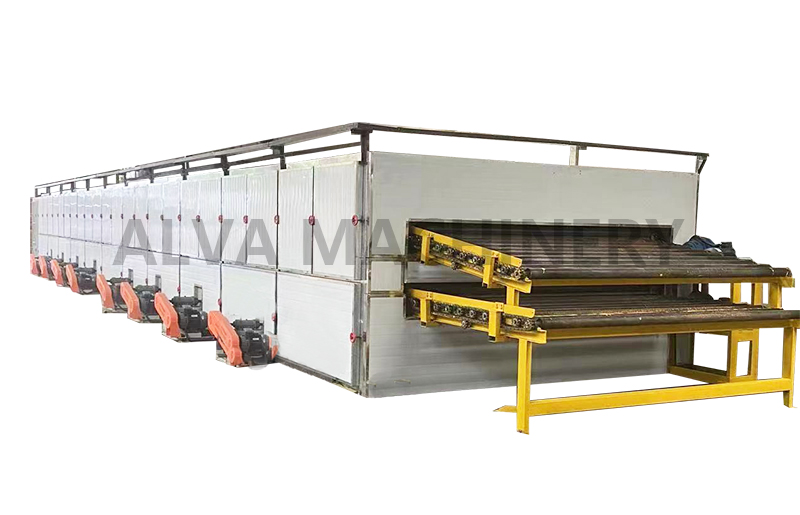
For handling breathable flake, strip, and granular materials, a continuous Mesh Belt Dryer represents the definitive processing solution. These dynamic machines replace manual labor bottlenecks. They deliver automated thermal consistency, ensuring high-yield output without compromising delicate product quality.

We created this article to equip plant managers and process engineers with a practical technical evaluation framework. You will discover how to optimize energy integration, apply rigorous thermodynamic sizing, and implement advanced automation strategies when scaling your facility's production capabilities.
Key Takeaways
Transitioning to a continuous mesh belt dryer reduces manual handling and ensures uniform heat-mass transfer across high-volume production cycles.
Energy-adaptive designs allow integration with regional, cost-effective heat sources (steam, heat pumps, biomass, natural gas), achieving heat exchange efficiencies exceeding 95%.
Optimal sizing relies on rigorous thermodynamic calculations, factoring in target moisture reduction (e.g., 85% down to 10%) and specific evaporation strength (6-30 kg.H2O/㎡·h).
Turnkey modularity enables seamless integration with upstream pre-processing (granulation) and downstream handling (cooling and automated packaging).
1. The Business Case: Batch vs. Continuous Drying Systems
Throughput & Labor Reduction
Batch tray dryers force operators into endless loading and unloading cycles. This constant manual handling drives up labor hours quickly. It also introduces significant human error. A continuous flow system solves this immediately. You feed materials evenly onto the moving belt. The machine handles the thermal processing automatically. Your staff can focus on quality control instead of heavy lifting.
Product Uniformity
Traditional methods often struggle to distribute heat evenly. Cross-flow indirect heating eliminates this frustrating challenge. Negative-pressure moisture extraction pulls hot air smoothly through the material bed. It guarantees uniform drying across the entire surface area. You avoid localized burning completely. You also eliminate wet spots in the center of the product mass.
Yield Consistency
Multi-stage temperature zoning minimizes product degradation safely. You can drop temperatures precisely when the product becomes vulnerable to thermal damage. This strict control proves essential for color-sensitive agricultural products. It also satisfies rigid regulatory demands for sensitive pharmaceutical compounds. Consistent yields protect your profit margins effectively.
Space Optimization
Floor space remains precious in any manufacturing facility. Multi-layer configurations multiply your effective drying area exponentially. Engineers frequently design 3, 5, or 7-tier layouts. You can achieve 15 to 30+ square meters of active surface space easily. This approach expands capacity vertically. It prevents you from needing a costly factory expansion.
Performance Comparison Chart: Batch Tray vs. Continuous Mesh Belt
Evaluation Metric | Batch Tray Drying | Continuous Mesh Belt Drying |
Labor Requirements | Intensive (manual loading/unloading) | Minimal (automated upstream feed) |
Heat Distribution | Prone to uneven edge-heating | Highly uniform cross-flow air circulation |
Floor Space Utilization | Low efficiency per square meter | High efficiency (multi-layer vertical scaling) |
Product Consistency | Varies between batches | Strictly uniform via continuous zoning |
2. Energy-Adaptive Design: Selecting the Right Heat Source
Cost-Driven Energy Flexibility
A robust industrial dryer must adapt to local energy economics. You should never feel forced into a single fuel type. Manufacturers design adaptive systems to harness whichever energy source costs the least in your specific region. This flexibility protects your facility from sudden fuel market fluctuations.
Heat Pump Systems (Electric): Electric heat pumps offer an exceptionally high Coefficient of Performance (COP). They lower emissions significantly. They are ideal for regions enforcing strict environmental compliance. They also make sense where electricity rates remain highly affordable.
Natural Gas / Diesel Burners: High-capacity lines often demand rapid temperature scaling. Gas and diesel burners provide immediate, precise thermal control. They deliver intense heat quickly. They support massive production runs effortlessly.
Biomass & Coal Heat Exchangers: Indirect heating allows you to utilize low-cost, local biomass fuels safely. The internal heat exchanger keeps 100% clean hot air in contact with your product. Ash, soot, and smoke never touch the materials.
Waste Steam Integration: Many facilities already operate large industrial boilers. You can route existing waste steam directly through finned tube heat exchangers. This clever integration delivers high-volume drying heat at near-zero additional energy cost.
3. Material-Specific Control Strategies & Process Engineering
Mesh Specifications & Material Prep
We standardly utilize 12–60 wire mesh sizing for flakes and strips. The specific mesh count depends on your product's raw dimensions. However, paste-like or cake materials require upstream preparation. You must granulate or extrude them before they enter the dryer chamber. This crucial step guarantees proper airflow penetration. It prevents sticky materials from blinding the woven belt.
Low-Temperature Profiles (45–65℃)
Sugar-rich fruits like apples and mangoes need gentle thermal handling. Low-temperature profiles prevent unwanted caramelization. They preserve the vital cellular structure flawlessly. Drying at 45–65℃ maintains natural colors. It also protects heat-sensitive nutritional compounds like Vitamin C.
Multi-Stage Zoning (50–75℃)
Dense root vegetables require dynamic temperature profiles. Garlic and carrots hold moisture deeply within their structures. You must remove surface moisture rapidly in the first stage. Then, you lower the temperature to penetrate core moisture gently. This multi-stage approach prevents the outer layers from hardening prematurely.
High-Temperature Profiles (80–120℃)
Industrial materials, biomass pellets, and hardy seaweeds demand extreme heat. Kelp processing requires enclosed, high-intensity moisture extraction. High-temperature profiles blast away heavy water weight rapidly. This ensures materials hit strict commercial moisture targets before packaging.
Recommended Material-Specific Process Profiles
Material Type | Examples | Recommended Temp Range | Process Strategy |
High-Sugar Fruits | Apples, Mangoes, Bananas | 45℃ – 65℃ | Gentle low-heat extraction to prevent sugar caramelization. |
Dense Root Vegetables | Garlic, Carrots, Onions | 50℃ – 75℃ | Multi-stage zoning to prevent surface hardening. |
Marine Biology | Seaweed, Kelp | 80℃ – 120℃ | High-intensity extraction for rapid massive water loss. |
Industrial / Biomass | Wood Chips, Resins | 90℃ – 120℃+ | Aggressive constant high heat for maximum throughput. |
4. Engineering Sizing & Thermodynamic Calculations
Moving Beyond Guesswork
Never trust vendors sizing machines purely by theoretical input capacity. You must demand precise heat balance calculations. Purchasing an industrial Mesh Belt Dryer requires exact mathematical validation. Guesswork leads to underperforming equipment. It causes unexpected bottlenecks on your factory floor.
Moisture Evaporation Parameters
Evaporation strength forms the core sizing metric for any reliable Mesh Belt Dryer. It typically ranges from 6 to 30 kg.H2O / ㎡·h. Engineers base this critical figure directly on your material's latent heat of vaporization. They calculate exactly how much thermal energy it takes to vaporize one kilogram of water from your specific product.
Airflow & Exhaust Sizing
Several distinct variables dictate the physical length of your drying sections. Inlet air temperature, air volume measured in kg/h, and exhaust humidity limits matter greatly. Standardized machine sections usually range from 6m to 40m. Proper airflow sizing ensures exhaust fans remove saturated air before condensation occurs inside the chamber.
Material Construction
Food-grade SUS304 or SUS316 stainless steel must cover all internal contact surfaces. This prevents corrosive pitting from acidic materials. Insulated modular panels surround the outer structural frame. They prevent internal thermal bridging. They stop expensive heat loss and protect factory workers from accidental burns.
5. Automation, Turnkey Integration, and Smart Factory Upgrades
Upstream & Downstream Integration
Mesh belt dryers act as the beating heart of a larger processing line. They connect seamlessly to vibratory spreaders upstream. These spreaders ensure a perfectly even material bed depth. Downstream, they feed directly into cooling tier extensions. Cooling the product prevents condensation inside automated packaging systems.
Advanced Control Systems
Real-time machine monitoring demands rigorous integration. Plant operators need precise digital oversight.
PLC Integration: Programmable Logic Controllers manage the fundamental physical movements. They adjust fan speeds precisely.
SCADA Systems: Supervisory Control and Data Acquisition systems record historical batch data. They track zone temperatures constantly.
Variable Frequency Drives (VFDs): These devices alter the main drive motor speed. You control exact retention times dynamically.
Heat Recovery Systems
Exhaust heat recovery units represent a mandatory environmental upgrade. Reusing expelled hot air lowers long-term operational expenses dramatically. These smart systems capture thermal energy from the exhaust stack. They pre-heat fresh incoming ambient air. This integration aligns perfectly with modern corporate sustainability goals.
Dust & Fines Management
Dusty applications require strict industrial compliance. Processing chemical resins or dry biomass generates airborne fines. You should evaluate optional cyclone separators. Baghouse filters provide superior particulate capture. Wet scrubbers offer excellent control for volatile dust. Managing fines properly keeps your facility clean and safe.
Conclusion
Procuring a mesh belt dryer is fundamentally a thermodynamic engineering project. It is never a simple off-the-shelf purchase. Successful deployment requires meticulous planning and rigorous mathematical validation.
When shortlisting manufacturers, prioritize those offering transparent engineering data. Seek out partners who provide clear energy integration options. Demand custom thermodynamic calculations tailored to your exact material. Look for modular scalability to future-proof your investment.
Before requesting technical proposals and engineering schematics, gather your baseline data thoroughly. Document your initial moisture content, your strict target moisture, and your required hourly yield. Identify your most cost-effective available heat source. Providing these exact metrics guarantees a highly accurate, high-performance machinery proposal.
FAQ
Q: What types of materials are not suitable for a continuous mesh belt dryer?
A: High-viscosity pastes, ultra-fine powders, and liquid suspensions generally fail in these machines. Powders blow away or fall directly through the woven mesh. Unless you pre-granulate or extrude these materials first, you will need alternative technologies like spray or drum dryers.
Q: How does a multi-layer mesh belt dryer improve efficiency over a single-layer?
A: Multi-layer designs leverage a mechanical "turnover effect." As material drops from an upper tier to the layer below, it flips and mixes. This action exposes entirely new damp surfaces to the hot air stream. It accelerates moisture release dynamically while drastically reducing the required floor space.
Q: Can the mesh belt speed and temperature be adjusted dynamically?
A: Yes. Modern automation integrates variable frequency drives (VFDs) and independently monitored thermal zones. Plant operators can fine-tune retention times and adjust drying curves on the fly. This flexibility accommodates different batch sizes and varying seasonal moisture levels perfectly.
Q: What is the typical maintenance routine for a mesh belt drying machine?
A: Maintenance centers on routine inspections of the chain drive tension and regular lubrication of high-temperature bearings. Operators must also perform Clean-in-Place (CIP) protocols or manual washdowns of the stainless steel mesh. Keeping the belts spotless prevents hazardous cross-contamination between different product runs.

 English
 العربية
 Français
 Русский
 Español
 Português
 Deutsch
 italiano
 日本語
日本語 한국어
한국어 Nederlands
 Tiếng Việt
 ไทย
ไทย Polski
 Türkçe
 አማርኛ
አማርኛ ພາສາລາວ
 ភាសាខ្មែរ
 Bahasa Melayu
 ဗမာစာ
ဗမာစာ தமிழ்
தமிழ் Filipino
 Bahasa Indonesia
 magyar
 Română
 Čeština
 Монгол
 қазақ
қазақ Српски
 हिन्दी
 فارسی
فارسی Kiswahili
 Slovenčina
 Slovenščina
 Norsk
Norsk Svenska
 українська
 Ελληνικά
 Suomi
Suomi Հայերեն
 עברית
עברית Latine
 Dansk
Dansk اردو
اردو Shqip
Shqip বাংলা
বাংলা Afrikaans
 Māori
Māori অসমীয়া
 Беларуская мова
 Català


