
Views: 0 Author: Site Editor Publish Time: 2026-08-25 Origin: Site


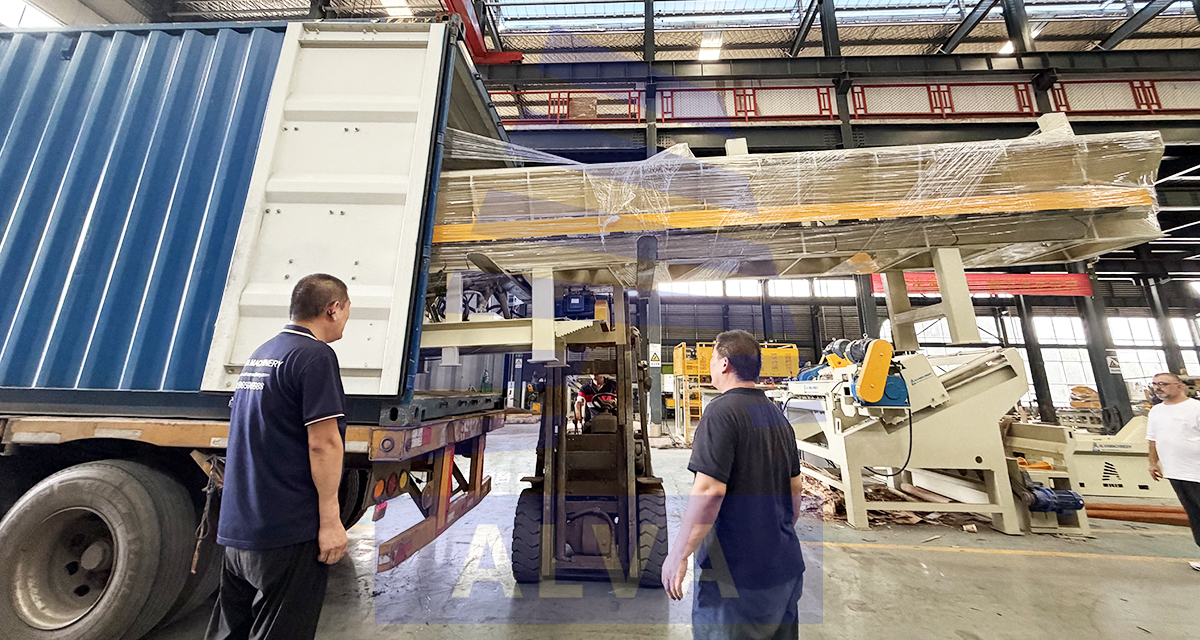
Shandong Alva Machinery Group’s woodworking machinery manufacturing base has recently completed production, assembly and on‑site commissioning of a log‑peeling one‑to‑two production line. At present, the complete set of equipment has entered the shipment preparation phase. Individual units are undergoing packaging, transshipment and container loading in accordance with the loading plan. The customer visited Shandong Alva Machinery Group’s manufacturing site to inspect equipment status, assembly quality and overall line configuration. Discussions were held with technical staff regarding equipment structures, production workflows and subsequent on‑site installation matters.
This log‑peeling one‑to‑two production line bound for the European customer is a wood‑processing line configured by Shandong Alva Machinery Group to match the customer’s actual production requirements. The whole line covers production procedures including log feeding, sawing, rounding, end‑trimming, veneer peeling, wood‑strip peeling and veneer stacking. Well‑coordinated equipment interconnections form a complete log‑processing workflow.
This project adopts a “one‑to‑two” production concept. Built upon a shared front‑end log‑pre‑treatment system, it is equipped with a log‑veneer peeling machine and a wood‑strip peeling machine, each matched with dedicated stacking machinery. Logs can be routed to corresponding processing stations to produce different raw materials and finished‑product specifications. This configuration is not a simple addition of extra machines. Instead, the whole‑line layout is engineered based on the customer’s production requirements, product portfolio, process sequence and site operation conditions. After front‑end preparation, logs can be diverted to different peeling processes according to production orders.
The production line mainly consists of a material‑storage platform, log sawing machine, one log rounding machine, two end‑trimming saws, one log‑veneer peeling machine, one wood‑strip peeling machine and two stacking machines. Each unit performs defined tasks and works in coordination following process sequences. Taking logs as the main processing material, the workflow runs from material storage, sawing, rounding and end‑trimming, through log peeling and wood‑strip peeling, to stacking of finished veneers and related products, forming a complete production chain.For more information, please click the link below:https://www.alvamachinery.com/Plywood-Equipment-pl43428486.html
Configuration of wood‑processing production lines shall take into account the customer’s actual processing objects, product portfolio, log sources, production techniques and downstream end‑use demands. Even for identical woodworking machinery, different customers may have varied requirements for product structures, processing modes and production organization. Therefore, whole‑line design should not focus merely on individual machines but consider all production links in an integrated manner.
For this European project, Shandong Alva Machinery Group combined log pre‑treatment equipment, peeling machines and stacking units to meet the customer’s production demands. The front‑end section includes a material‑storage platform, log sawing machine, rounding machine and end‑trimming saws to complete all preparatory work before logs enter peeling stations. The middle section comprises the log‑veneer peeling machine and wood‑strip peeling machine to carry out respective peeling tasks for different product requirements. Two stacking machines are installed at the rear end to sort and stack outputs from the two peeling machines separately.
Such equipment organization builds clear process correspondences across the line. Logs are first received and buffered by the material‑storage platform, then delivered to front‑end sawing and shaping procedures. Processed logs are directed to designated peeling machines, and finished materials are subsequently handled by matching stackers.
The core logic of the one‑to‑two line is that one set of front‑end log‑processing system serves two downstream processing demands. Logs for standard veneer production go to the log‑veneer peeling machine; logs for wood‑strip production are sent to the wood‑strip peeling machine. Each product type is supported by dedicated processing and stacking equipment, allowing the customer to organize production flexibly according to orders, raw‑material conditions and product specifications.
This layout emphasizes coordination between production procedures rather than simple superposition of individual machine functions. Machines are arranged following process sequences so that logs undergo transportation and treatment step‑by‑step from entry to finished‑product output.
In log‑processing operations, raw‑material feeding modes directly influence inter‑machine coordination. As a front‑end unit, the material‑storage platform is designed for log buffering and transition prior to subsequent processing.
Its deployment in this project follows the customer’s on‑site workflow. Upon arriving at the production area, logs are sorted and conveyed before entering sawing and further processing. The storage platform receives incoming logs and feeds them into downstream procedures as scheduled.
For continuous‑operation wood‑processing lines, front‑end raw‑material management concerns both machine performance and process‑rhythm matching. Cooperating with the log sawing machine, the storage platform avoids disordered log piling at workstations and streamlines material flow on the shop floor.
When configuring production lines, Shandong Alva Machinery Group evaluates equipment interconnections based on machine composition and customer‑site conditions. The storage platform does not operate independently; it forms an integral part of front‑end procedures together with subsequent sawing, rounding and peeling equipment.For more information, please click the link below:https://www.alvamachinery.com/Plywood-Equipment-pl43428486.html
After entering processing, logs require sawing treatment complying with production specifications. The log sawing machine in this project fulfills front‑end cutting tasks and prepares logs for rounding, end‑trimming and peeling.
Log shapes, lengths and end conditions vary due to raw‑material origins and transportation. Front‑end sawing processes logs to qualified conditions for downstream operations.
The log sawing machine works in sequence with the material‑storage platform. While the platform receives incoming logs, the sawing machine performs cutting according to workflows; together they constitute the front‑end raw‑material‑treatment section.
Saw‑processed logs proceed to subsequent operations. Performing sawing ahead of peeling ensures that downstream machines receive pre‑treated logs, enabling smooth rounding, end‑trimming and peeling cycles.
Within whole‑line configuration, Shandong Alva Machinery Group treats the log sawing machine as part of the overall process rather than an isolated unit. Matching upstream and downstream procedures distinguishes turn‑key line projects from single‑machine supply.
One rounding machine is deployed in this project for log shaping before peeling. In log‑peeling production, log profiles have a direct impact on peeling performance, making rounding a critical pre‑processing step.
Following front‑end sawing, logs are sent to the rounding station as required. The rounding machine reshapes log surfaces and lays a foundation for subsequent end‑trimming and peeling.
Occupying an important position in pre‑treatment, the rounding machine cooperates with the sawing machine and end‑trimming saws to finish all preparations before logs reach peeling stations.
Dedicated rounding equipment separates log reshaping from peeling cycles and clarifies overall workflows. For this European project, the rounding machine is matched with the upstream storage platform and sawing machine as well as the two end‑trimming saws downstream, fully adapted to the two peeling machines.For more information, please click the link below:https://www.alvamachinery.com/Plywood-Equipment-pl43428486.html
End conditions of logs affect machine‑matching performance in peeling processes. Therefore two end‑trimming saws are equipped to cut log ends to meet peeling‑process requirements.
The dual‑saw setup is designed for the whole‑line production organization. After sawing and rounding, logs pass through end‑trimming to achieve dimensional specifications for peeling.
End‑trimming saws serve as an important link connecting log pre‑treatment and peeling. Upstream they link to sawing and rounding; downstream they feed the log‑veneer peeling machine and wood‑strip peeling machine.
Integrating end‑trimming into the production line guarantees fully‑prepared logs entering peeling stations and prevents ambiguous hand‑overs between successive procedures. The dual‑saw configuration reflects the customer’s practical production‑organization requirements. Shandong Alva Machinery Group arranges equipment combinations so that front‑end log‑processing machinery properly interfaces with downstream peeling units.
After storage, sawing, rounding and end‑trimming, logs move to peeling stations. One log‑veneer peeling machine is installed to satisfy mass veneer‑production demands.
As one of the core processing units, it turns pre‑treated logs into continuous veneer sheets. Peeling machines must coordinate with upstream log‑pre‑treatment units as well as downstream stacking equipment. Corresponding stacking machinery is thus configured to handle peeled veneers.
The log‑veneer peeling machine undertakes different tasks from the wood‑strip peeling machine. Logs can be assigned to different processing routes according to raw‑material status and order demands, enabling the one‑to‑two line to produce multiple product types. Shandong Alva Machinery Group sets the log‑veneer peeling machine as one independent production path paired with its dedicated stacker.
Besides standard veneer output, one wood‑strip peeling machine is fitted to realize another product category.
The two peeling machines perform differentiated processing. Within one production line, they share the same front‑end log‑pre‑treatment system yet deliver different finished goods. The “two” in “one‑to‑two” signifies two alternative production paths rather than mere quantitative increase of machines. Processed logs are diverted to either peeling machine according to product targets.
Such arrangement facilitates flexible production scheduling for wood‑processing enterprises facing fluctuating market orders. During assembly and commissioning, Alva’s technical staff verify process relations among all units to guarantee consistency between machine setup and customer requirements. The wood‑strip peeling machine links logically with upstream pre‑treatment and downstream stacking equipment.
Two stacking machines are deployed at the line rear end, dedicated to outputs from the log‑veneer peeling machine and wood‑strip peeling machine respectively.
Freshly peeled veneers require conveying, sorting and stacking. Dedicated stacking stations for each product keep material flows well‑defined. Without matched stacking capacity, peeled materials would pile up on‑site and hinder handling, storage and transportation. This project separates post‑processing workflows for two product lines, supporting classified management and convenient packaging and warehousing.
From the material‑storage platform through sawing, rounding, end‑trimming, dual peeling units and dual stackers, the whole line is not a simple collection of standalone machines but a complete system built upon customer‑specific production logic.
The core feature of this project is one shared front‑end log‑pre‑treatment system supporting two downstream peeling‑production routes.
Process overview: Logs enter the material‑storage platform → log sawing for cutting → rounding → end‑trimming for preparation. Pre‑treated logs are then split: some go to the log‑veneer peeling machine for veneer manufacturing; others are fed into the wood‑strip peeling machine for alternative‑product output. After peeling, products are delivered to their respective stacking machines for sorting.
The complete production logic can be summarized as: raw‑material buffering → sawing → rounding → end‑trimming → diverted peeling → separate stacking.
This design combines shared upstream procedures with split downstream processes. The customer avoids investing in two full sets of log‑pre‑treatment equipment for two product types. Shandong Alva Machinery Group emphasizes equipment synergy in turn‑key projects, taking into consideration machine interconnections, material flows, production rhythms and post‑processing besides individual‑machine performance.For more information, please click the link below:https://www.alvamachinery.com/Plywood-Equipment-pl43428486.html
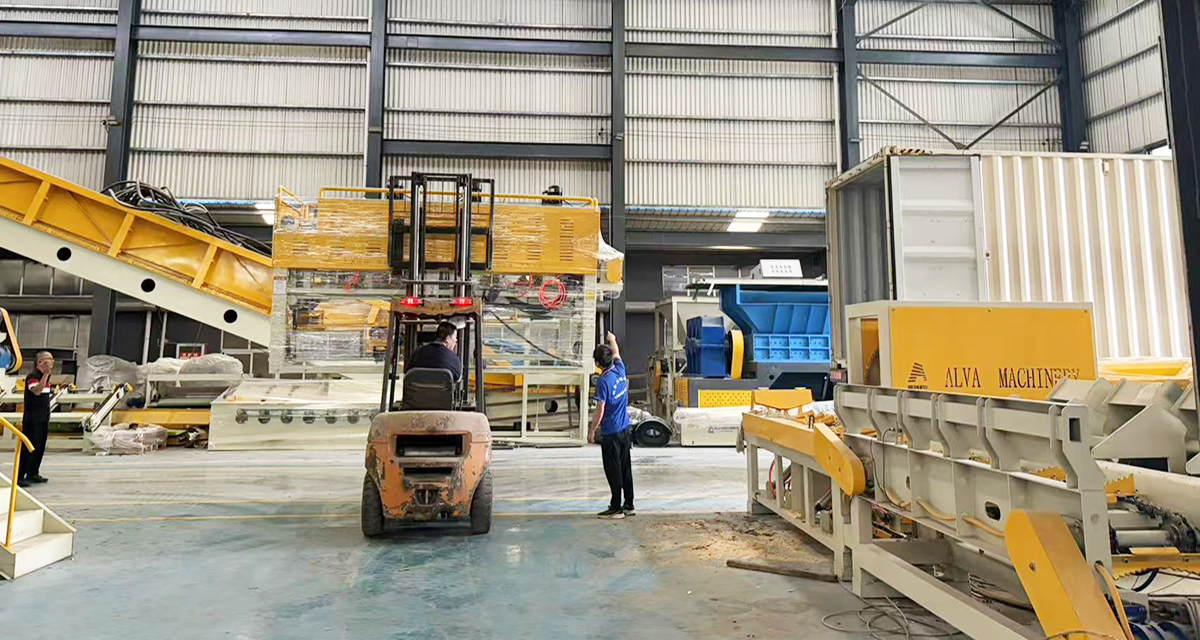
Production and assembly of this project have been finished and container‑loading is underway. The customer visited Shandong Alva Machinery Group’s plant to inspect the complete line.
Customer on‑site inspection is a vital step in turn‑key‑project delivery. Face‑to‑face review enables the customer to verify machine status, assembly quality and overall configuration. Alva’s technical and production staff confirm production requirements and upcoming installation arrangements together with the customer.
For large‑scale woodworking production lines, delivery covers manufacturing, assembly, customer inspection, packaging, container‑loading and logistics instead of mere transportation. The customer examined key units including the storage platform, sawing machine, rounding machine, end‑trimming saws, peeling machines and stacking machines, confirming the full bill of equipment. The visit also helps the customer visualize future installation layouts at the European plant. Alva organizes classification‑based packaging and container‑loading aligned with on‑site‑erection sequences.
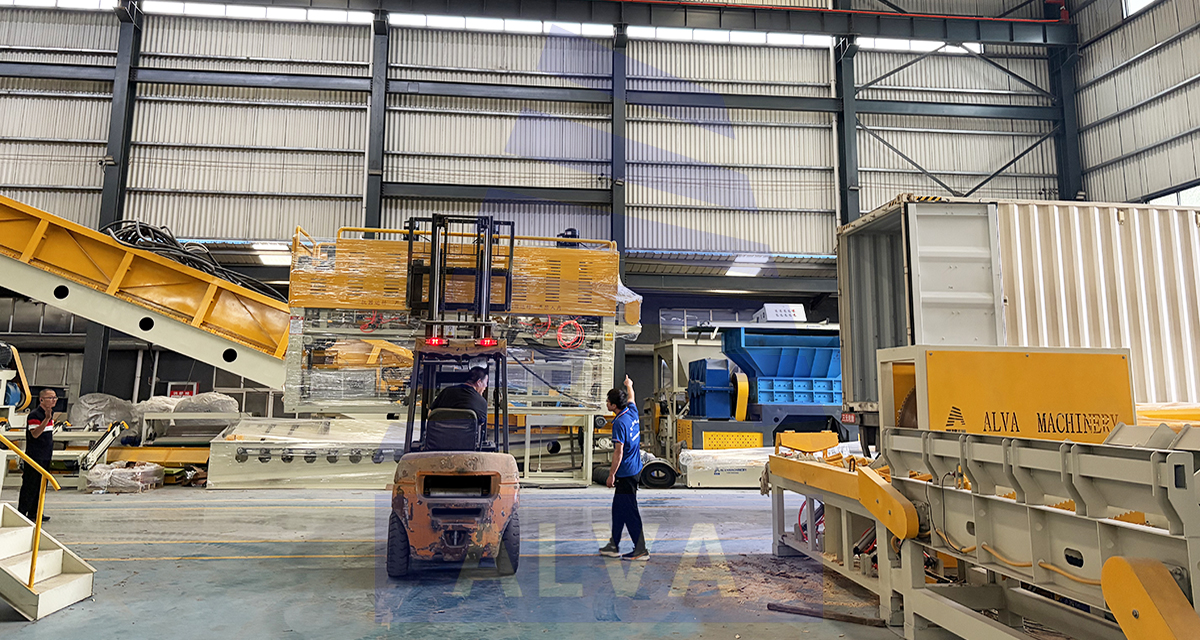
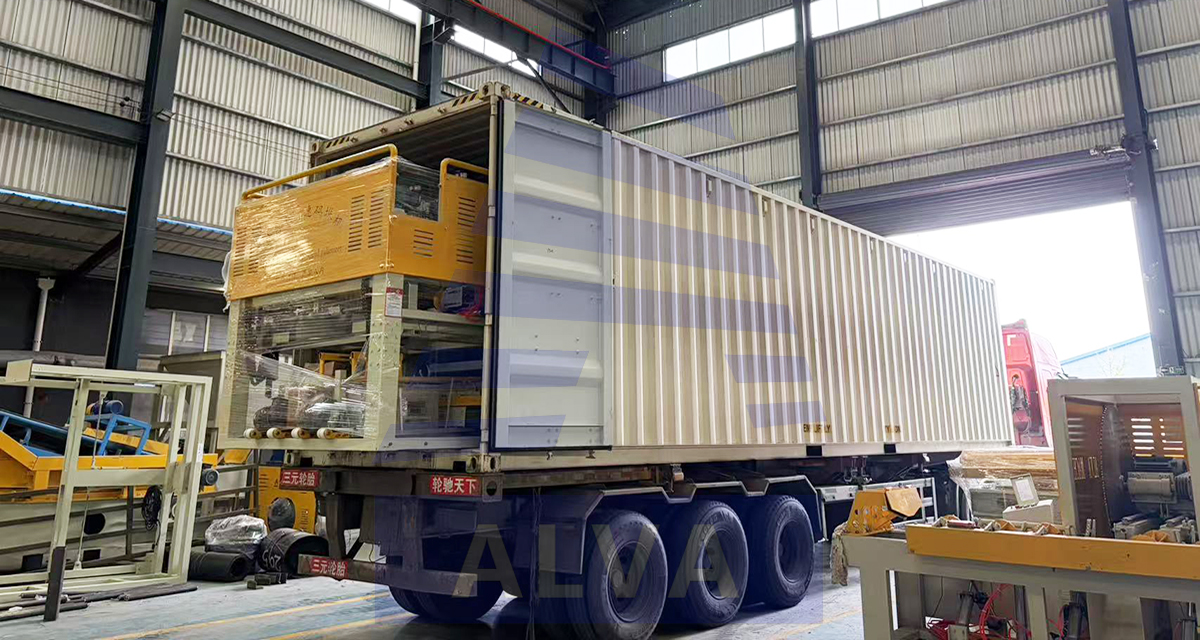
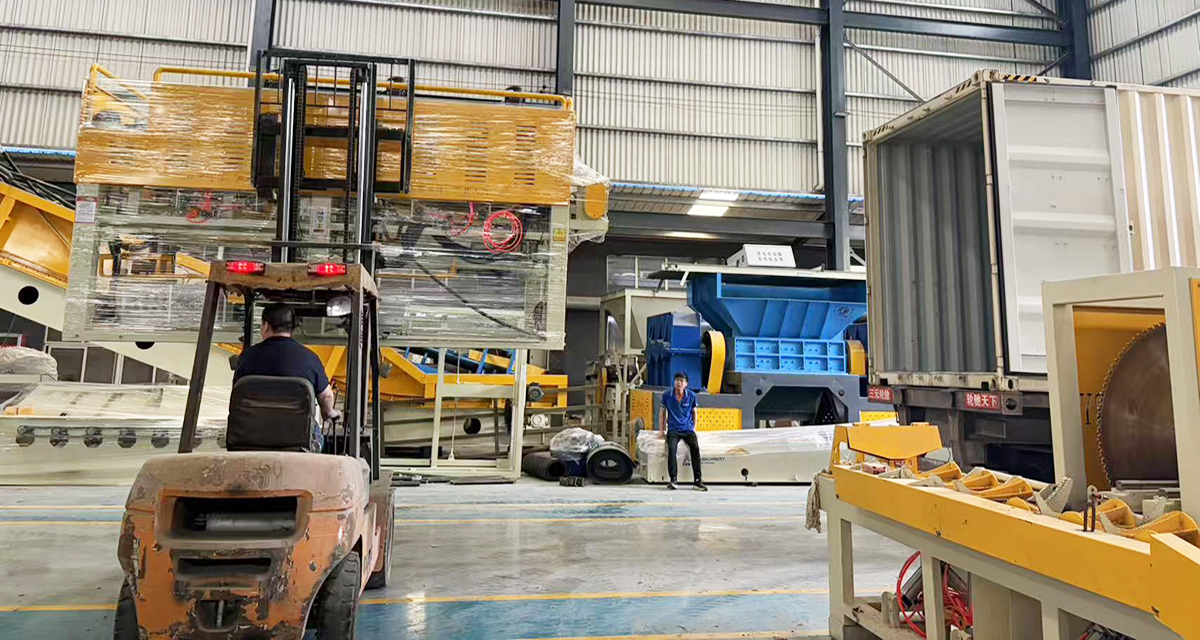
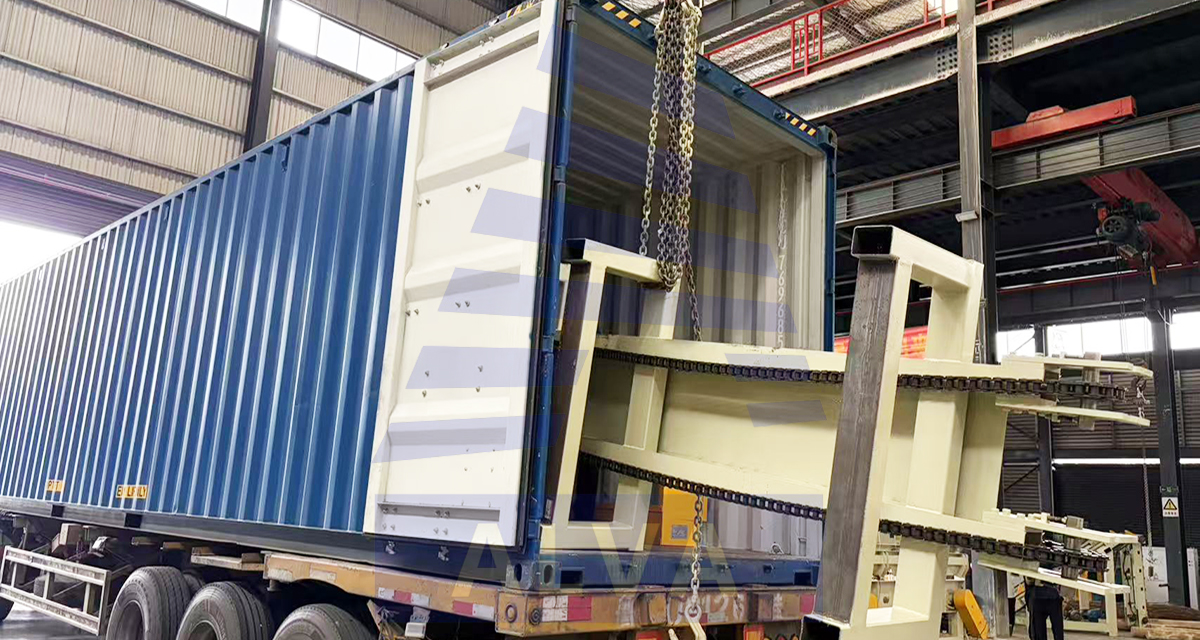
With production and assembly completed, equipment is going through container‑loading procedures.
Container‑loading is critical for woodworking‑machinery export projects. Given the wide variety of main units and auxiliary parts, loading plans follow machine structures, packaging specifications and transport‑protection requirements. Every unit is checked to ensure consistency with project configurations. Attachments, connecting components and accessories are sorted properly for convenient subsequent installation and commissioning abroad. Loading sequences also consider future on‑site‑assembly orders because of process‑driven machine dependencies. Shandong Alva Machinery Group advances container‑loading strictly according to shipment schedules for international freight.
After container‑loading, the complete log‑peeling one‑to‑two production line will be shipped to the European customer’s manufacturing plant.
This represents another turn‑key‑line overseas delivery by Shandong Alva Machinery Group. Compared with single‑machine export, production‑line projects feature more diversified equipment and complex process‑interconnection requirements, placing higher demands on project management, manufacturing, assembly and logistics coordination.
The whole project workflow includes requirement confirmation, solution design, manufacturing, factory assembly, customer inspection, packaging, loading and after‑sales technical support. Upon arrival in Europe, machines will be laid out and interconnected following process‑flow diagrams to reconstruct the full production system locally. Shandong Alva Machinery Group will provide continuous technical support for on‑site installation, commissioning and operation.
Distinctions exist between standalone woodworking machines and integrated production lines. Single machines focus on their own processing functions; production‑line projects optimize the full workflow from raw‑material input to finished‑product output.
In this one‑to‑two project: the storage platform receives incoming logs; the sawing machine performs cutting; the rounding machine shapes log profiles; two end‑trimming saws finish end processing; logs are diverted to different peeling machines; two stackers complete final sorting. Each machine bears clear responsibilities and maintains process links with adjacent units. Ignoring inter‑machine coordination would undermine stable line performance. Such whole‑line systematic thinking is consistently pursued by Shandong Alva Machinery Group in R&D, manufacturing and project delivery.
Equipping both a log‑veneer peeling machine and a wood‑strip peeling machine addresses the customer’s multi‑product‑manufacturing needs. Real‑world wood‑processing enterprises frequently adjust product portfolios responding to orders, raw‑material supplies and market fluctuations. Multi‑route production lines support flexible production scheduling. While front‑end pre‑treatment remains unified, downstream processing is split. Priority can be given to veneer‑production routes or wood‑strip‑production routes according to production plans, with finished goods handled by corresponding stackers.
Shandong Alva Machinery Group’s woodworking‑machinery business covers not only single‑machine fabrication but also complete wood‑processing‑line projects. Turn‑key‑project lifecycles span requirement communication, solution confirmation, manufacturing, factory assembly, customer inspection, packaging, shipment and overseas installation‑commissioning services. This European project has transitioned from manufacturing to international delivery. Equipment combinations are defined by customer‑site requirements; machines are assembled and inspected; after customer acceptance, packaging and loading proceed. This demonstrates the full‑cycle delivery model from production to practical application.
Customer factory visits build direct understanding of machine‑manufacturing processes. Since woodworking machinery is ultimately deployed at end‑user plants, pre‑shipment verification of equipment composition and condition benefits later project execution. During on‑site visits, the customer reviews machine structures and line configurations; Alva’s specialists explain process relationships and clarify post‑delivery scopes including transportation, layout, interconnection and commissioning. Close customer communication ensures manufactured equipment matches end‑user operating scenarios.
This upcoming shipment forms one case of Shandong Alva Machinery Group’s overseas turn‑key‑line deliveries targeting Europe. European markets have unique requirements for woodworking‑machinery production organization, equipment configurations and on‑site application. Solutions are customized for each project according to local raw‑material conditions and product targets. The combination of storage platform, sawing machine, rounding machine, dual end‑trimming saws, two peeling machines and dual stackers in this project is a tailored setup for the European customer. After ocean transportation, the production line will be erected and commissioned for formal wood‑processing operations.
Each turn‑key‑line project involves multiple machines and workflows. Project execution improves enterprise‑level project‑management and delivery procedures. Equipment is cross‑checked against packing lists for full completeness. Practical‑project experience accumulates know‑how for future line customization. Modules covering log storage, sawing, rounding, end‑trimming, peeling and stacking can be recombined flexibly. Modular‑equipment and project‑execution capabilities lay the foundation for diversified turn‑key‑line solutions. Shandong Alva Machinery Group keeps optimizing machine structures, processes and delivery workflows responding to wood‑processing‑industry demands.
The real value of machinery lies in customer‑site production performance. This one‑to‑two line is not merely an assembly of machines but a complete processing system built for customer‑specific demands. Front‑end units execute log pre‑treatment; middle‑section machines realize core processing; rear‑end stackers accomplish finished‑product handling. Clear division‑of‑labor supports flexible task allocation. For end‑users, well‑matched production‑line configurations simplify workflow organization and equipment management. For machinery manufacturers, solutions must start from customer‑product requirements rather than only focusing on individual‑machine specs. The equipment portfolio of this project originates precisely from such customer‑oriented thinking.For more information, please click the link below:https://www.alvamachinery.com/Plywood-Equipment-pl43428486.html
Global wood‑processing industries see growing demand shifting from standalone machines toward integrated production‑line solutions. Well‑coordinated links across log‑handling, veneer‑production and post‑processing segments are required. Production‑line projects organize discrete machines into systematic equipment packages. Shandong Alva Machinery Group keeps investing in R&D and manufacturing for log‑processing and veneer‑production equipment and provides customized line solutions for varied clients. This European one‑to‑two‑line project, now undergoing container‑loading for export, serves as a typical case of Alva’s turn‑key‑project practice. Starting from customer requirements and going through equipment configuration and manufacturing, the project enters international‑shipment phases.
The Alva log‑peeling one‑to‑two production line is being loaded into containers. The journey from Shandong manufacturing base to European customer site includes packaging, container‑loading, ocean freight, unloading, on‑site installation and commissioning. Completion of container‑loading does not mark project closure but opens a new delivery stage. Shandong Alva Machinery Group maintains customer communication and supports post‑shipment installation and commissioning. Upon arrival, machines will be laid‑out and erected at the European plant. Alva commits to technical‑service support to put the whole line into productive operation as expected. From single machines to complete lines, from domestic factories to overseas sites, every phase demands rigorous project management.
Shandong Alva Machinery Group focuses on woodworking‑machinery R&D, manufacturing and project services for log‑processing and veneer‑production sectors worldwide. This European one‑to‑two production‑line solution is customized for the customer. Composed of a material‑storage platform, log sawing machine, one rounding machine, two end‑trimming saws, one log‑veneer peeling machine, one wood‑strip peeling machine and two stacking machines, the line implements a full workflow from log pre‑treatment to finished‑product stacking. Machinery is now ready for shipment. Customer factory‑visit completion signals the formal start of international delivery. Sticking to customer‑demand‑oriented philosophy, Alva persists in machine‑manufacturing excellence and turn‑key‑line‑delivery capacity to supply wood‑processing‑equipment solutions for global clients.
The delivery of this wood‑processing‑production‑line connects Alva’s manufacturing base with overseas wood‑processing markets. After domestic manufacturing, assembly and customer inspection, the equipment set proceeds to international transportation. Shandong Alva Machinery Group will closely follow subsequent project implementation. Customer‑product requirements define production paths; process‑interconnection relationships are established among machines; manufacturing, packaging, loading and logistics are coordinated for overseas‑project standards. This project reflects the complete end‑to‑end delivery workflow.
Each production‑line project corresponds to unique customer‑requirement profiles and equipment combinations. This European one‑to‑two solution creates two alternative peeling‑production routes based on shared front‑end log‑pre‑treatment resources. Machinery is being container‑loaded following customer on‑site acceptance, ready for ocean shipment to Europe. Shandong Alva Machinery Group will guarantee equipment delivery quality and advance follow‑up services. Woodworking‑machinery manufacturers must consider end‑user application scenarios rather than only finishing manufacturing tasks. Production‑lines deliver value only when well‑aligned with actual‑production requirements. The whole lifecycle of this project is driven consistently by practical‑production demands.
The Alva log‑peeling one‑to‑two production line has entered the container‑loading‑and‑shipment phase. The customer visited Shandong Alva Machinery Group’s plant to inspect the complete equipment set. After assembly and inspection, machines are being loaded sequentially and will soon be shipped to the European customer’s production site.
This one‑to‑two line consists of a material‑storage platform, log sawing machine, one rounding machine, two end‑trimming saws, one log‑veneer peeling machine, one wood‑strip peeling machine and two stacking machines. Built upon shared front‑end log‑pre‑treatment resources, it generates two downstream peeling‑production paths each equipped with dedicated stacking machinery.
The material‑storage platform undertakes raw‑material buffering and transition; the log sawing machine performs front‑end cutting; the rounding machine shapes log profiles; two end‑trimming saws process log ends; the log‑veneer peeling machine manufactures veneer products; the wood‑strip peeling machine realizes alternative‑product output; two stacking machines sort and stack finished goods from respective production paths.
The whole‑line configuration follows the production logic: raw‑material input → front‑end pre‑treatment → diverted peeling → separate stacking. Clear process‑link relationships are established, and the overall solution is fully customer‑requirement‑driven.
Travelling from Shandong manufacturing base to Europe, the project steps into a new delivery phase. Shandong Alva Machinery Group will push forward shipment execution and subsequent technical‑service support, supplying woodworking‑machinery and turn‑key‑line solutions matching practical‑production demands for wood‑processing customers globally.
Machinery stands ready for shipment and project progress stays on schedule. As the complete production line is container‑loaded and dispatched to Europe, another wood‑processing‑equipment cooperation between Alva Machinery and overseas customers enters on‑site‑delivery stages.
Shandong Alva Machinery Group — Specialized in woodworking machinery and wood‑processing production lines, providing single‑machine‑to‑turn‑key‑line manufacturing solutions for global clients.For more information, please click the link below:https://www.alvamachinery.com/Plywood-Equipment-pl43428486.html


