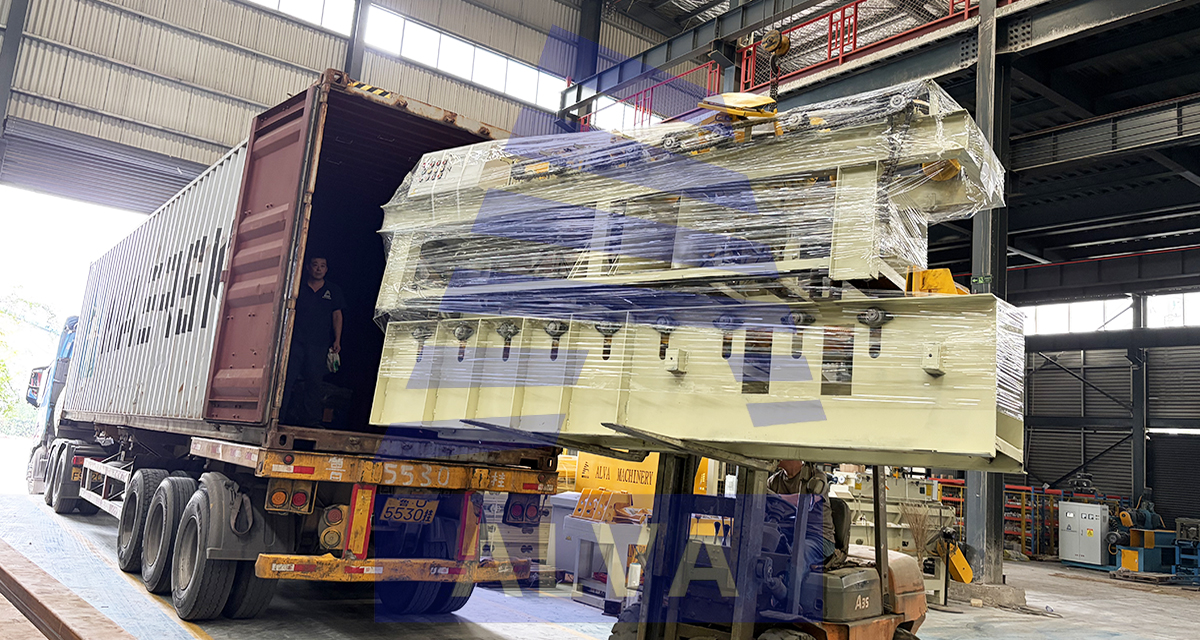
With the continuous development of the global wood processing industry, automated, continuous, and integrated wood processing equipment has become an important part of modern production. Recently, a complete small log veneer peeling production line manufactured by Shandong Alva Machinery Group Co., Ltd. was officially shipped to Europe.
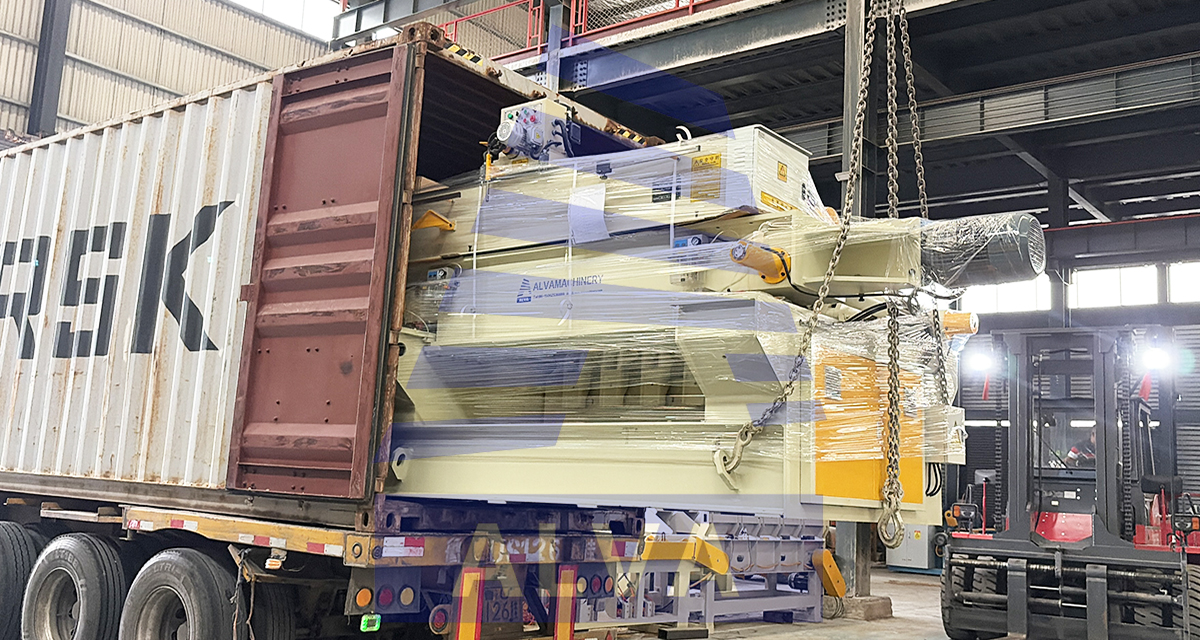
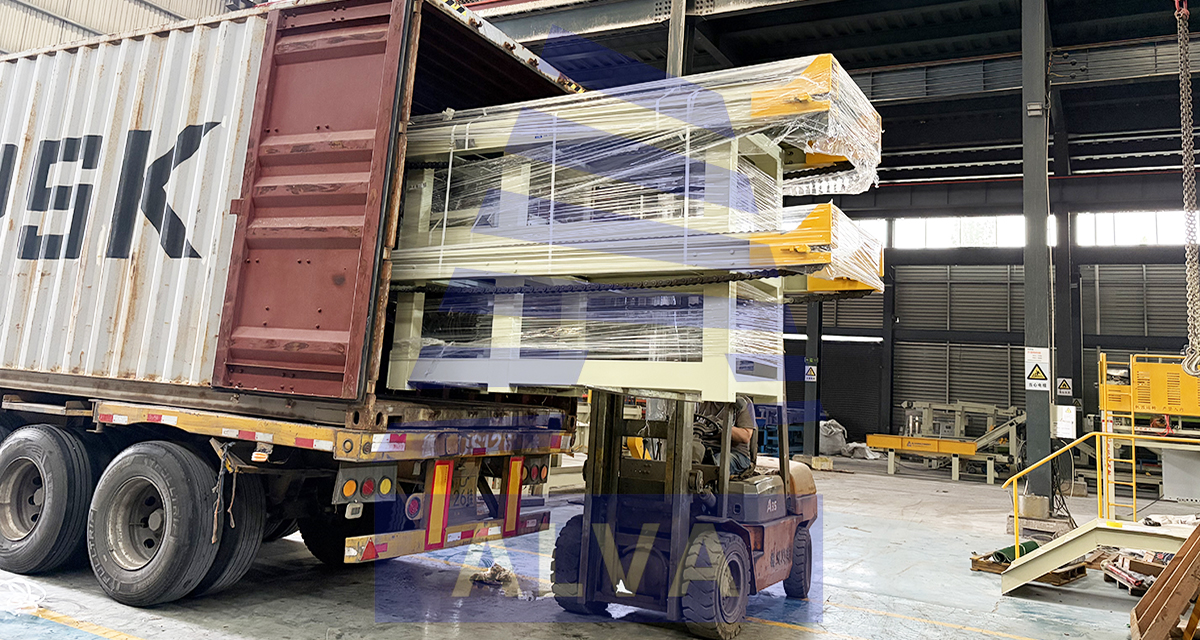
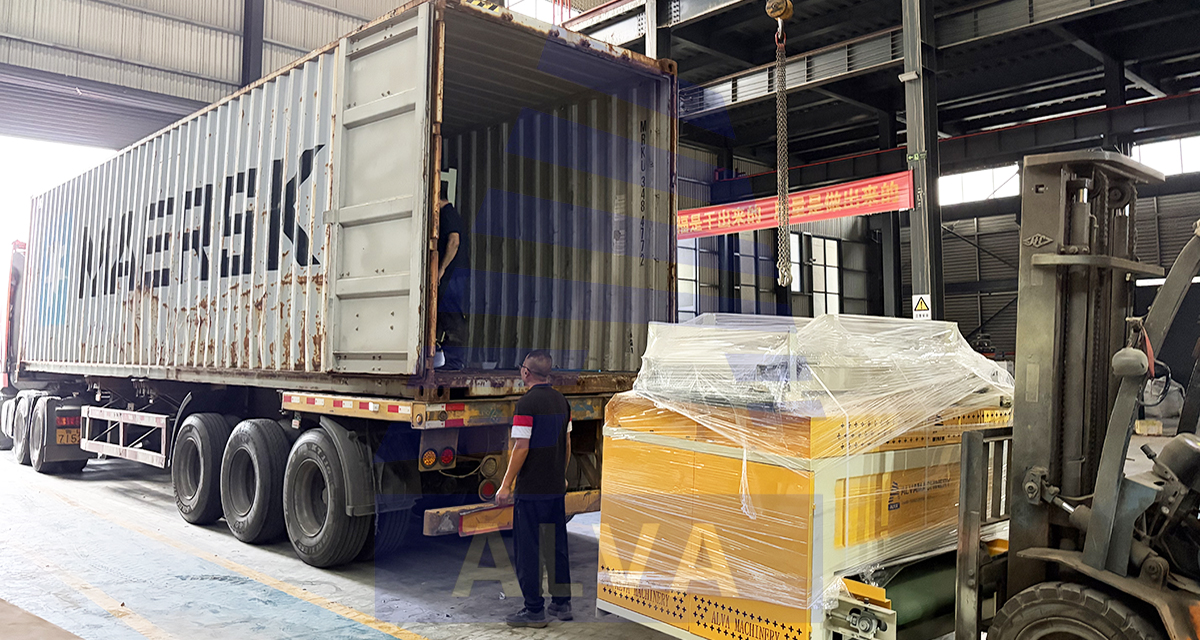
From early morning until sunset, the Alva Machinery production and logistics teams worked continuously to complete the loading of three containers. The shipment included a complete range of wood processing equipment, including a log saw, log feeding machine, log rounding machine, veneer peeling machine, small log veneer peeling machine, and veneer stacking machine.
The production line was designed and manufactured according to the customer's wood processing requirements. It connects several important stages of production, from raw log preparation and feeding to rounding, veneer peeling, and finished-product stacking.
The completion of container loading marks an important stage in the delivery of this European project. It also represents the transition of the production line from the manufacturing workshop in China to the customer's production site in Europe.
For Alva Machinery, every international shipment is not simply the transportation of equipment. It is also an important part of the company's manufacturing process, quality management, international service, and long-term cooperation with customers.
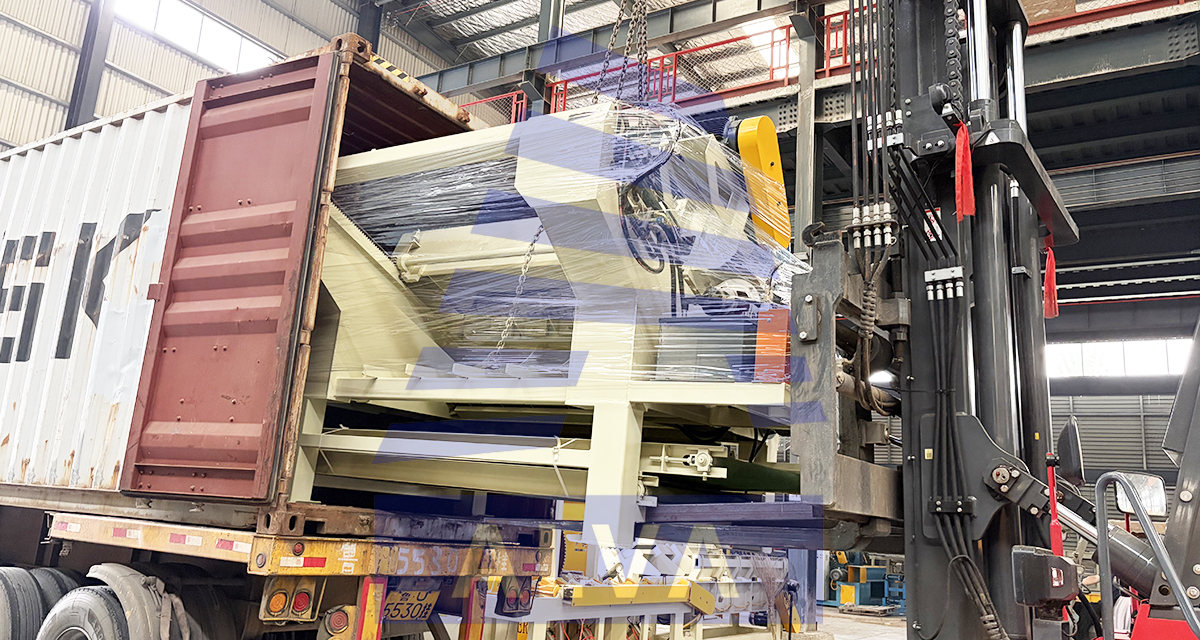
From Manufacturing to Delivery: A Complete Production Process
For a wood processing machinery manufacturer, the delivery of a production line involves much more than moving equipment out of the factory. It represents the completion of a process that includes technical communication, production planning, mechanical manufacturing, assembly, testing, packaging, and shipment.
During the manufacturing of this small log veneer peeling production line, the Alva Machinery technical team communicated with the customer regarding the required processing method, production flow, and equipment configuration.
Based on these requirements, the technical team planned the production line layout and the connection between individual machines. The purpose was to ensure that each stage could work together as part of a continuous production process.
During manufacturing, different departments worked together, including mechanical processing, welding, assembly, electrical installation, inspection, and testing.
After assembly, the equipment was inspected and tested before entering the packing and shipping stage.
A production line consists of multiple machines, and the performance of each individual machine can influence the overall production process. Therefore, before shipment, Alva Machinery conducts inspections of the machine structure, electrical system, transmission components, and related auxiliary systems.
The equipment is then prepared for international transportation.
The shipment to Europe demonstrates Alva Machinery's approach to production line manufacturing and international equipment delivery.
Loading Began in the Early Morning and Continued Until Sunset
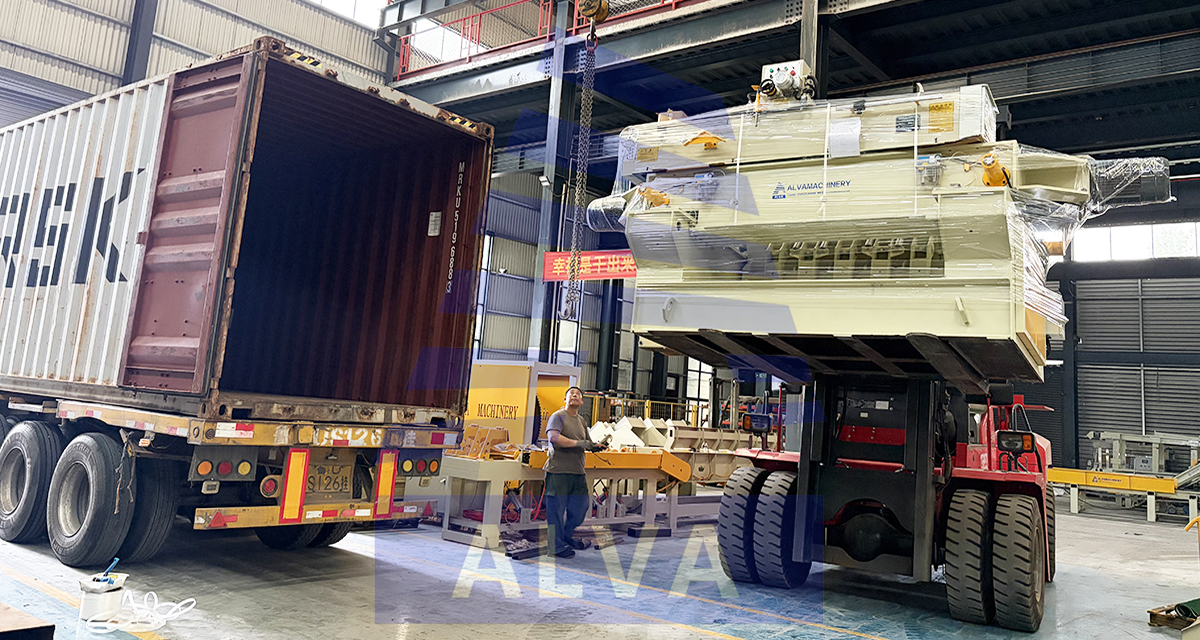
The loading process began early in the morning.
Before loading started, the equipment had already been organized according to the shipping plan. Because the production line contains different types of machines, auxiliary components, and supporting parts, the loading sequence had to be carefully planned.
During container loading, the team considered the dimensions, weight, structure, and transportation requirements of each machine.
Large machines were positioned according to the overall loading plan, while smaller equipment and accessories were arranged in suitable locations and secured to reduce movement during transportation.
The log saw, feeding machine, log rounding machine, veneer peeling machine, small log veneer peeling equipment, and stacking machine were gradually loaded into the containers.
The loading team considered not only how to make effective use of the container space, but also how the customer would unload and install the equipment after arrival.
From the beginning of the morning until the sun gradually moved toward the horizon, the team continued working.
After a full day of loading, all three containers were completed and prepared for transportation to Europe.
The end of the loading process marked the official departure of this production line from the Alva Machinery factory.
For Alva Machinery, every shipment represents a responsibility to the customer and the beginning of another stage of cooperation.
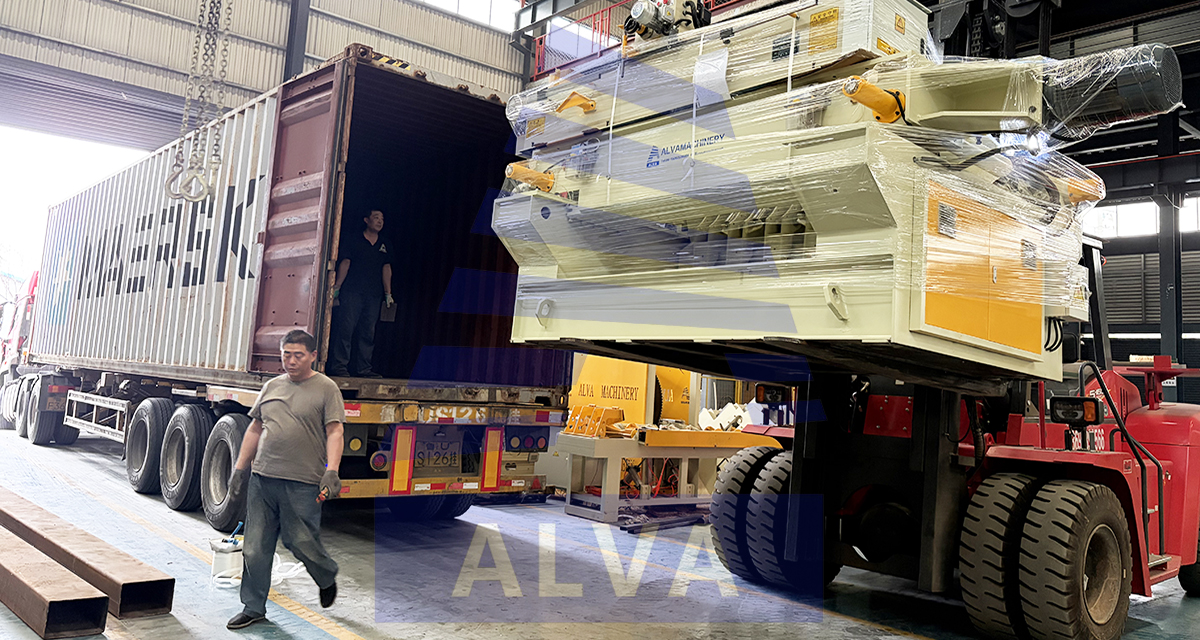
A Complete Small Log Veneer Peeling Production Line
The small log veneer peeling production line is one of the integrated wood processing solutions developed according to the needs of modern wood processing enterprises.
As applications for wood products continue to expand, manufacturers increasingly require equipment capable of handling different types and sizes of raw materials.
Traditional wood processing methods may involve several independent operations and significant manual handling. An integrated production line connects different processing stages through mechanical equipment, creating a more continuous production process.
The European project includes a log saw, log feeding machine, log rounding machine, veneer peeling machine, small log veneer peeling equipment, and veneer stacking equipment.
The production process begins with raw log preparation.
The log saw performs the initial processing required before the logs enter the following stages. After that, the feeding machine transports the logs to the next processing area.
The log rounding machine then processes the logs to prepare them for veneer peeling.
The veneer peeling machine performs the core cutting process, converting the processed logs into veneer products.
The small log veneer peeling equipment provides an additional processing option for specific raw materials and product requirements.
After peeling, the veneer products are transferred to the stacking section, where the stacking machine organizes the finished products for subsequent handling, storage, or further processing.
By connecting these stages, the production line provides the customer with a complete wood processing workflow.
Log Saw: An Important Starting Point for Log Processing
The log saw is one of the first pieces of equipment in the production line.
Before logs enter the veneer peeling process, they often require preliminary processing. The log saw performs this initial stage and prepares the raw material for subsequent operations.
Natural logs can differ in shape, size, and surface condition. Proper preliminary processing can make the logs more suitable for subsequent equipment and help improve the continuity of the production process.
When designing a complete production line, Alva Machinery considers the characteristics of the customer's raw materials and plans the equipment arrangement accordingly.
In this European project, the log saw is connected with the feeding, rounding, and veneer peeling equipment to form a continuous processing sequence.
Log Feeding Machine: Connecting Different Production Stages
Material feeding is an important part of an automated wood processing line.
In traditional production environments, logs may need to be moved manually between different processing stages. This can increase labor requirements and interrupt the production flow.
A mechanical feeding system can transport logs from the storage or preparation area toward the processing equipment, reducing manual handling and improving the connection between different operations.
For continuous wood processing, a stable material feeding process is important.
The feeding machine included in this Alva Machinery production line is designed as part of the complete system and works together with the log saw, rounding machine, and veneer peeling machine.
Log Rounding Machine: Preparing Logs for Veneer Peeling
The log rounding machine is another important part of the small log veneer peeling production line.
Its main function is to process the shape of the logs so that they are better prepared for the veneer peeling process.
Natural logs do not always have a regular cylindrical shape. Directly processing irregular logs may affect the subsequent peeling process.
Through rounding, the log shape can be processed to better meet the requirements of the veneer peeling equipment.
The log rounding machine therefore serves as an important connection between the raw log preparation stage and the veneer peeling stage.
Shandong Alva Machinery Group has continued to develop and manufacture wood processing machinery according to different customer requirements.
In this European project, the rounding machine works together with the veneer peeling equipment to complete an important part of the log processing process.
Veneer Peeling Machine: The Core Processing Equipment
The veneer peeling machine is one of the core machines in the production line and is also an important product category manufactured by Alva Machinery.
Rotary veneer peeling uses the rotation of the log together with a cutting blade to produce continuous sheets of veneer.
Veneer products can be used as raw materials for plywood manufacturing, packaging materials, and various other wood products.
As the wood processing industry develops toward automation, customers increasingly focus not only on the basic cutting function of a machine, but also on production continuity, equipment stability, operation, and integration with other machines.
Alva Machinery's veneer peeling equipment is designed with attention to machine structure and production-line integration.
In this European project, the veneer peeling machine performs the main cutting operation and works together with the rounding machine, feeding system, and stacking equipment.
Small Log Veneer Peeling Machine: Supporting Specific Processing Requirements
The development of the wood products industry has created demand for different types and specifications of processed wood products.
The small log veneer peeling machine is designed to support specific processing requirements within the overall production system.
Compared with a single-machine production method, an integrated small log veneer peeling line provides a more systematic approach to raw material preparation, peeling, and product handling.
Small-sized wood products can be used in various applications, including furniture manufacturing, packaging, panel production, and other wood processing industries.
As a result, small log veneer peeling equipment has become an important part of certain wood processing production lines.
Alva Machinery continues to improve the machine structure, processing method, and production-line integration of its small log veneer peeling equipment.
The European production line includes not only the main peeling equipment but also the necessary supporting machines, allowing the customer to establish a complete processing workflow.
Veneer Stacking Machine: Improving Finished-Product Handling
Finished-product handling is an important part of an automated production line.
In traditional production, finished veneer products may need to be collected and arranged manually. This can increase labor requirements and affect the continuity of the production process.
The veneer stacking machine provides an automated method for organizing the processed veneer products.
As the downstream equipment of the production line, the stacking system connects the processing stage with the finished-product handling stage.
Alva Machinery considers both the core processing equipment and the supporting processes when designing a complete production solution.
The goal is to create a production line in which the major stages are properly connected and the customer can manage the finished products more efficiently.
Manufacturing Equipment for the European Market
Europe has a mature wood processing industry and established requirements for woodworking machinery, equipment stability, production management, and technical service.
As wood processing enterprises continue to improve their production systems, demand for automated equipment and integrated production lines continues to develop.
European customers generally consider not only the processing functions of machinery but also equipment manufacturing quality, delivery arrangements, technical support, installation, and long-term service.
Shandong Alva Machinery Group has continued to serve wood processing customers in international markets and has developed experience in manufacturing and exporting woodworking machinery.
The shipment of this small log veneer peeling production line is another example of Alva Machinery's international cooperation.
From the initial technical communication to production planning, manufacturing, inspection, and final container loading, the project involved cooperation between different teams within the company.
For export machinery, international transportation must also be considered during the manufacturing and packing stages.
Equipment packaging, container space utilization, securing methods, and subsequent installation requirements all form part of the delivery process.
Alva Machinery prepares and secures equipment according to transportation requirements to help ensure that the machines arrive at the customer's site in suitable condition.
The complete process, from manufacturing to container loading, represents an important part of Alva Machinery's international equipment delivery system.
From Equipment Delivery to Long-Term Cooperation
For a woodworking machinery manufacturer, completing a production line is not the end of the cooperation. It is the beginning of another stage of service.
Shandong Alva Machinery Group focuses on customer requirements throughout the equipment procurement, installation, commissioning, and operation processes.
Through technical communication and service support, Alva Machinery aims to help customers complete equipment installation and put the production line into operation according to the planned production process.
The European small log veneer peeling production line required cooperation between the customer and Alva Machinery from the initial technical discussions through final shipment.
The technical team, production department, quality management personnel, and export service team all participated in different stages of the project.
Every international shipment reflects the company's approach to manufacturing and its understanding of overseas customer requirements.
Understanding Customer Requirements and Developing Suitable Solutions
Wood processing companies in different regions may work with different raw materials, product specifications, and production methods.
For this reason, woodworking machinery should be planned according to the actual conditions of each project rather than simply using one standard configuration for every customer.
During this European project, the Alva Machinery team communicated with the customer regarding the required wood processing flow, product requirements, and production method.
Based on this information, the team developed a complete production-line configuration.
From raw log preparation to veneer peeling and finished-product stacking, each stage was planned as part of one integrated production process.
The objective was to reduce unnecessary gaps between individual machines and provide a continuous processing sequence.
Alva Machinery believes that suitable equipment should be based on the customer's actual production requirements.
A machine can provide long-term value only when its functions, configuration, and production process match the customer's working conditions.
Manufacturing Control for Export Equipment
Equipment quality is one of the foundations of a machinery manufacturer's long-term development.
During production, Alva Machinery manages different stages including mechanical processing, welding, assembly, electrical installation, inspection, and testing.
From individual components to complete machine assembly, each stage follows corresponding production requirements.
After assembly, the equipment is inspected and tested before shipment to confirm that the relevant functions meet the design requirements.
For export equipment, quality control is particularly important because the machines must be transported over long distances before being installed and operated at the customer's facility.
Equipment structure, transportation safety, packaging, and installation requirements therefore all need to be considered.
Before the European production line was loaded into containers, the equipment was inspected and prepared according to the transportation plan.
From early morning until the completion of loading in the evening, the team carried out equipment positioning, handling, securing, and other related work.
Every part of this process was completed with the goal of ensuring that the equipment could reach the customer safely and be prepared for installation.
Chinese Manufacturing Serving the International Wood Processing Industry
The development of China's woodworking machinery industry has created opportunities for Chinese manufacturers to participate in international markets.
With continued improvements in manufacturing technology, product development, and service capabilities, Chinese woodworking machinery companies are increasingly working with customers in different regions.
Shandong Alva Machinery Group continues to monitor developments in the global wood processing industry and improve its product portfolio and production capabilities.
The demand for automated wood processing systems continues to develop. From individual machines to complete production lines, and from conventional processing to more integrated production systems, the industry is undergoing continuous change.
Alva Machinery continues to develop and manufacture woodworking machinery based on market requirements and customer applications.
The European small log veneer peeling production line is another example of Alva Machinery's participation in international wood processing projects.
The machines will leave the manufacturing facility in Shandong, travel through the international transportation process, and eventually be installed at the customer's production site in Europe.
The shipment represents not only a group of machines, but also the beginning of another stage of cooperation between the two companies.
Building Complete Wood Processing Solutions Around Customer Requirements
The development of the wood processing industry requires suitable machinery, while machinery manufacturers must continue to adapt to changes in the market.
Shandong Alva Machinery Group remains focused on customer requirements and continues to improve its product development, manufacturing, and service capabilities.
For different customers, Alva Machinery provides not only individual machines but also complete production-line solutions based on the customer's actual processing requirements.
From the moment raw logs enter the production line to the final stacking of finished veneer products, every stage requires effective coordination between different machines.
The European small log veneer peeling production line includes a log saw, feeding machine, log rounding machine, veneer peeling machine, small log veneer peeling equipment, and stacking equipment.
Through the integration of these machines, the customer receives a complete processing system rather than a collection of independent machines.
In the future, Alva Machinery will continue to focus on the needs of the wood processing industry, improve product development and manufacturing capabilities, and provide woodworking machinery and complete processing solutions for customers in China and international markets.
Three Containers Depart from the Factory and Begin a New European Project
As the sun gradually set, the final machine was secured and the loading process was completed.
From the early morning start to the completion of three containers, the entire day recorded not only the shipment of a production line but also an important stage in the journey of a Chinese-made woodworking system toward the international market.
Every equipment shipment represents a connection between the manufacturer and the customer.
The small log veneer peeling production line shipped to Europe will soon arrive at the customer's production site and become part of its wood processing operation.
For Shandong Alva Machinery Group, this shipment is another step in the company's international development and another opportunity to build long-term cooperation with an overseas customer.
From manufacturing in Shandong to serving customers around the world, Alva Machinery will continue to focus on woodworking machinery manufacturing, improve its production and technical capabilities, and provide complete wood processing solutions based on customer requirements.
Every machine, every production line, and every international delivery represents part of this ongoing process.
As the three containers leave the Alva Machinery factory and begin their journey to Europe, a new stage of cooperation is also beginning.
Shandong Alva Machinery Group will continue to work with wood processing enterprises around the world and provide machinery and production-line solutions for the development of the global woodworking industry.

 English
 العربية
 Français
 Русский
 Español
 Português
 Deutsch
 italiano
 日本語
日本語 한국어
한국어 Nederlands
 Tiếng Việt
 ไทย
ไทย Polski
 Türkçe
 አማርኛ
አማርኛ ພາສາລາວ
 ភាសាខ្មែរ
 Bahasa Melayu
 ဗမာစာ
ဗမာစာ தமிழ்
தமிழ் Filipino
 Bahasa Indonesia
 magyar
 Română
 Čeština
 Монгол
 қазақ
қазақ Српски
 हिन्दी
 فارسی
فارسی Kiswahili
 Slovenčina
 Slovenščina
 Norsk
Norsk Svenska
 українська
 Ελληνικά
 Suomi
Suomi Հայերեն
 עברית
עברית Latine
 Dansk
Dansk اردو
اردو Shqip
Shqip বাংলা
বাংলা Afrikaans
 Māori
Māori অসমীয়া
 Беларуская мова
 Català


