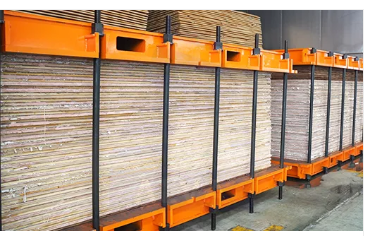
Wood drying requires precise temperature control. A drying kiln removes moisture safely and efficiently. It prevents warping, cracking, and shrinkage in lumber. In this article, you will learn typical kiln temperatures, their impact on wood properties, and best operational practices.
Temperature Ranges in Wood Drying Kilns
Conventional Hardwood Kilns
Hardwood drying kilns generally maintain dry-bulb temperatures between 120°F and 190°F, depending on wood species, thickness, and moisture content, and softwoods in some cases can be exposed to temperatures up to 240°F. Automated or semi-automated systems maintain stable heat and humidity throughout the drying process, ensuring uniform moisture reduction and minimizing surface defects. Alva kilns, such as models ALVA-01 and ALVA-02, offer touch-screen control for precise temperature management, allowing operators to adjust heat according to species and thickness, improving wood performance.
Low-Temperature Kilns
Predryers and low-temperature kilns, often used for delicate wood species or plywood, operate below 120°F, reducing stress on the wood and minimizing surface defects. These kilns are ideal for high-value hardwoods, veneers, and thin panels where maintaining structural integrity and surface appearance is critical.
High-Temperature Kilns
Some softwoods and low-value hardwoods use high-temperature schedules, reaching up to 270°F for fast drying. Alva kilns provide scientific temperature and humidity control that accelerates drying while ensuring uniformity and minimizing the risk of cracks or deformation.
Vacuum and Dehumidification Kilns
Vacuum kilns lower the boiling point of water, allowing thick or dense wood to dry at lower temperatures, which prevents cracking or internal stress. Dehumidification kilns circulate warm air around 95–140°F, often with heat recovery systems to improve energy efficiency while maintaining consistent drying quality.
Choosing the right temperature range for specific species ensures optimal wood quality and reduces waste.
How Temperature Affects Wood Properties
● Moisture Removal
Heat drives moisture from wood in two stages: free water exits first, followed by bound water in the cell walls. As the moisture content decreases, more energy is required, making precise temperature control essential to prevent internal stress or cracks.
● Surface Quality
High temperatures can darken wood or affect resin distribution, while controlled low-temperature drying preserves smooth surfaces and prevents checks or splitting. Kilns like the Alva models ensure uniform drying that maintains the aesthetic qualities of high-value wood.
● Strength and Stability
Proper kiln heat preserves the wood’s mechanical strength, including toughness and compression resistance. Overheating can reduce durability and increase shrinkage, so precise control is vital, especially for thicker boards.
● Shrinkage and Warp
Maintaining a consistent temperature reduces warping, cupping, and bowing. Alva kilns are designed to maintain uniform airflow and temperature across the drying chamber, minimizing differential shrinkage.
Wood Property | Effect of Proper Kiln Temperature | Risk of Overheating/Improper Control |
Moisture Content | Target moisture achieved | Cracking, uneven drying |
Surface Quality | Smooth, defect-free | Checking, discoloration |
Structural Strength | Maintained or enhanced | Reduced toughness, brittleness |
Dimensional Stability | Minimal warp or shrinkage | Cupping, bowing, internal stress |
Consistent temperature control ensures high-quality, defect-free lumber suitable for furniture and flooring.
Monitoring and Controlling Kiln Heat
Operators use dry-bulb and wet-bulb thermometers to measure both temperature and relative humidity, which allows them to calculate the drying force accurately and ensure consistent moisture removal throughout the kiln. Modern drying kilns, including advanced Alva models, feature touch-screen automated systems that continuously adjust heat, humidity, and airflow based on real-time sensor data, significantly reducing human error and improving energy efficiency. In addition to automation, operators can manually fine-tune settings for mixed loads, uneven boards, or special wood species using fans, baffles, and portable thermometers, ensuring uniform drying and preventing defects such as warping, cracking, or surface checking. Combining automated controls with skilled manual adjustments allows for optimal wood quality, higher production efficiency, and more reliable drying results across different wood types and sizes.
Kiln Drying Schedules and Timing
● Time-Temperature Relationship
Higher temperatures allow shorter drying periods; for example, 180°F for 120 hours can match 270°F for just 9 hours. Alva kilns provide controlled environments that allow safe acceleration of drying schedules without compromising wood integrity.
● Species-Specific Schedules
Hardwoods like oak and maple require slower drying with moderate heat to preserve toughness, while softwoods like pine and fir can tolerate higher temperatures for shorter periods.
● Thickness Considerations
Thicker boards demand lower temperatures or longer schedules to allow moisture to exit evenly from the core, preventing internal tension, cracking, or warping.
● Conditioning and Cooling Phases
After the drying cycle, controlled cooling stabilizes the moisture content, relieves internal stress, and prevents defects such as surface checking or casehardening, ensuring lumber is ready for machining or storage.
Special Kiln Types and Temperature Approaches
Solar Kilns
Solar kilns use sunlight and moderate temperatures to slowly dry lumber, making them particularly suitable for small-scale, low-volume, or eco-friendly operations. Although drying times are significantly longer compared to conventional kilns, the energy costs are minimal, and the system requires little fuel input, making it an environmentally sustainable and cost-effective solution for artisanal or remote wood processing.
Heat Pump Kilns
Efficient heat pump systems maintain moderate temperatures and stable energy use, making them ideal for drying delicate wood species or thin veneers that are prone to cracking or warping. These systems provide precise control over both temperature and humidity, ensuring consistent moisture removal while minimizing energy consumption, and they offer a reliable, cost-effective, and environmentally friendly solution for manufacturers seeking high-quality wood drying with reduced operational risks.
Vacuum Kilns
Vacuum kilns reduce water’s boiling point, allowing thick or high-value boards to dry at lower temperatures, which minimizes internal stress and reduces shrinkage, warping, and cracking. By creating a controlled low-pressure environment, vacuum kilns enable faster moisture removal from dense or high-density wood while preserving structural integrity and surface quality, making them particularly suitable for valuable hardwoods, engineered panels, and specialty lumber where precision and defect-free results are essential for high-end applications.
Steam and Oil-Fired Kilns
These kilns deliver rapid, uniform heat with precise control, making them highly suitable for high-throughput industrial operations where consistent quality and minimal defects are critical. They allow operators to complete drying cycles more quickly while maintaining uniform moisture distribution across all boards, reducing waste, enhancing productivity, and ensuring that large batches of lumber meet strict structural and aesthetic standards required for furniture, flooring, cabinetry, and other commercial applications.
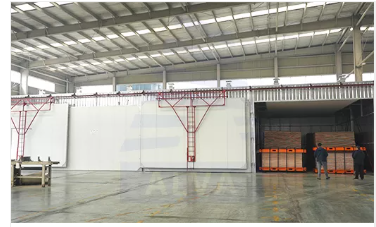
Safety and Operational Considerations
Preventing overheating is critical in a drying kiln because high temperatures can pose serious fire risks and compromise the structural integrity of wood if not carefully managed, making it essential to follow species-specific heat schedules to avoid accidents and maintain product quality. Worker safety is equally important, and proper ventilation, insulated surfaces, and the use of protective equipment protect operators from heat exposure, burns, and inhalation hazards during kiln operation. Additionally, monitoring wood quality through regular checks with moisture probes and sample boards ensures that lumber dries evenly and as intended, preventing defects such as cracks, internal collapse, or uneven moisture content. Implementing comprehensive safety protocols and combining them with diligent wood monitoring not only safeguards personnel but also ensures consistent, high-quality kiln-dried wood for industrial or commercial use.
Energy Efficiency and Environmental Factors
Heat Recycling
Dehumidification kilns are designed to recover energy from the moisture that evaporates during the drying process, capturing and reusing heat that would otherwise be lost, which significantly reduces overall operational costs while ensuring that the wood dries evenly and consistently throughout the entire load. This energy recovery process not only improves efficiency but also supports sustainable and environmentally friendly operations by lowering electricity or fuel consumption, making dehumidification kilns an ideal choice for manufacturers seeking high-quality, cost-effective, and eco-conscious wood drying solutions.
Fuel Sources
Kilns can operate using a variety of energy sources, including electricity, steam, gas, solar power, or hybrid systems that combine multiple fuel types, and the choice of energy directly affects the kiln’s overall efficiency, operating costs, and environmental impact. Electricity-powered kilns offer precise control and cleaner operation, steam or gas-fired kilns provide rapid heating and high throughput for industrial-scale drying, while solar or hybrid systems can reduce reliance on fossil fuels and lower carbon emissions. Selecting the appropriate fuel type allows manufacturers to balance performance, cost-effectiveness, and sustainability, ensuring that the drying process is both efficient and environmentally responsible.
Environmental Impact
Efficient temperature management within a drying kiln plays a crucial role in reducing both energy consumption and greenhouse gas emissions, which not only lowers operational costs but also supports sustainable, environmentally responsible wood processing practices. By maintaining precise control over heat, airflow, and humidity, operators can minimize energy waste while ensuring that each piece of lumber dries uniformly, preventing defects and improving overall product quality. This careful temperature regulation enables manufacturers to optimize production efficiency, reduce carbon footprint, and achieve cost-effective operations without compromising the structural integrity or aesthetic properties of the wood.
Kiln Type | Typical Temperature Range (°F) | Energy Consideration |
Conventional Hardwood | 120–190 | Moderate energy use, automated control |
Low-Temperature Predryer | <120 | Low energy, slow drying |
High-Temperature Softwood | Up to 270 | High energy, short schedules |
Dehumidification Kiln | 95–140 | Energy-efficient, recycles heat |
Alva Wood Drying Kiln | 95–50°C rated | Automatic control, consistent drying |
Conclusion
Wood drying kilns operate across a wide temperature range from approximately 95°F in dehumidification and low-temperature kilns up to 270°F for high-heat softwood schedules, and temperature selection directly impacts drying speed, surface quality, structural strength, and dimensional stability. Using modern kilns, such as the Alva wood drying kiln, ensures precise control of temperature, humidity, and airflow, resulting in uniform, high-quality lumber suitable for furniture, flooring, and industrial applications. Proper heat management reduces defects, improves operational efficiency, and supports sustainable, cost-effective wood processing.
FAQ
Q: What is a wood drying kiln?
A: A drying kiln is a controlled chamber that removes moisture from lumber to prevent warping, cracking, and shrinkage.
Q: Why is temperature control important in a drying kiln?
A: Precise temperature ensures uniform drying, preserves wood strength, and prevents defects such as cracks or warping.
Q: Can all wood types handle the same kiln heat?
A: No, hardwoods require moderate heat, while softwoods tolerate higher temperatures and faster drying cycles.
Q: How long does wood stay in a drying kiln?
A: Drying time depends on species, thickness, and temperature, ranging from days to several weeks.
Q: Are vacuum and dehumidification kilns safer for high-value wood?
A: Yes, they use lower temperatures, minimizing stress, shrinkage, and surface defects while maintaining quality.

 English
 العربية
 Français
 Русский
 Español
 Português
 Deutsch
 italiano
 日本語
日本語 한국어
한국어 Nederlands
 Tiếng Việt
 ไทย
ไทย Polski
 Türkçe
 አማርኛ
አማርኛ ພາສາລາວ
 ភាសាខ្មែរ
 Bahasa Melayu
 ဗမာစာ
ဗမာစာ தமிழ்
தமிழ் Filipino
 Bahasa Indonesia
 magyar
 Română
 Čeština
 Монгол
 қазақ
қазақ Српски
 हिन्दी
 فارسی
فارسی Kiswahili
 Slovenčina
 Slovenščina
 Norsk
Norsk Svenska
 українська
 Ελληνικά
 Suomi
Suomi Հայերեն
 עברית
עברית Latine
 Dansk
Dansk اردو
اردو Shqip
Shqip বাংলা
বাংলা Afrikaans
 Māori
Māori অসমীয়া
 Беларуская мова
 Català


