In high-volume wood processing, managers frequently reduce "efficiency" to simple machine cycle times. This narrow focus ignores massive operational impacts like mounting scrap rates, sudden energy spikes, and idle thermal recovery periods. You need a more holistic view to optimize production. Deciding to implement a Hot Press Dryer requires balancing upfront energy consumption against exponential gains in daily throughput and overall material recovery. Does the rapid speed justify the heavy power draw?
This guide breaks down the vital thermodynamic realities, precise mechanical benchmarks, and hidden operational metrics. You will learn how to evaluate if this technology aligns directly to your facility's specific production bottlenecks and ROI targets. We will explore everything from advanced pressure curves to resin chemistry to help you make an informed equipment decision.
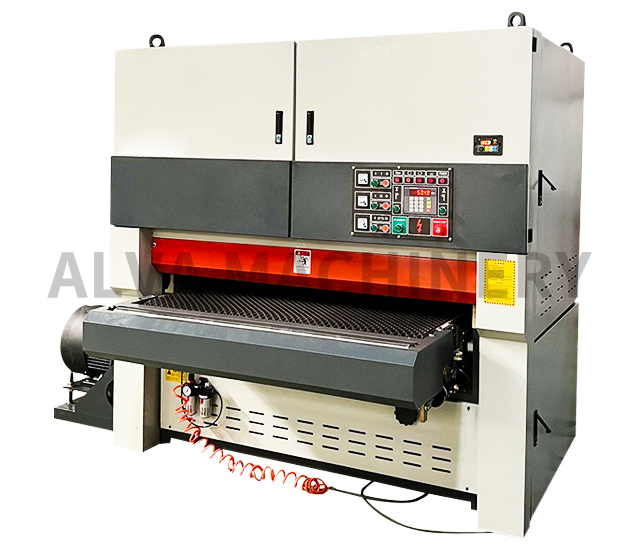
Key Takeaways
Drying Speed vs. Energy: Hot press drying can compress drying times to minutes (e.g., 4–8 minutes for specific veneers) while potentially reducing overall energy consumption compared to traditional kiln drying.
Quality & Yield: Applies precise pressure (typically 50–120 kg/cm²) during drying and pressing, improving cross-grain dimensional stability by up to 30–60% and directly increasing material recovery.
The Real Efficiency Formula: True equipment ROI isn't just cycle speed; it is calculated as *(Panels Produced × First-Pass Yield) ÷ (Energy Costs + Labor + Machine Downtime)*.
Procurement Warning: Scaling up to multi-daylight presses (e.g., 12+ layers) without automated loading often creates operational bottlenecks that negate the machine's speed advantages.
The Thermodynamics of Hot Press Drying: Heat and Mass Transfer
Understanding equipment efficiency requires exploring the core mechanisms driving heat and mass transfer. It goes far beyond simple mechanical compression. When you place a wet wood mat inside the machine, surface moisture vaporizes almost instantly upon platen contact. This rapid vaporization creates a strong internal pressure differential. It forcefully drives hot steam straight into the core of the board. This dynamic action accelerates internal heating. It simultaneously initiates rapid resin activation, ensuring molecular-level bonding across every fiber.
Industry baselines offer clear drying efficiency metrics. For dedicated drying applications, operating temperatures typically range from 250° to 450°F. Platen pressures usually sit between 25 and 75 psi. Using these exact parameters allows the core moisture content to reach a highly stable 4–6% rapidly. The process eliminates the slow moisture migration seen in ambient environments. It forcefully expels water vapor while the mechanical pressure prevents the wood cells from warping during the phase change.
We must also assess energy substitution. We compare direct contact heating against traditional convective kiln drying. Contact heating uses specialized thermal oil or steam. It transfers thermal energy directly into the wood fibers through heavy steel platens. Conversely, convective kilns waste massive amounts of energy heating ambient air and ventilating exhaust. Many engineered wood facilities report up to a 50% energy reduction after switching to contact heating methods for specific veneer applications. The heat stays concentrated exactly where you need it.
Hot Press vs. Cold Press: Justifying the Energy Expenditure
Facility managers often struggle to choose between thermal and ambient pressing solutions. You must contrast the two distinct technologies based on specific resin chemistry and overall production scale. Cold pressing requires almost no electrical heating energy, but it demands massive amounts of time and floor space. To evaluate your options effectively, we rely on a clear set of operational criteria.
Evaluation Criteria | Hot Press Technology | Cold Press Technology |
Curing Speed | Minutes (4 to 8 minutes) | Hours (often 4 to 24 hours) |
Resin Compatibility | Thermosetting resins (Urea-formaldehyde) | Standard PVA or ambient cure adhesives |
Material Suitability | Composites, MDF, OSB, veneers | Heat-sensitive solid woods, thick doors |
Energy Draw | High (requires thermal oil/steam boilers) | Low (requires basic hydraulic power only) |
Where does hot pressing actually win? It dominates in high-volume output environments. Operations relying heavily on thermosetting resins, like urea-formaldehyde, require intense heat to trigger chemical curing. The high initial energy cost is quickly offset by the molecular-level bonding speed. You cut curing times from long hours down to mere minutes. This speed clears your production floor and accelerates shipping schedules.
Conversely, cold pressing wins in highly specific scenarios. Operations handling heat-sensitive solid woods cannot risk rapid moisture migration. Sudden thermal shocks could easily cause discoloration, cellular collapse, or severe structural stress. Cold pressing keeps the ambient environment stable. It preserves the natural aesthetic of luxury hardwoods while the adhesive cures naturally.
Your decision framework should map this choice directly to facility throughput limits. Walk through your plant. If your current bottleneck is physical floor space taken up by endless stacks of curing inventory, you have a problem. In this exact scenario, the energy premium of a heated system becomes fully justified. You are buying floor space and velocity, not just a machine.
Hidden Efficiency Multipliers: Evaluating Machine Specifications
Equipment buyers frequently obsess over maximum tonnage. They ignore the nuanced mechanical features driving actual daily output. To accurately gauge machine performance, you must evaluate three hidden efficiency multipliers.
Thermal Recovery Rates: We need to challenge the "fast closing speed" myth. True efficiency relies on rapid thermal recovery. When cold wood touches hot steel, the platen temperature drops instantly. Outdated equipment takes 60 to 90 seconds to reheat back to the target temperature. Modern thermal oil circulation systems recover in just 20 to 25 seconds. This rapid recovery significantly reduces shift downtime. Over an eight-hour shift, shaving 40 seconds off every cycle yields massive production gains.
Hydraulic System Engineering: Relying on a single-speed hydraulic pump wastes time and ruins panels. Highlight the absolute necessity of dual-speed hydraulics. The system should execute a rapid approach at roughly 150 mm/s. It must then instantly slow down for precise pressing at about 15 mm/s. This dual action shaves seconds off each open-and-close cycle. It also prevents the sudden impact from shifting the delicate glue lines or cracking the core veneers.
3-Stage Pressure Curves: Applying static "maximum pressure" immediately upon closure is a critical mistake. It causes severe glue squeeze-out and guarantees edge delamination. You must evaluate systems capable of executing variable pressure curves. The machine should apply light pressure initially for even glue spread. It transitions to medium pressure to accommodate adhesive viscosity drops as the heat penetrates. Finally, it applies high pressure for final structural curing. Advanced control logic reduces daily scrap rates from near 10% down to under 3%.
Measuring Material Recovery and Scrap Reduction
We often frame scrap reduction as the most overlooked efficiency metric in modern woodworking. Consider the "hidden" ROI of your production line. A heavy-duty machine producing 5% fewer defect boards is infinitely more efficient than a machine running 5% faster but ruining panels. Wasted panels cost you raw materials, adhesive, labor, and energy. Preventing these defects transforms your bottom line.
Dimensional stability plays a massive role in this material recovery equation. Combining intense heat and sustained mechanical pressure physically stabilizes the wood fibers. The fibers plasticize slightly under heat. They lock into their new compressed state as the resin cures. This process minimizes post-press warping. It also drastically reduces the need for heavy post-press processing. You spend less time sending warped boards through heavy sanders or finishing planners, saving both time and abrasive belts.
We must also note the role of these heavy presses in broader sustainability efforts. A highly efficient Hot Press Dryer excels at raw waste utilization. Facilities can capture raw wood waste, including loose chips and refined fibers. They mix these waste streams with industrial resins. The press converts this low-value scrap into high-margin engineered products like MDF, OSB, and structural Plywood. You literally turn sawdust into sellable inventory.
Sizing and Scalability: Avoiding Facility Bottlenecks
Purchasing a massive multi-layer press seems like an easy way to boost output. However, mismatched equipment creates severe facility bottlenecks. You must match your machine capacity directly to your actual material handling capabilities.
Here is a realistic framework for choosing daylights (platen layers):
Low/Mid Volume (<600 boards/day): Opt for 4 to 6 layers. A small manual team can load and unload this configuration without delaying the heating cycle.
High Volume (800–1400 boards/day): Select 8 to 9 layers. You will need basic lifting tables and organized staging areas to maintain a fluid rhythm.
Enterprise (>1500 boards/day): Choose 12+ layers. This scale absolutely requires fully automated loading and unloading racks.
We must warn buyers about a severe implementation risk. Purchasing a massive 12-layer press without corresponding auto-loading infrastructure leads directly to "batching bottlenecks." Manual operators take too long to fill all 12 slots. By the time they load the top layer, the bottom layers have already been sitting against hot steel for several minutes. The early layers over-cure and become brittle. The later layers under-cure. The machine's hypothetical speed advantage completely disappears.
Outline your integration requirements before installation day. A large industrial press requires robust facility support. You need adequate thermal oil infrastructure to handle the massive heating demands. You must ensure stabilized industrial power grids to prevent voltage drops when the heavy hydraulic pumps engage. Finally, you need skilled operator availability. Your team must understand advanced pressure curves and basic thermodynamic principles, not just how to push a start button.
Conclusion
A hot press drying system proves highly efficient, provided your facility processes a volume high enough to offset the considerable energy footprint. You must utilize thermosetting resins and composite materials that truly benefit from rapid thermal activation. When matched correctly to your product line, the technology drastically shrinks production cycles and significantly boosts your first-pass yield.
We recommend conducting a strict internal audit of your current scrap rates and curing bottlenecks. Do not simply shop for maximum tonnage. Advise your procurement team to demand documented thermal recovery times and variable pressure-curve capabilities from equipment manufacturers. Focus on acquiring a smart system capable of executing complex recipes, rather than just a heavy piece of steel.
FAQ
Q: How much energy does a hot press dryer consume compared to a kiln?
A: It generally consumes less overall energy per panel because it uses highly efficient contact heating rather than convective air heating. However, it requires a much higher peak electrical load during the initial heating phase. Once it reaches the target temperature, the operational maintenance load is relatively low.
Q: Can a hot press dryer process solid wood, or is it only for composites?
A: It primarily processes composites, veneers, and engineered panels. Using it on thick solid wood can cause extreme structural stress and severe discoloration. The rapid heat transfer causes moisture to migrate too quickly for thick solid lumber to handle without cracking.
Q: What is the typical maintenance cost for a hot platen system?
A: Maintenance costs are moderate but highly predictable. You must budget for routine thermal oil replacements, hydraulic seal wear due to continuous high pressure, and occasional platen resurfacing. Keeping the platens clean prevents resin buildup, which otherwise creates uneven pressure and expensive board defects.
Q: How does pressure affect the final moisture content?
A: Platen pressure physically prevents the wood cells from distorting while internal moisture boils into vapor. It controls the rate of steam escape. By maintaining strict pressure during the drying phase, the core reaches a highly stable final moisture content without warping the panel edges.

 English
 العربية
 Français
 Русский
 Español
 Português
 Deutsch
 italiano
 日本語
日本語 한국어
한국어 Nederlands
 Tiếng Việt
 ไทย
ไทย Polski
 Türkçe
 አማርኛ
አማርኛ ພາສາລາວ
 ភាសាខ្មែរ
 Bahasa Melayu
 ဗမာစာ
ဗမာစာ தமிழ்
தமிழ் Filipino
 Bahasa Indonesia
 magyar
 Română
 Čeština
 Монгол
 қазақ
қазақ Српски
 हिन्दी
 فارسی
فارسی Kiswahili
 Slovenčina
 Slovenščina
 Norsk
Norsk Svenska
 українська
 Ελληνικά
 Suomi
Suomi Հայերեն
 עברית
עברית Latine
 Dansk
Dansk اردو
اردو Shqip
Shqip বাংলা
বাংলা Afrikaans
 Māori
Māori অসমীয়া
 Беларуская мова
 Català


