| Availability: | |
|---|---|
| Quantity: | |

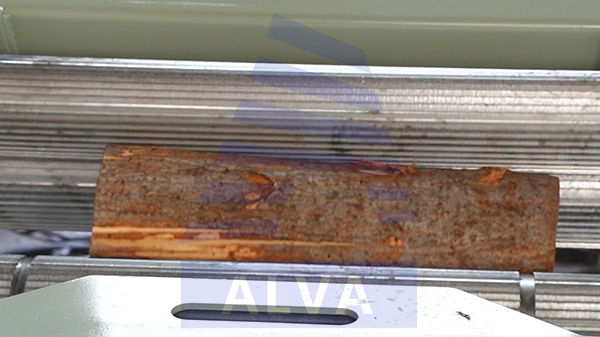
The 2-foot log rounding machine is a precision rounding equipment tailored for short logs of 0.61m. It is mainly suitable for raw material preprocessing needs of small wood processing workshops, furniture factories and small-batch veneer production lines. It can efficiently process small and medium-diameter wood species such as poplar, Chinese fir and miscellaneous wood, providing high-quality base materials with regular dimensions for subsequent fine peeling and slicing processes, and improving the yield of wood processing from the source.
Aiming at the characteristics of small diameter and light weight of 2-foot logs, the equipment innovatively adopts a compact structural design of "single-roller leading + side pressure positioning". It abandons the redundant components of traditional large-scale equipment, with the machine width reduced to 1.2m, and the floor space is only 50% of that of conventional 4-foot equipment, which can be flexibly installed in narrow processing spaces. The feeding end is equipped with an arc-shaped guide groove and a pneumatic pressing device, which can not only quickly complete the positioning and feeding of short logs, but also avoid the damage to the log surface through flexible pressure control, solving the industry pain points of short materials being prone to "slipping" and "shifting" during processing.
/ Product Specifications/
| Model | ALVA-WD-2FT |
| Log length | 600mm |
| Log diameter | 600mm |
| Speed | 70m/min |
| Total power | 35kw |
| Single roller motor | 11kw |
| Double roller motor | 11kw |
| Hydraulic station | 5.5kw |
| Weight | 3000kg |
| Size | 2150*2100*1350mm |
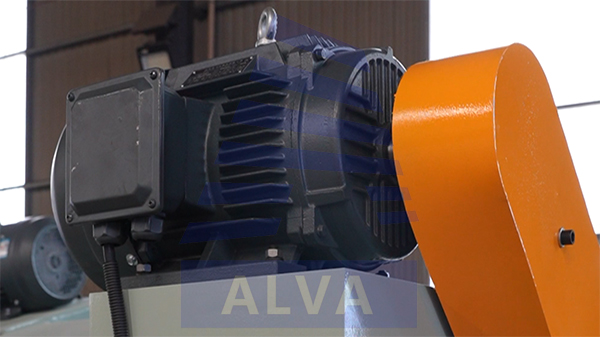
As the power source of the 2-foot log rounding machine, its motor boasts significant advantages. Firstly, the adoption of a high-efficiency and energy-saving motor ensures strong power output while effectively reducing energy consumption, which not only meets the current requirements for green production but also lowers the electricity costs in business operations. Secondly, the motor exhibits excellent operational stability with low vibration and low noise, enabling long-term continuous operation. It avoids frequent shutdowns caused by motor failures and improves production continuity and efficiency.
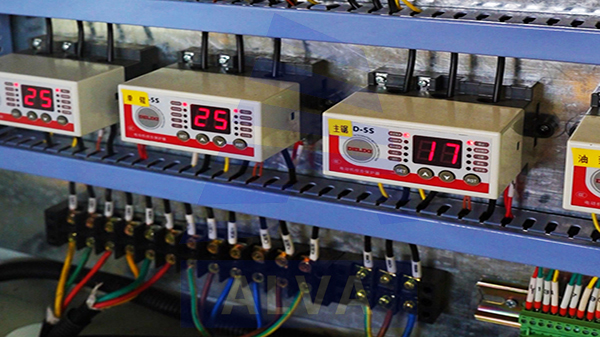
The transmission and functional components of the 2-foot log rounding machine also perform exceptionally well. Its transmission system features high precision and low loss, which can accurately transmit the motor power to ensure the synchronization and precision of each action during rounding operations. This results in a more uniform rounding effect on materials such as wood, which better meets the process requirements.
The 2-foot log rounding machine features a body made of high-strength and wear-resistant materials, combined with a scientifically designed structure. This integration of materials and structure not only enables the machine body to withstand long-term and high-intensity workloads, extending the overall service life of the equipment, but also maintains excellent structural stability under variable operating conditions. It ensures the precision and consistency of rounding operations, and minimizes the adverse impact on product quality caused by issues such as machine body deformation.
Poplar
eucalyptus
pine
Hardwood
Rubber Tree
Please consult
First, plug in the Log Debarking Machine and check the power supply,Adjust the blade distance based on your log’s thickness using the side knob,Place one end of the log on the feeding rail and push it gently into the machine,Let the machine process the log – it will exit with bark removed on the other side,After use, turn off the power and wipe the blades with a dry cloth

As your go-to supplier, ALVA offers more than just a Debarking Machine. We provide free online training to help your team operate it safely. If you run into issues, our technical team is available 24/7 via phone or email. We also stock replacement parts for sale, so you won’t wait long for fixes.

![]() | ![]() | ![]() | ![]() | ![]() | ![]() |
![]() | ![]() | ![]() | ![]() | ![]() | ![]() |
![]() | ![]() | ![]() | ![]() | ![]() | ![]() |
![]() | ![]() | ![]() | ![]() | ![]() | ![]() |
![]() | ![]() | ![]() | ![]() | ![]() | ![]() |
![]() | ![]() | ![]() | ![]() | ![]() | ![]() |
![]() | ![]() | ![]() | ![]() | ![]() | ![]() |
![]() | ![]() | ![]() | ![]() | ![]() | ![]() |
![]() | ![]() | ![]() | ![]() | ![]() | ![]() |
![]() | ![]() | ![]() | ![]() | ![]() | ![]() |
![]() | ![]() | ![]() | ![]() | ![]() | ![]() |
![]() | ![]() | ![]() | ![]() | ![]() | ![]() |