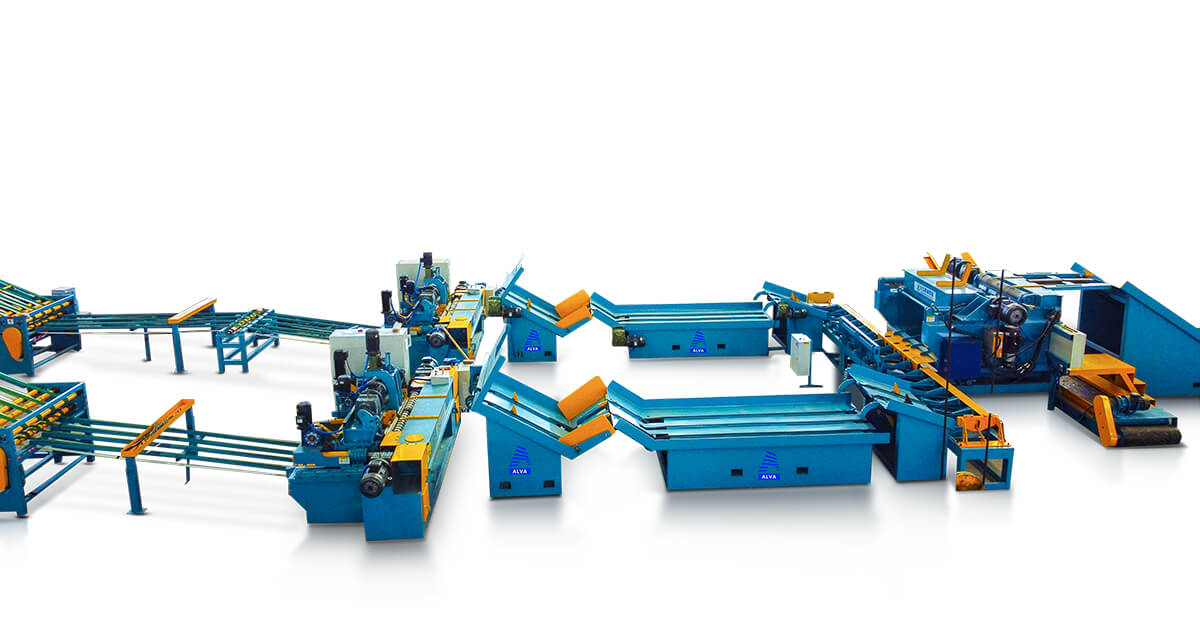
Veneer drying consumes up to 70% of the thermal energy and 60% of the total energy in plywood manufacturing. This immense energy draw makes it the primary operational bottleneck for most active mills. Many facilities view this drying stage simply as basic moisture removal. However, imprecise drying directly causes severe downstream failures across the production line. These costly defects include poor glue bonding, panel warping, and excessive formaldehyde emissions.
For plant managers and technical buyers, upgrading equipment is not just a capacity play. It acts as a critical quality-control intervention to stabilize your entire output. This guide evaluates how modern drying technology directly impacts panel structural integrity. We assess key equipment features to help you navigate complex purchasing decisions confidently. Finally, you will learn the true operational returns of humidity-controlled drying, shifting your focus toward precision material preservation.

Key Takeaways
Precision prevents material waste: Maintaining optimal moisture prevents veneer brittleness, reducing downstream glue consumption by up to 20%.
Temperature controls emissions: Scientific data indicates that curing veneers at specific temperatures (e.g., 185°C via steam drying) significantly reduces final formaldehyde emissions without compromising shear strength.
Advanced mechanics preserve flatness: Technologies like overlapped feeding and sine-wave guide systems mitigate warping and structural degradation, especially in difficult-to-dry woods like beech and poplar.
Process optimization beats raw power: Counterintuitively, maintaining higher humidity with stepped cooling in the dryer yields faster heat transfer and lower steam consumption than maximum-heat approaches.
The Business Problem: Why Outdated Drying Ruins Panel Quality
Older drying systems lack modern sensor feedback and precise airflow geometry. They force operators to guess internal conditions. This guesswork creates massive operational inefficiencies and destroys raw material quality before it ever reaches the press.
The "Over-Drying" Trap
Without precise control, facilities lower their average moisture targets. They do this to ensure no wet spots remain in the batch. This defensive strategy causes widespread over-drying. It strips too much natural water from the wood cells. The veneers become extremely brittle. They lose their natural flexibility and become highly prone to cracking during downstream splicing. Over-drying wastes immense amounts of thermal energy. It also generates excessive physical scrap on the factory floor.
Surface Inactivation
Applying extreme heat blindly causes irreversible chemical damage to the wood. Exposing wood to excessively high temperatures (e.g., >240°C) permanently alters the wood's surface chemistry. It destroys vital hydroxyl bonding sites on the veneer surface. Adhesives require these chemical sites to form strong hydrogen bonds. When you destroy them, you guarantee delamination during the hot pressing stage. Surface inactivation represents a hidden quality killer. The wood looks fine visually, but it will inevitably fail quality assurance testing.
Inaccurate Moisture Sorting
Legacy RF (radio frequency) moisture sensors measure dielectric properties. These sensors lose critical accuracy when green veneer moisture exceeds 30%. Water pooling on the wood surface skews the capacitance readings wildly. This technological limitation leads to high variance in the dryer feed. When wet and dry boards enter the machine together, you get inconsistent panel output. You cannot optimize a drying cycle for a profoundly mixed batch of raw materials.
How an Advanced Plywood Dryer Directly Improves Panel Quality
Optimized Glue Bonding and Structural Integrity
Adhesives require precise moisture levels to cure properly. Consistently hitting the 4–6% moisture sweet spot ensures maximum adhesive penetration into the wood fibers. A well-calibrated Plywood Dryer stabilizes this output moisture profile automatically.
Predictable moisture profiles allow facilities to reduce adhesive spread rates confidently. You stop over-applying expensive resins to compensate for dry, porous wood. This precision saves significantly on chemical costs. It also improves the overall shear strength of the final panel.
Best Practices for Glue Bonding
Always calibrate your moisture meters weekly to ensure the 4–6% target remains accurate.
Avoid applying resin to veneers still retaining surface heat from the drying process.
Monitor ambient factory humidity, as overly dry air can sap remaining moisture from veneers before pressing.
Managing Formaldehyde Emissions Through Thermal Profiling
Wood naturally contains volatile organic compounds, including naturally occurring formaldehyde. Heat treatment naturally accelerates the volatilization of formaldehyde inherent in wood. You can use the drying phase strategically to force these compounds out early.
A modern steam Plywood Dryer operating precisely around 185°C acts as an essential pre-treatment. It effectively lowers the final panel's emission levels. This controlled thermal profiling benefits both UF (Urea-Formaldehyde) and PF (Phenol-Formaldehyde) glued panels. Lowering baseline emissions helps manufacturers meet increasingly strict global environmental compliance standards without changing their core resin formulas.
Preventing Deformation in Difficult Wood Species
Certain species like beech and poplar warp heavily as they lose water. Advanced mechanical layouts apply continuous, even physical pressure during moisture loss. They prevent the wood fibers from twisting out of shape.
Modern machines utilize specialized belt configurations. Utilization of specialized belt systems prevents "wavy" deformations. These systems often employ tensioned mesh or rigid rollers. They ensure a perfectly flat veneer. A perfectly flat sheet bonds uniformly under the hot press, eliminating localized pressure voids and weak spots.
Evaluating Plywood Dryer Technologies: Features to Shortlist
You must evaluate specific mechanical and digital features when upgrading your production line. Look beyond basic heating capacity. Focus entirely on control mechanisms and airflow dynamics.
In-Situ Dewpoint and Humidity Control
What to look for: Demand direct-installation PLC-integrated sensors. Look for proven industrial solutions like DRYCAP technology. These sensors operate reliably in harsh 180–190°C environments. They do this without complex, prone-to-fail air sampling systems. Older sampling systems pull air out of the machine to cool it, creating endless condensation and maintenance nightmares.
Outcome: This hardware delivers a real-time dynamic response to green wood moisture variations. The programmable logic controller adjusts damper openings instantly. It maintains exact internal atmospheric conditions.
Aerodynamic Airflow and Nozzle Design
What to look for: Inspect the internal air distribution system closely. Look for zig-zag nozzle configurations and optimized air streams. These distinct geometries eliminate dead zones across the drying decks. Straight nozzles often leave the edges of the veneer completely unexposed to high-velocity air.
Outcome: Proper aerodynamics prevent localized over-drying. They also drastically reduce the risk of internal veneer jams. Consistent air pressure holds the sheets flat against the transport belts.
Overlapped Feeding Mechanisms
What to look for: Seek systems incorporating intelligent feed software. These systems feed veneers into the decks utilizing calculated overlaps. They account for predictable lateral shrinkage as the wood loses water.
Outcome: This feature maximizes tray utilization perfectly. It ensures uniform thermal exposure across the entire sheet. When boards shrink, they pull apart slightly. The initial overlap prevents gaps from forming. Empty gaps allow hot air to bypass the wood, wasting energy and causing uneven heating.
Feature Evaluation Matrix
Technology Focus | Legacy Equipment Feature | Modern Equipment Feature | Direct Production Outcome |
Humidity Measurement | External air sampling tubes | In-situ PLC DRYCAP sensors | Zero maintenance loops; precise damper control. |
Airflow Delivery | Straight, static nozzles | Zig-zag aerodynamic streams | Eliminates wet edges and internal board jams. |
Material Feeding | End-to-end single feeding | Calculated overlapped feeding | Maximizes tray space; prevents air bypassing. |
The Hidden ROI: Capacity vs. Energy Efficiency
Many plant managers misunderstand the physics of wood drying. They assume hotter and drier air equals faster production. Industrial science proves this assumption completely wrong. A correctly tuned Plywood Dryer balances heat and humidity to optimize thermal transfer.
The Counterintuitive Humidity Rule
Increasing internal dryer humidity actually improves heat transfer rates. You achieve this by strategically limiting the exhaust damper openings. Moist air holds more thermal energy than completely dry air. Industrial studies show this technique can increase feed speed dramatically. It boosts overall capacity by up to 16%. Simultaneously, retaining that hot air inside cuts steam energy waste by roughly 10%.
Chart: Summary of Heat Transfer & Energy Dynamics
Internal Damper State | Internal Humidity Level | Heat Transfer Efficiency | Steam Energy Waste | Feed Speed Capacity |
Fully Open | Low (Dry Air) | Poor | High (100% baseline) | Standard |
Strategically Limited | High (Moist Air) | Excellent | Reduced by ~10% | Increased up to +16% |
Stepped Cooling Zones
Maintaining maximum heat until the very end of the cycle wastes energy. It also heavily risks surface inactivation. The wood surface dries much faster than the core. If you blast the surface with 190°C heat while waiting for the core to dry, you burn the exterior.
Modern dryers step down temperatures in the final zones. They utilize progressive cooling chambers. This stepped approach preserves chemical bonding quality without slowing overall throughput. The residual core heat continues pushing internal moisture outward gently.
Uptime and Yield Increases
Proper drying ecosystems rely heavily on what happens before the machine. These ecosystems include advanced pre-sorting scanners. Implementing scanners can yield over 10% more high-quality veneer per stack. Furthermore, consistent moisture feeds add up to 5% more effective machine uptime. You achieve this uptime simply by preventing internal physical jams and recurring sensor failures caused by extreme moisture spikes.
Implementation Risks and Buyer Considerations
Upgrading your facility requires careful infrastructure planning. You must account for physical space constraints, harsh internal climates, and the quality of your raw material feed.
Footprint and Modular Scalability
Evaluate manufacturers offering highly modular designs. Standardized 2.25m sections and versatile 4-to-8 deck configurations provide immense flexibility. Modular construction minimizes expensive civil engineering costs. It allows you to build the machine over your existing foundation.
Furthermore, modularity allows for phased capacity upgrades. You can add extra drying sections next year without massive downtime. This flexibility protects your initial capital investment as your business scales.
Condensation and Resin Buildup
High-humidity drying creates extremely aggressive internal environments. The air holds massive amounts of water. This process requires specialized heavy-duty door seals and insulated floorings. They must handle extreme internal moisture loads reaching up to 900 g H2O/kg.
If the machine lacks proper thermal breaks, cold spots form near the doors. These cold spots cause rapid condensation. You must prevent corrosive resin condensation at entry and exit points. Acidic wood resins will eat through standard steel rapidly, destroying your machine from the inside out.
Pre-Sorting Dependency
A high-end machine cannot perform miracles on terrible raw materials. It cannot fix profoundly mixed green batches. If you feed 20% moisture wood alongside 60% moisture wood, one of them will emerge defective.
Buyers must budget for accurate visual and moisture pre-sorting lines. You need these systems to group veneers intelligently before they enter the dryer. Categorizing wood into light, medium, and heavy moisture stacks allows you to run optimized, distinct recipe cycles for each batch.
Common Mistakes to Avoid During Implementation
Failing to upgrade the factory steam boiler to match the new dryer's demand peaks.
Ignoring the installation of high-quality exhaust ducting, leading to factory roof condensation.
Skipping operator training on the new PLC interfaces, resulting in manual overrides that ruin automation benefits.
Conclusion
Final Verdict: A modern plywood dryer absolutely improves panel quality across every measurable metric. It shifts the production focus from "brute-force moisture removal" to "precision chemical and structural preservation." By preventing over-drying and surface inactivation, you guarantee stronger, flatter, and safer panels.
Shortlisting Logic: Prioritize equipment that offers in-situ dewpoint control. Demand modular scalability to future-proof your facility. Seek out specialized handling mechanisms for your specific wood species. Look for vendors who emphasize advanced airflow geometry over mere maximum temperature specs. Smart airflow always outperforms raw heat.
Next Step: Before requesting a hardware quote, take action on your factory floor today. Conduct a comprehensive moisture variance audit on your current green veneer feed. Measure 100 random sheets. This audit will determine whether your primary need is upstream pre-sorting equipment, a direct dryer upgrade, or a fully integrated line solution.
FAQ
Q: What is the ideal veneer moisture content before gluing?
A: Typically, veneers should be dried to a strict 4–6% moisture content range. Hitting this target ensures optimal resin absorption. It also prevents steam-blistering during hot pressing. Consistent moisture directly supports stronger glue bonds and fewer panel rejects.
Q: Can a plywood dryer reduce the formaldehyde emissions of the final panel?
A: Yes. Optimal high-temperature drying promotes the early release of volatile compounds. Specifically, utilizing a Plywood Dryer with steam heating around 185°C accelerates this volatilization process. This thermal pre-treatment significantly lowers the final emission levels of the finished plywood board.
Q: What happens if veneer is over-dried?
A: Over-dried veneer loses its natural flexibility and becomes highly brittle. This brittleness leads to physical breakage during handling and splicing operations. Extreme heat also causes surface inactivation. This chemical change prevents glue absorption, leading to delamination and unnecessary thermal energy waste.
Q: Does increasing the dryer temperature always speed up production?
A: No. Initial high heat speeds up early moisture loss. However, excessive temperatures at the end of the drying cycle severely degrade wood quality. Modulating internal humidity and utilizing stepped temperature zones represent the proven methods to maximize your feed rate safely.

 English
 العربية
 Français
 Русский
 Español
 Português
 Deutsch
 italiano
 日本語
日本語 한국어
한국어 Nederlands
 Tiếng Việt
 ไทย
ไทย Polski
 Türkçe
 አማርኛ
አማርኛ ພາສາລາວ
 ភាសាខ្មែរ
 Bahasa Melayu
 ဗမာစာ
ဗမာစာ தமிழ்
தமிழ் Filipino
 Bahasa Indonesia
 magyar
 Română
 Čeština
 Монгол
 қазақ
қазақ Српски
 हिन्दी
 فارسی
فارسی Kiswahili
 Slovenčina
 Slovenščina
 Norsk
Norsk Svenska
 українська
 Ελληνικά
 Suomi
Suomi Հայերեն
 עברית
עברית Latine
 Dansk
Dansk اردو
اردو Shqip
Shqip বাংলা
বাংলা Afrikaans
 Māori
Māori অসমীয়া
 Беларуская мова
 Català


