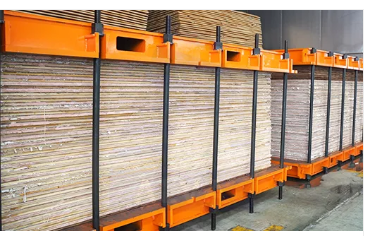
Industrial plant managers face a constant, stressful dilemma. You must successfully scale up production to meet aggressive market demands. Simultaneously, you have to strictly control spiraling energy and operational expenses (OPEX). Solving this complex equation requires the right heavy-duty infrastructure. A Tunnel Drying Kiln serves as a continuous-flow thermal processing system. Engineers design these massive units specifically for high-volume, highly uniform output. They continuously move materials through distinct temperature zones on steady tracks.
While a tunnel drying kiln acts as the ultimate solution for mass production—often cutting unit fuel consumption by up to 50%—it is not for everyone. Its massive physical footprint and high initial capital expenditure (CAPEX) present significant upfront hurdles. Therefore, this technology remains highly suitable only for facilities managing predictable, low-variance product lines. In this guide, you will learn how advanced thermodynamics drop operating costs. We will also explore exact industry applications, compare modern alternatives, and help you decide if your plant is ready for this major operational upgrade.

Key Takeaways
Ideal for Scale: Best suited for 24/7, continuous manufacturing of uniform products (e.g., ceramics, bricks, structured food products, lumber).
Economic Trade-off: High initial CAPEX is offset by the industry's lowest per-unit energy costs (via counter-current heat recovery).
Material Constraints: Superior to rotary dryers for fragile or shaped solid components that cannot withstand tumbling, but overly rigid for high-mix, low-volume batches.
Longevity: Offers extreme durability with major maintenance intervals spanning 5–7 years due to stable, continuous thermal states.
The Mass Production Matrix: Where a Tunnel Drying Kiln Excels
Let us explore the core differences between batch and continuous processing. When you operate a standard batch system, operators waste countless hours. They must load, heat, cool, and unload individual product batches manually. A continuous system completely eliminates this expensive idle downtime. You integrate automated kiln cars or continuous conveyor belts directly into your active line. This setup aligns perfectly with uninterrupted, turn-key production facilities. The product simply never stops moving. You feed raw materials in one end, and finished goods emerge steadily from the other.
Next, consider product uniformity and physical protection. Many traditional industrial dryers tumble materials vigorously. Constant tumbling easily destroys fragile edges. It quickly strips away delicate surface coatings. In a tunnel configuration, linear progression protects your materials from damaging mechanical wear. Items remain entirely stationary on robust trays or flat cars. They move smoothly through escalating temperature zones. This stationary transit guarantees exceptional physical integrity for highly sensitive components.
Who benefits most from this gentle, continuous design? We see massive adoption across several specific target industries:
Ceramics & Building Materials: Facilities produce roof tiles and heavy clay bricks continuously. They easily handle extreme capacities approaching 100,000 units per day. Furthermore, technical ceramics require slow, exceptionally uniform moisture removal. This precise control prevents catastrophic surface cracking and structural warping.
Agri-Food & Lumber: Many agricultural commodities and wood products demand gentle, low-temperature moisture reduction. A continuous system preserves critical organic cell structures. It significantly reduces bulk freight weight for shipping. More importantly, it achieves this moisture reduction without damaging the valuable raw product.
Structured Foods: Manufacturers use these systems for pet foods and extruded cereals. The even airflow guarantees consistent crunch and moisture content across millions of identical kibbles.
Thermodynamic Efficiency at Scale: Why OPEX Drops
Operating expenses often dictate the ultimate survival of a mass production facility. Why do these operational costs drop so dramatically here? The secret lies in counter-current airflow mechanics. We rely on fundamental, highly effective thermodynamic physics. Hot exhaust gases travel strictly in the opposite direction of the product path. The system pushes intensely hot air from the central firing zone toward the wet entry doors. This naturally pre-heats the incoming cold materials. You seamlessly capture thermal energy otherwise lost to the factory atmosphere. Massive industrial draft fans constantly pull this exhaust forward, ensuring you extract every ounce of usable heat.
To fully understand this efficiency, we must break down the four-zone phasing. Each zone links a specific mechanical feature to a vital production outcome:
Loading & Preheat Zone: This initial stage gently warms the incoming product. It slowly evaporates delicate surface moisture. This slow ramp-up prevents the outer shell from hardening prematurely, allowing internal moisture to escape safely.
Drying/Firing Zone: The system tackles stubbornly bound water here. It elevates the core temperature to exact metallurgical or chemical specifications. It safely achieves your final thermal processing targets.
Cooling Zone: The equipment introduces fresh ambient air to quickly cool the hot product. It lowers the material temperature safely before it exits the tunnel, preventing severe thermal shock.
Heat Recovery: The system recaptures this newly heated ambient air. It feeds up to 30% of this recovered waste heat directly back into the primary combustion zones.
Typical Four-Zone Thermal Profile Chart
Zone Name | Primary Function | Atmosphere Condition | Primary Heat Source |
Preheat | Evaporate surface moisture safely | High humidity, warm | Exhaust gases from Firing Zone |
Firing / Drying | Remove bound water, achieve final temp | Low humidity, extreme heat | Direct gas burners or electric coils |
Cooling | Lower product temp to handling levels | Dry, cooling rapidly | Fresh ambient air intake |
Heat Recovery | Recycle warmed cooling air | Dry, warm | Residual heat emitted by product |
Beyond pure thermodynamics, automated consistency plays a massive role in reducing costs. Modern facilities rely heavily on SCADA systems (Supervisory Control and Data Acquisition). These digital systems monitor hundreds of internal data points simultaneously. They manage burner outputs, fan speeds, and draft pressures autonomously. They maintain incredibly stable internal temperature gradients. Consequently, you reduce manual operator intervention to an absolute minimum. Product rejection rates plummet because human error is entirely removed from the thermal equation.
Tunnel Drying Kiln vs. Alternative Industrial Dryers
You might wonder if a simpler, smaller dryer could meet your production needs. Let us closely compare the tunnel setup against other common industrial choices.
First, we look at Shuttle Kilns. Shuttle units handle distinct batch processing. They offer incredibly high operational flexibility. They demand a much lower initial capital expenditure. You generally use them for custom, specialized, or highly variable product mixes. Shuttle kilns rely heavily on operators manually adjusting burner profiles for every unique batch. You spend a lot of time waiting for the chamber to heat up and cool down. A tunnel system eliminates this thermal wait time completely. The specific physical zones simply remain at their designated temperatures forever. You move the product into the heat, rather than bringing the heat to the stationary product. However, a tunnel system enforces highly rigid scheduling. It delivers the absolute highest thermal efficiency in the industry, but you simply need massive, continuous volume to justify its installation.
Next, we evaluate Rotary Drum Dryers. Rotary models excel at managing bulk granular materials. They process fine powders, sands, and coarse agricultural aggregates efficiently. Unfortunately, they cause severe internal dust generation. They also induce heavy mechanical abrasion through constant tumbling. A tunnel configuration remains essential for solid, formed shapes. Fragile billets, delicate tiles, and heavy bricks demand strict dimensional stability.
Finally, consider Fluid Bed Dryers. Fluid bed systems face strict aerodynamic limitations. They rely on lifting particles upward using high-pressure airflow. Therefore, they only handle very specific particle sizes and weights. A tunnel system remains completely agnostic to aerodynamic properties. You can process heavy, wet slurries in shallow pans. You can dry massive, heavily molded components sitting on flat trays.
Alternative Dryer Comparison Table
Dryer Type | Best Suited For | Primary Drawback | Production Mode |
Tunnel Kiln | Formed solids, fragile shapes, high volume | Massive physical footprint, high CAPEX | Continuous (24/7) |
Shuttle Kiln | Custom batches, low volume, high mix | High fuel consumption, idle time | Batch |
Rotary Drum | Bulk powders, resilient aggregates | Severe dust, mechanical abrasion | Continuous |
Fluid Bed | Uniform lightweight particles | Strict aerodynamic limits on materials | Continuous / Batch |
Implementation Realities: CAPEX, Footprint, and Engineering Risks
Despite the clear operational benefits, upgrading involves serious physical and financial hurdles. You must thoroughly acknowledge the extreme space requirement first. These continuous systems possess a massive physical footprint. They frequently demand dedicated, custom-built industrial facilities. A standard unit easily spans over 100 meters in length. You need significant linear factory floor space to accommodate the loading tracks, the tunnel itself, and the unloading staging areas. Building extensions quickly inflate your initial project budget.
Furthermore, you must address the known "kiln car" energy penalty. This remains a notorious, historically frustrating industry drawback. The sheer thermal mass of the heavy transport cars absorbs a significant amount of heat. You constantly waste expensive energy heating these massive steel and refractory platforms instead of your product. Additionally, improper under-car sealing causes severe engineering issues. Most systems use sand troughs to seal the hot upper chamber from the cool undercarriage. If these sand seals fail or shift, cold air leaks directly into the hot firing zones. These disruptive leaks severely degrade overall thermal efficiency.
Fortunately, modern engineering offers powerful mitigation strategies and system upgrades. Engineers now heavily deploy highly advanced, low-thermal-mass car designs. They actively integrate lightweight silicon carbide (SiC) internal components to replace heavy traditional bricks. You can even source innovative "carless" roller or skate designs today. These mechanical advancements dramatically reduce wasted heat. They actively improve the baseline energy efficiency of the entire plant.
Finally, we must evaluate inherent downtime risks. Traditional continuous systems suffer from severe thermal shock if you shut them down frequently. You simply cannot turn them off for regular weekends or minor holidays. They demand relentless, non-stop operation to protect the masonry. However, modern refractory materials are rapidly changing this harsh reality. They effectively resist rapid temperature fluctuations. Some highly advanced Tunnel Drying Kiln models now allow for safe, intermittent weekend shutdowns. This operational flexibility represents a major breakthrough for medium-volume manufacturers seeking lower weekend labor costs.
Decision Checklist: Is Your Plant Ready to Upgrade?
Upgrading your thermal processing infrastructure represents a massive organizational commitment. How do you know if the timing is objectively right? We strongly recommend reviewing the following crucial criteria before moving forward.
Throughput Volume: Does your facility process a single product line continuously? Do you manufacture highly similar items 24/7? You strictly need relentless, non-stop volume to properly justify the immense continuous thermal load.
CAPEX vs. OPEX Horizon: Can your business safely absorb a heavy upfront financial investment? You must model this major expenditure against a realistic 5-to-10-year ROI. This return model relies heavily on achieving steady 30-50% fuel savings over time. If your company requires a 12-month payback, this technology will not fit your financial strategy.
Facility Infrastructure: Do you currently possess the necessary linear square footage indoors? If not, will a costly new building extension be strictly necessary? You must factor major construction costs and local zoning permits into your planning phase.
Material Sensitivity: Does your fragile product genuinely require strict, slow-release temperature curves? Rapid heating often causes catastrophic cracking, blistering, or warping in dense solids. Only a properly zoned continuous dryer provides this highly specific, gentle environmental control.
If you answer 'yes' to most of these questions, you are likely ready. The massive operational savings will eventually outpace the heavy initial expenditures. However, if your daily production is erratic, small-scale, or highly customized, you should probably stick with flexible batch processing equipment.
Conclusion
In final analysis, a tunnel drying kiln serves as the definitive choice for mass production. It absolutely dominates the thermal processing industry, provided your operational model is strictly continuous. Your daily product variation must remain exceptionally low to reap the maximum rewards. When these precise conditions align, no other drying system matches its baseline thermal efficiency or product consistency.
What should plant leaders and decision-makers do next? We strongly advise starting with a rigorous full lifecycle cost analysis. You should build a comprehensive Net Present Value (NPV) model immediately. Factor in your local industrial fuel costs meticulously. Evaluate your currently available linear floor space carefully. Calculate your expected waste-heat recovery percentages accurately based on engineering models. Gather all this hard, actionable data first. Only then should you begin requesting formal, detailed engineering bids from top equipment manufacturers.
FAQ
Q: How long does a commercial tunnel drying kiln last?
A: Typically 20–25+ years, with major structural maintenance (refractory lining overhaul) only required every 5–7 years due to the lack of thermal cycling stress.
Q: Can a tunnel kiln be turned off on weekends?
A: Traditionally, no—they operate continuously to maintain thermal stability. However, newer models utilizing advanced silicon carbide (SiC) materials can support intermittent operation and faster heat-up/cool-down cycles.
Q: What is the maximum operating temperature?
A: While low-temp tunnel dryers (for food or wood) operate below 100°C, high-end industrial tunnel kilns (for technical ceramics or metallurgy) can sustain continuous temperatures up to 1800°C.

 English
 العربية
 Français
 Русский
 Español
 Português
 Deutsch
 italiano
 日本語
日本語 한국어
한국어 Nederlands
 Tiếng Việt
 ไทย
ไทย Polski
 Türkçe
 አማርኛ
አማርኛ ພາສາລາວ
 ភាសាខ្មែរ
 Bahasa Melayu
 ဗမာစာ
ဗမာစာ தமிழ்
தமிழ் Filipino
 Bahasa Indonesia
 magyar
 Română
 Čeština
 Монгол
 қазақ
қазақ Српски
 हिन्दी
 فارسی
فارسی Kiswahili
 Slovenčina
 Slovenščina
 Norsk
Norsk Svenska
 українська
 Ελληνικά
 Suomi
Suomi Հայերեն
 עברית
עברית Latine
 Dansk
Dansk اردو
اردو Shqip
Shqip বাংলা
বাংলা Afrikaans
 Māori
Māori অসমীয়া
 Беларуская мова
 Català


