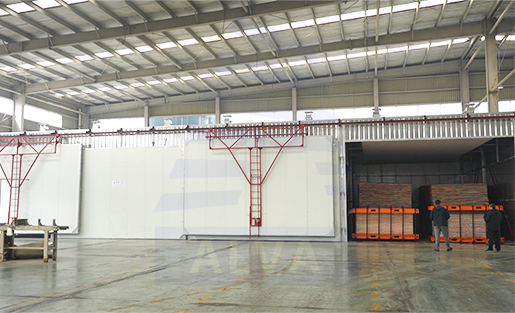
Industrial manufacturing demands rapid processing speeds and strict quality control. Facilities must maintain high standards to remain competitive today. Yet, many plants still rely on outdated batch drying systems. These legacy setups invariably create massive production bottlenecks. They force operators into inefficient start-stop cycles. This approach drives up manual labor costs significantly. It also frequently causes inconsistent moisture gradients across different product batches. Transitioning to a Tunnel Drying Room serves as the critical bridge. It moves operations from manual handling to fully automated, continuous-throughput production. This guide provides an objective evaluation tool for plant managers and industrial engineers. Equipment upgrade decisions require careful technical analysis. You will discover exactly how a continuous drying system aligns with specific material properties. We will explore facility footprints and distinct return-on-investment requirements.
Key Takeaways
Tunnel drying rooms transition operations from batch to continuous processing, drastically reducing manual loading/unloading labor.
Zoned temperature control and customizable airflow dynamics (cross-flow, counter-current) prevent material degradation like surface case-hardening.
Modern models integrate exhaust heat recovery, lowering energy consumption by up to 20-30% compared to traditional atmospheric dryers.
They provide superior physical protection for fragile or irregularly shaped materials compared to rotary drum or fluid bed alternatives.
The Core Business Advantages of a Tunnel Drying Room
Continuous Throughput & Scalability
Batch drying cycles inherently create costly waiting periods. Operators must wait for machines to cool down. They manually unload finished trays before reloading wet materials. This idle time wastes hours every production week. A Tunnel Drying Room completely eliminates these operational gaps. It introduces continuous conveyorized production to the facility. Workers feed wet materials into the entrance continuously. Finished products emerge steadily from the exit. This constant flow stabilizes downstream packaging and assembly lines.
Furthermore, these systems offer exceptional modular expansion capabilities. Scaling up capacity no longer requires scrapping your existing equipment. Facilities simply bolt additional tunnel sections onto the existing frame. You can extend the heating or cooling zones as volume grows. This modular approach protects your initial capital investment perfectly.
Labor Reduction & Automation Consistency
Manual loading processes expose facilities to high labor expenses. Continuous systems automate these repetitive physical tasks. Plants utilize pass-through tray racks on guided rails. Alternatively, they deploy perforated continuous belts. These mechanisms move materials without human intervention. The labor reduction drops overhead costs dramatically.
Automation also guarantees process consistency. Advanced PLC (Programmable Logic Controller) and HMI (Human-Machine Interface) systems manage the operation. They maintain strict PID (Proportional-Integral-Derivative) control over temperature parameters. The system instantly corrects minor heat fluctuations automatically. This eliminates operator-to-operator variance entirely. Every production shift achieves identical, reliable results.
High-Volume Product Uniformity
Product uniformity determines your ultimate market reputation. Batch dryers often leave the center materials damp. Meanwhile, they over-dry the exterior edges. Tunnel systems solve this thermodynamic challenge through precise mechanical timing. The conveyor belt maintains an absolute, constant speed.
As products travel, they pass through independent heating zones. Each item undergoes the exact same thermodynamic lifecycle. The first row experiences the same heat curve as the thousandth row. This high-volume uniformity minimizes rejected batches. It ensures compliance with rigorous quality control standards.
Engineering the Yield: Airflow Dynamics and Quality Control
Implementation reality dictates one harsh rule. Poor drying ruins product yield instantly. Overheating destroys delicate active ingredients. Under-drying invites fungal or bacterial growth. You must control fluid dynamics meticulously. A major engineering advantage here is customizable airflow. You can tailor the air currents to your specific material physics.
Preventing Case-Hardening
Rapid surface drying creates a severe industrial problem. Engineers call this surface case-hardening. High heat quickly seals the outer layer of a product. This rigid shell traps internal moisture permanently. The product eventually cracks, shrinks, or rots from the inside out.
Staged temperature zones prevent this phenomenon entirely. The initial tunnel zone applies warm, highly humid air. This keeps the surface pores open. It allows core moisture to migrate outward safely. Subsequent zones gradually increase dry heat to finish the process. This staged approach protects internal structural integrity.
Airflow Configurations (Evaluation Criteria)
Engineers must evaluate and select the correct airflow pattern. Different materials demand different aerodynamic treatments. The following table summarizes the primary airflow configurations.
Airflow Type | Flow Mechanism | Primary Advantage | Best Application |
Co-current Flow | Air moves in the same direction as the product. | Rapid initial moisture removal. | High-moisture materials needing quick surface stabilization. |
Counter-current Flow | Air moves against the product direction. | Gentle, highly uniform thermal finishing. | Sensitive materials requiring deep core drying. |
Cross-flow | Air blows laterally across the conveyor belt. | Maximum thermal consistency across varying heights. | Multi-tiered tray racks and varied product shapes. |
Hybrid Heating Integrations
Standard convective hot air serves as an excellent baseline. However, modern manufacturing often requires faster processing times. Manufacturers now pair traditional convection with advanced localized heating. Engineers integrate Infrared (IR) or Microwave emitters into specific tunnel zones. Microwaves penetrate deep to accelerate core moisture evaporation. Infrared panels provide intense, targeted surface heating. This hybrid approach accelerates overall drying times. It protects surface integrity while boosting total daily throughput.
Equipment Shortlisting: Tunnel Drying Room Vs. Traditional Alternatives
How do you know continuous tunnels offer the best solution? You must evaluate your distinct material physics carefully. Plant managers need a reliable decision framework. This section compares tunnel systems against traditional industrial alternatives.
Vs. Rotary Drum Dryers
Rotary drums tumble materials aggressively inside a massive spinning cylinder. This friction causes severe mechanical wear on delicate items.
The Advantage: A Tunnel Drying Room transports materials exceptionally gently. It utilizes flat belts or stationary trays. This preserves original particle sizes perfectly. It prevents the generation of combustible friction dust. You should choose tunnel systems for fragile, brittle, or precisely shaped products.
Vs. Fluid Bed Dryers
Fluid bed systems suspend particles in a high-velocity upward air stream. They offer rapid drying but require strict parameters.
The Advantage: Fluid beds require uniform particle sizes to float them properly. They struggle significantly with highly viscous or sticky materials. Tunnel dryers handle almost everything easily. You can process wet, heavy slurries in trays. You can dry massive, odd-shaped mechanical components. They offer unmatched material versatility.
Vs. Vacuum Dryers
Vacuum dryers lower the boiling point of water. They excel at low-temperature dehydration for highly sensitive pharmaceuticals.
The Advantage: Vacuum systems operate strictly in enclosed, limited batches. Tunnel systems operate at standard atmospheric pressure. They offer vastly higher continuous throughput rates. They also integrate much easier into existing automated assembly lines. Choose continuous tunnels when production volume outweighs extreme low-temp requirements.
Evaluating ROI: Energy Efficiency and Operational Cost Reductions
Many plant managers harbor valid skepticism regarding thermal equipment. Continuous dryers require significant initial energy inputs to reach operating temperatures. However, modern designs mitigate these ongoing utility expenses aggressively. Proper engineering transforms thermal systems into highly efficient assets.
Waste Heat Recovery
Exhausting hot air outside wastes massive amounts of paid energy. Modern systems capture this excess thermal energy automatically. They pull residual heat from the final cooling zones. They also route hot exhaust flues through cross-flow heat exchangers. The system uses this captured energy to pre-heat incoming ambient air. This closed-loop waste heat recovery drastically lowers utility bills. Operations often see energy consumption drop substantially.
Insulation & Thermal Bridging
Generating heat matters little if your equipment leaks it continuously. Poorly insulated machines heat the factory floor instead of the product. Customized structural insulation panels (SIPs) solve this issue. High-density mineral wool cores minimize environmental heat loss. Quality engineering also eliminates thermal bridging. It isolates the internal hot chamber from the exterior metal frame. This keeps the thermal energy focused directly on your materials.
Unconventional Cost Savings
Calculate your return on investment beyond standard manufacturing metrics. Facilities often use these systems for unconventional applications. Consider the drying of organic waste or agricultural biomass. Removing water content reduces physical disposal weight massively. This slashes associated transport and landfill fees significantly. In some cases, dried biomass becomes a sellable biofuel pellet. This transforms a waste disposal cost into a new revenue stream.
Implementation Risks, Footprint, and Compliance Considerations
Rolling out any new industrial system introduces real-world challenges. Experienced plant managers anticipate these hurdles early. You must plan carefully to avoid costly installation delays.
Facility Footprint Requirements
Continuous drying equipment requires significant linear floor space. A Tunnel Drying Room cannot wrap easily around tight corners. You must plan for straight-line plant layouts. Check your building dimensions and column placements before ordering. If linear space runs tight, consult your manufacturer. They might design a multi-tiered conveyor system to utilize vertical space instead.
Belt Maintenance & Wear
Conveyor belts experience heavy thermal stress daily. This constant heating and cooling causes metal expansion. Tracking issues often occur as belts stretch unevenly. Address this risk during the purchasing phase. Choose models featuring automatic belt alignment technology. Auto-tensioning pneumatic systems keep the belt running perfectly flat. This upfront investment reduces future maintenance downtime substantially.
Safety & Compliance (ATEX/NFPA)
Do you process materials containing volatile organic compounds (VOCs)? Do your materials emit flammable solvents during drying? Safety compliance becomes absolutely non-negotiable here. You must adhere strictly to ATEX or NFPA explosion standards. Flammable vapors require specialized engineering. Outline the necessity of closed-loop nitrogen systems. Nitrogen displaces oxygen, preventing any chance of combustion. Ensure the manufacturer uses intrinsically safe, explosion-proof electrical components throughout the entire zone.
Conclusion
The true advantage of a tunnel drying system lies in standardizing product quality. It achieves strict consistency at massive commercial volumes. Simultaneously, it drives down your per-unit energy and manual labor costs. Facilities move away from erratic batch cycles into smooth, continuous profitability.
Your next step requires empirical data. Do not guess your specific drying parameters. We recommend conducting a pilot test with an equipment manufacturer. Utilize a small-scale testing unit first. Map your exact material moisture curves accurately. Finalize your aerodynamic requirements before committing to a full-scale customized tunnel length. This proactive approach guarantees a successful industrial implementation.
FAQ
Q: How long is the typical operational lifespan of an industrial tunnel drying room?
A: Industrial continuous drying systems are highly durable. They typically offer a 15 to 25-year operational lifecycle. You must perform regular maintenance on the conveyor belts, exhaust fans, and heating elements. Modular designs allow facilities to replace worn sections easily without scrapping the entire machine.
Q: Can a tunnel drying room handle multiple different product lines?
A: Yes. They offer excellent operational flexibility for varied production runs. You can utilize programmable PLC recipes to adjust belt speeds and temperature zones quickly. However, you must factor in proper purge and cleaning times between distinctly different materials to prevent cross-contamination.
Q: Is it possible to upgrade the heating source later?
A: Absolutely. Modern industrial dryers feature highly modular construction. Facilities frequently upgrade thermal systems as regional energy grids evolve. You can transition from traditional steam coils to high-efficiency industrial heat pumps. You can also add specific infrared or microwave modules to accelerate drying times later.

 English
 العربية
 Français
 Русский
 Español
 Português
 Deutsch
 italiano
 日本語
日本語 한국어
한국어 Nederlands
 Tiếng Việt
 ไทย
ไทย Polski
 Türkçe
 አማርኛ
አማርኛ ພາສາລາວ
 ភាសាខ្មែរ
 Bahasa Melayu
 ဗမာစာ
ဗမာစာ தமிழ்
தமிழ் Filipino
 Bahasa Indonesia
 magyar
 Română
 Čeština
 Монгол
 қазақ
қазақ Српски
 हिन्दी
 فارسی
فارسی Kiswahili
 Slovenčina
 Slovenščina
 Norsk
Norsk Svenska
 українська
 Ελληνικά
 Suomi
Suomi Հայերեն
 עברית
עברית Latine
 Dansk
Dansk اردو
اردو Shqip
Shqip বাংলা
বাংলা Afrikaans
 Māori
Māori অসমীয়া
 Беларуская мова
 Català


