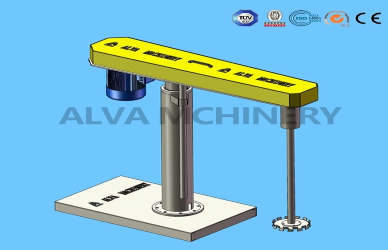
When selecting the right glue mixer, understanding the viscosity of the adhesive is crucial. Viscosity refers to the thickness or flow resistance of a substance, and it significantly impacts the mixing process. Thicker adhesives, such as epoxy or resin-based glues, require specialized high-shear mixers, while thinner adhesives, like water-based glues, can be effectively mixed using low-shear or agitator mixers. Choosing the right equipment based on viscosity is essential to ensure that the adhesive is mixed thoroughly and evenly, which directly affects the quality of the final product. Using the wrong mixer for the adhesive’s viscosity can lead to inefficient mixing, inconsistent product quality, and increased energy consumption, which highlights the importance of matching the equipment to the specific needs of the adhesive.
1.Understanding Viscosity in Adhesives
What is Viscosity?
Viscosity is a measure of a fluid's resistance to flow. In the context of adhesives, viscosity indicates how thick or thin the adhesive is and how easily it flows when applied. High viscosity adhesives, such as thick pastes or gels, resist flow and require more energy to stir or mix, while low viscosity adhesives, like watery solutions, flow easily and require less mixing force. Viscosity plays a key role in the mixing process as it affects how well the adhesive components blend together and how uniform the final mixture will be. If the viscosity is too high or too low for the chosen mixing equipment, it can lead to improper blending, inconsistencies, or inefficiency in the production process.
Viscosity Ranges
Adhesives come in a wide range of viscosities, each suited for different applications and requiring different types of mixers. Here are the typical viscosity ranges for various adhesives:
Low Viscosity (e.g., Water-based Adhesives): Low viscosity adhesives flow easily and are often used in applications where the adhesive needs to spread quickly and evenly, such as in paper bonding or packaging. These adhesives typically have a viscosity of 100 to 1,000 cP (centipoise). Mixers for low-viscosity adhesives usually use less shear force and can be more basic, like agitators or paddle mixers.
Medium Viscosity (e.g., PVA or EVA adhesives): These adhesives have a moderate thickness and are often used for wood bonding, textile applications, and some plastic bonding. Their viscosity usually falls between 1,000 and 10,000 cP. Mixers for medium viscosity adhesives may need to balance shear and power to ensure uniformity without creating air bubbles or heat.
High Viscosity (e.g., Epoxy, Resin Adhesives): High viscosity adhesives are very thick and resistant to flow. They are typically used in applications that require strong bonding, such as in construction, automotive, or electronics. These adhesives often have viscosities ranging from 10,000 to 100,000 cP or more. For these adhesives, high-shear mixers or planetary mixers are often required to achieve uniform blending without trapping air in the mixture.
2.Types of Glue Mixers for Different Viscosity Levels
Different adhesives with varying viscosities require specific mixing equipment to achieve efficient and uniform results. Here’s an overview of the equipment suitable for different adhesive viscosities:
Low Viscosity Adhesives
Low viscosity adhesives, like water-based glues, flow easily and don’t need heavy mixing equipment.
Agitators: Ideal for thin adhesives, these mixers gently stir without introducing air or over-mixing.
Low-Shear Mixers: These mixers maintain a smooth consistency and prevent excessive shear forces, perfect for applications like packaging.
Medium Viscosity Adhesives
Medium viscosity adhesives, such as PVA or EVA, require more robust mixing equipment to achieve consistent blending.
Ribbon Blenders: These blenders gently mix without excessive shear, making them perfect for adhesives like wood glue.
Planetary Mixers: They provide both shear and thorough mixing, ideal for larger batches of medium viscosity adhesives.
High Viscosity Adhesives
High viscosity adhesives, like epoxies and resins, require specialized equipment for proper mixing.
High-Shear Mixers: These mixers use intense forces to break down thick adhesives, ensuring thorough mixing.
Heavy-Duty Mixers: Built for thick materials, they use powerful motors and specialized blades for efficient mixing.
Vacuum Mixers: Used for eliminating air bubbles in thick adhesives, these mixers ensure smooth, consistent results.
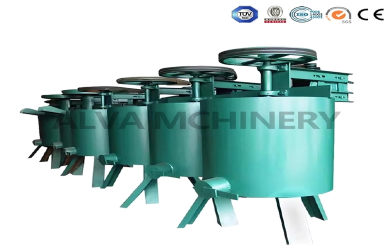
3.Key Features to Look for in a Glue Mixer
When selecting a glue mixer, there are several key features to consider to ensure efficient mixing and optimal results. These include mixing speed, power, blade design, and temperature control, all of which affect how well the adhesive is blended.
Mixing Speed and Power
Adjusting the mixing speed and power is essential for properly mixing adhesives with different viscosities. Thicker adhesives, such as epoxy or resin, require more power and slower speeds to break down the material and ensure a uniform blend. For thinner adhesives, faster speeds and less power are generally sufficient, as they require less force to achieve consistency. Proper adjustment of these settings prevents over-shearing, which could degrade the adhesive’s quality, and ensures efficient mixing, reducing time and energy consumption.
Blade Design
The design of the blades plays a crucial role in achieving the right mix for different viscosity adhesives:
Ribbon Blades: Best for medium viscosity adhesives like PVA or EVA, ribbon blades provide efficient mixing without excessive shear, ensuring uniformity while preserving the adhesive’s integrity.
Impeller Blades: Designed for high viscosity adhesives, impeller blades are more robust and create high shear forces, making them ideal for thicker adhesives. These blades ensure thorough mixing, breaking down the thicker consistency into a homogeneous product.
Temperature Control
Temperature regulation is critical, especially for heat-sensitive adhesives or those that require specific curing temperatures. Some adhesives, particularly high-viscosity ones like epoxies, can degrade or lose their effectiveness if exposed to excessive heat during the mixing process. A glue mixer with temperature control features ensures that the adhesive stays within its optimal mixing temperature range, preserving its chemical properties and improving its performance. This feature is especially important in applications where precise bonding is required, such as in automotive or electronics manufacturing.
4.Choosing Based on Production Volume
When selecting a glue mixer, it's essential to choose equipment that matches your production volume. The size of the batch and the scale of production will dictate the type of mixer you need. Here’s how to choose between small-scale and large-scale production mixers:
Small-Scale Production
For small-scale or laboratory production, where you need to mix small batches of adhesive, compact and precise mixers are ideal. These mixers are designed to handle smaller volumes while providing accurate and consistent results.
Laboratory Mixers: These mixers are perfect for research, product development, or testing small batches of adhesives. They are typically smaller, offer precise control over mixing speed and time, and are ideal for experimenting with different adhesive formulations.
Bench-Top Mixers: Often used in labs or small workshops, these mixers handle smaller quantities (usually up to 10 liters). They are cost-effective and versatile, providing accurate mixing for specialty or experimental adhesives.
Large-Scale Production
For large-scale production, where you need to process large volumes of adhesive continuously or in quick succession, industrial mixers with higher capacity and automation are required.
Industrial Mixers: These mixers are designed to handle large batches of adhesive, ranging from 50 liters to several thousand liters. They are equipped with powerful motors, robust blades, and automatic controls to maintain consistent quality and meet high production demands.
Continuous Mixers: In high-volume production environments, continuous mixers are often used to keep production flowing without interruption. These mixers allow for a continuous supply of mixed adhesive, making them ideal for fast-paced, high-demand environments.
FAQ (Frequently Asked Questions)
1.Can a single glue mixer handle adhesives of varying viscosities?
Answer: Some advanced mixers are adjustable and can handle a range of viscosities, but for consistent results, it’s best to use equipment designed for specific viscosity levels.
2.How do I know if my adhesive is high viscosity?
Answer: High viscosity adhesives are thick and resist flow, similar to paste or gel. If the adhesive moves slowly or stays in place when tipped, it is likely high viscosity.
3.What is the best type of glue mixer for small batches of high-viscosity adhesive?
Answer: For small batches, a high-shear mixer or a planetary mixer is ideal for achieving the required thorough mixing of high-viscosity adhesives.
4.How does temperature affect the viscosity of adhesives during mixing?
Answer: Heat can lower the viscosity of adhesives, making them thinner and easier to mix. Some mixers come with temperature control features to ensure optimal consistency.
Conclusion
To sum up, selecting the right glue mixer based on adhesive viscosity is crucial for achieving the best possible mixing outcomes. It is essential to consider the viscosity of the adhesive and choose the appropriate mixer type—whether it's a low-shear mixer for thinner adhesives or a high-shear mixer for thicker materials. Adjusting the mixing speed, power, and blade design plays a significant role in ensuring both efficiency and consistency, while temperature control is particularly important for maintaining the quality of heat-sensitive adhesives. Additionally, it is vital to match the mixer to your production volume, whether handling small batches for testing or large-scale production for mass manufacturing. This ensures that the mixing process remains both cost-effective and efficient, meeting production demands without compromising quality. By carefully evaluating these factors, you can optimize the mixing process, improve product consistency, and reduce waste, ultimately boosting productivity and the overall quality of your adhesive products.

 English
 العربية
 Français
 Русский
 Español
 Português
 Deutsch
 italiano
 日本語
日本語 한국어
한국어 Nederlands
 Tiếng Việt
 ไทย
ไทย Polski
 Türkçe
 አማርኛ
አማርኛ ພາສາລາວ
 ភាសាខ្មែរ
 Bahasa Melayu
 ဗမာစာ
ဗမာစာ தமிழ்
தமிழ் Filipino
 Bahasa Indonesia
 magyar
 Română
 Čeština
 Монгол
 қазақ
қазақ Српски
 हिन्दी
 فارسی
فارسی Kiswahili
 Slovenčina
 Slovenščina
 Norsk
Norsk Svenska
 українська
 Ελληνικά
 Suomi
Suomi Հայերեն
 עברית
עברית Latine
 Dansk
Dansk اردو
اردو Shqip
Shqip বাংলা
বাংলা Afrikaans
 Māori
Māori অসমীয়া
 Беларуская мова
 Català


