In timber processing, logs need to go through a series of operations, including log cutting, sawing, sorting, drying, sizing, and further processing before they can be used in furniture, construction, packaging, wood panels, and other wood products.
As an important machine in the initial stage of timber processing, a wood sawing machine is mainly used for log cutting, opening, and processing of logs and other wood materials. It connects raw logs with subsequent wood processing operations and plays an important role in the overall timber processing process.
Shandong ALVA Machinery Group specializes in the development and manufacturing of woodworking machinery and timber processing equipment. Based on different raw materials, production processes, and application requirements, ALVA Machinery provides wood sawing machines and related equipment solutions for customers in the timber processing industry.
This article introduces the applications, working principle, main components, advantages, production applications, maintenance requirements, and selection considerations of ALVA wood sawing machines, helping timber processing companies understand the role of wood sawing equipment in production.Please see this link:https://www.alvamachinery.com/Log-Sawing-Machine-pl42405486.html
1. What Is a Wood Sawing Machine?
A wood sawing machine is a mechanical device used for cutting and processing logs, lumber, boards, and other wood materials.
Depending on the production process, a wood sawing machine can cut logs into boards, square timber, strips, and other wood products required for subsequent processing.
In traditional timber processing, log cutting often depends on manual positioning, marking, handling, and sawing. With the development of modern timber processing, mechanical sawing has become an important method for log processing.
A mechanical wood sawing machine can perform feeding, positioning, guiding, and sawing operations through coordinated mechanical systems. This makes the production process more consistent and provides suitable raw materials for subsequent processing.
From the perspective of timber processing, sawing is one of the basic operations in log processing. Logs are processed longitudinally through sawing equipment to produce lumber with the required form and dimensions.
For timber processing companies, a wood sawing machine is not an independent production unit. It is normally integrated into a larger timber processing workflow.
After sawing, the processed wood can enter subsequent operations such as sorting, drying, planing, sizing, sanding, edge processing, finger jointing, panel production, or other woodworking processes.
Therefore, the feeding system, sawing system, positioning system, and connection with downstream equipment are important considerations when selecting a wood sawing machine.
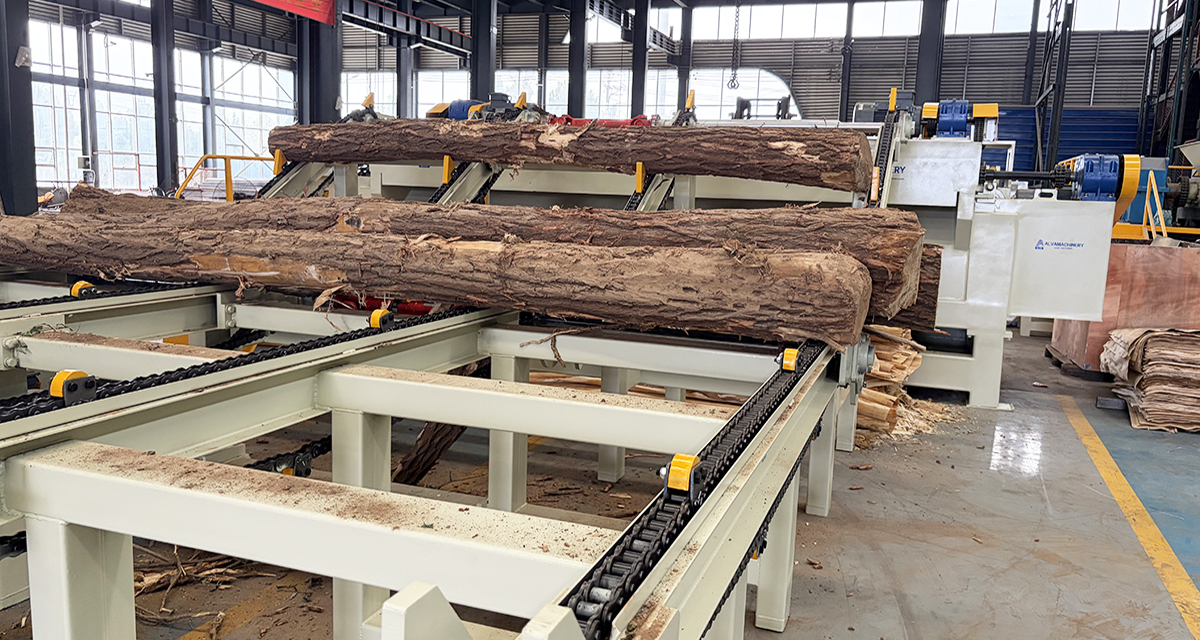
2. Main Applications of ALVA Wood Sawing Machine
ALVA wood sawing machines are mainly used in the log cutting and initial wood processing stages.
Depending on the raw material and final product, the machine can be used for different types of sawing and opening operations.
2.1 Log Cutting and Opening
After logs arrive at a timber processing facility, they normally need to be processed before entering subsequent production stages.
Logs differ in diameter, length, shape, moisture content, grain structure, and other characteristics. The cutting method therefore needs to be selected according to the final product requirements.
A wood sawing machine can process logs longitudinally and convert them into boards, square timber, or other lumber required by the production process.
Log opening is an important basic operation in timber processing.
A suitable cutting method can provide relatively consistent raw materials for subsequent operations and make it easier for manufacturers to classify and manage different grades of timber.
2.2 Board Cutting
In addition to processing logs, wood sawing equipment can also be used for cutting boards and other wood materials according to the machine configuration and production requirements.
Wood materials that have already undergone preliminary processing may require further cutting, trimming, sizing, or splitting before entering subsequent production processes.
Mechanical sawing can reduce the influence of manual cutting operations and provide a more consistent processing method.
For continuous timber production, board cutting equipment can also be connected with conveyors and downstream processing equipment to form a continuous workflow.
2.3 Square Timber Processing
Logs can be processed into square timber through appropriate sawing methods.
Square timber is widely used in construction, furniture manufacturing, packaging, pallets, wood structures, and other wood products.
After the initial sawing process, the timber can be further processed through planing, drying, cutting, drilling, profiling, or other operations.
The wood sawing machine is normally used as the initial processing equipment in this workflow.
2.4 Raw Material Processing for Furniture Manufacturing
Solid wood furniture production requires boards, square timber, and other wood materials.
Logs are generally sawn before they are dried, sized, planed, jointed, sanded, and processed into furniture components.
A wood sawing machine can perform the initial log cutting operation and provide raw materials for subsequent furniture manufacturing.
For furniture manufacturers, the consistency of the initial raw material has an influence on subsequent processing. Therefore, the sawing equipment needs to be selected according to the type of logs, furniture products, and downstream processing requirements.Please see this link:https://www.alvamachinery.com/Log-Sawing-Machine-pl42405486.html
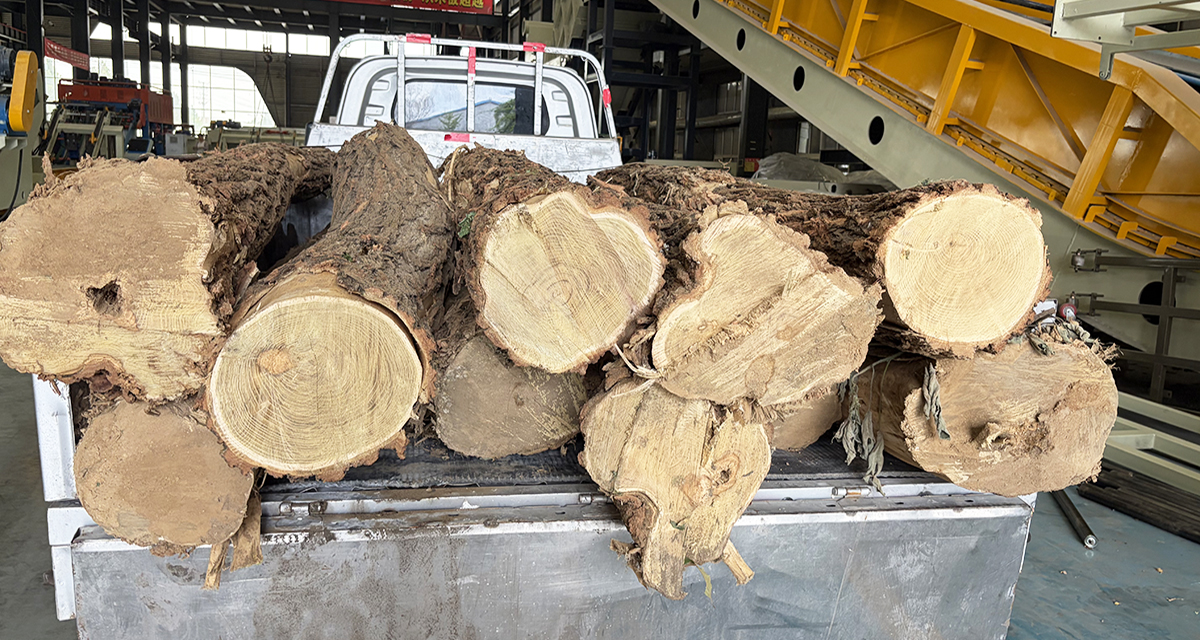
2.5 Construction Timber Processing
Construction timber requires logs and lumber to be processed into suitable forms for further use.
Wood sawing machines can be used for the initial processing of structural timber, construction boards, square timber, and other wood materials.
After sawing, the timber can be further processed through drying, planing, preservation, sizing, and other operations.
The primary role of the wood sawing machine in construction timber production is to convert logs into usable lumber for subsequent processing.
2.6 Packaging Wood Processing
Wooden pallets, wooden boxes, crates, and other packaging products require boards and square timber in different forms.
A wood sawing machine can process logs into suitable lumber for packaging production.
The sawn timber can then be cut to length, planed, sorted, and assembled according to the final product requirements.
For packaging manufacturers, the sawing process can be integrated with feeding, conveying, and downstream processing equipment.
3. Working Principle of ALVA Wood Sawing Machine
The basic working process of a wood sawing machine can be described as:
Loading → Positioning → Feeding → Sawing → Discharging
Logs or wood materials are first loaded into the feeding area.
The material is then positioned according to the production requirements. The feeding system moves the material into the sawing area, where the sawing mechanism cuts the wood according to the required processing method.
After sawing, the processed lumber is discharged from the machine and transferred to the next production stage.
The machine integrates several systems during operation.
The feeding system moves the wood material.
The guiding system controls the running direction.
The positioning system helps maintain the required material position.
The sawing system performs the actual cutting operation.
The transmission system transfers power to the working components.
The electrical control system manages the operation of the machine.
Different models of wood sawing machines may use different mechanical structures and feeding methods. Therefore, equipment configuration should be selected according to the raw material, production process, and final product.
4. Main Components of a Wood Sawing Machine
A wood sawing machine combines mechanical, transmission, electrical, and control systems.
The exact configuration varies depending on the machine model and application, but the main components generally include the following.
4.1 Machine Frame
The machine frame provides the basic structural support for the sawing mechanism, feeding system, transmission system, and other components.
A stable frame helps maintain the relative position of different working components during operation.
The structural condition of the machine frame also affects the long-term operation of the equipment.
4.2 Sawing System
The sawing system is the main working system of the machine.
The power system drives the cutting components, creating relative movement between the saw and the wood material.
The condition of the saw directly affects the cutting process.Please see this link:https://www.alvamachinery.com/Log-Sawing-Machine-pl42405486.html
Therefore, suitable saw components should be selected according to the type of wood and production requirements, and regular inspection should be carried out during operation.
4.3 Feeding System
The feeding system moves logs or wood materials into the sawing area.
Stable feeding helps reduce material deviation, interruption, and unnecessary movement during processing.
In continuous production, the feeding system needs to work in coordination with the sawing system.
4.4 Guiding and Positioning System
Logs are natural materials and do not have completely uniform shapes.
The machine therefore requires guiding and positioning components to control the position and movement of the material.
The positioning system determines the working position of the material, while the guiding system helps control its movement direction.
4.5 Transmission System
The transmission system transfers power from the drive source to the working mechanisms.
Depending on the machine configuration, the transmission system may include motors, chains, sprockets, shafts, bearings, and other components.
The condition of the transmission system has a direct relationship with machine operation, so regular inspection and maintenance are required.
4.6 Electrical Control System
The electrical control system controls the starting, stopping, and operation of the machine.
Depending on the machine configuration, different levels of automation can be provided.
For continuous production, the electrical control system can also help coordinate the machine with upstream and downstream equipment.
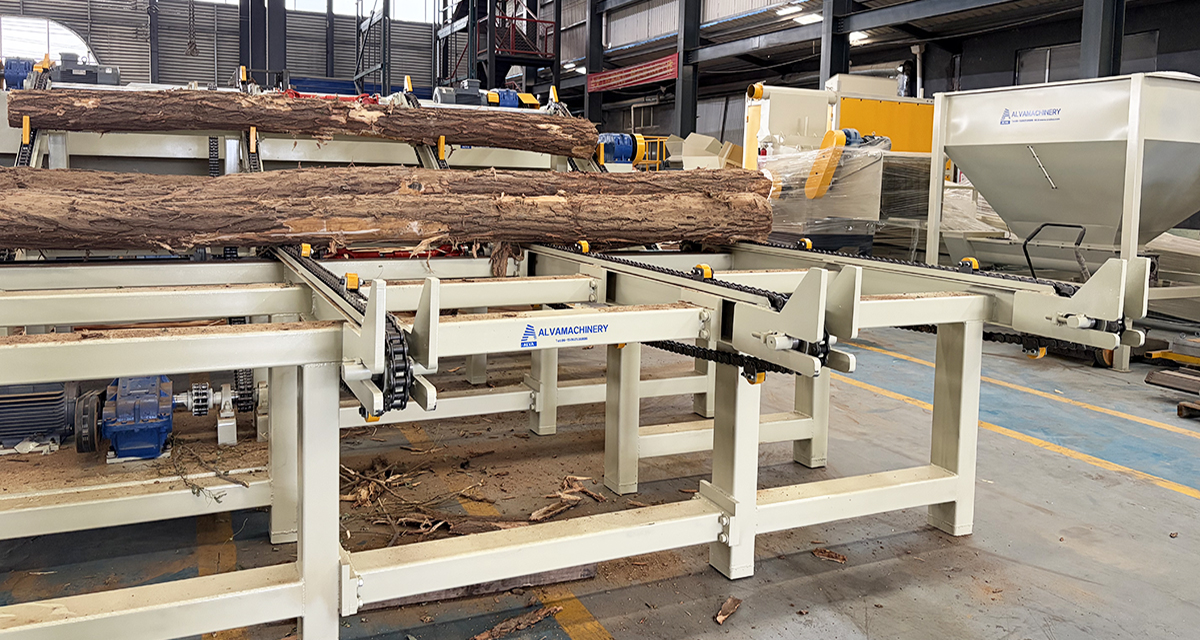
5. Advantages of ALVA Wood Sawing Machine
ALVA wood sawing machines are designed around the basic requirements of log feeding, positioning, cutting, and material transfer.
Their main advantages in timber processing include the following.Please see this link:https://www.alvamachinery.com/Log-Sawing-Machine-pl42405486.html
5.1 Mechanical Log Cutting
Manual sawing requires operators to perform a large part of the cutting and handling work.
With mechanical sawing equipment, the main log cutting operation can be performed by the machine.
The machine carries out feeding and cutting according to the established production process, reducing direct manual involvement in the sawing operation.
Mechanical processing is an important part of modern timber production.
5.2 Suitable for Continuous Processing
Timber processing usually consists of multiple operations rather than a single process.
Logs may need to go through cutting, sorting, drying, planing, sizing, and further processing.
When a wood sawing machine is connected with conveyors and downstream equipment, the entire production process can become more continuous.
This can reduce unnecessary material handling and improve the organization of material flow within the workshop.
5.3 Reduced Manual Handling
Logs and large wood materials can be difficult to handle manually.
Mechanical feeding and conveying systems can reduce the amount of manual handling required during production.
When suitable auxiliary conveyors are installed, the movement of logs from loading to discharge can be further organized.
5.4 Supports Standardized Production
Timber manufacturers may need to produce boards, square timber, strips, and other lumber according to different product requirements.
Mechanical sawing provides a more consistent processing method.
Standardized processing also makes it easier for manufacturers to organize production and classify raw materials, semi-finished products, and finished products.
5.5 Supports Efficient Wood Utilization
Wood is a natural material with differences in grain, knots, curvature, density, and other characteristics.
During log cutting, the cutting method should be selected according to the actual condition of the log and the requirements of the final product.
A suitable sawing process can help reduce unnecessary material loss and improve the utilization of the available log.
For timber manufacturers, raw material utilization is closely related to production management.
Therefore, the selection of a wood sawing machine should consider not only the machine itself but also the characteristics of the raw material and the overall cutting process.
6. The Role of a Wood Sawing Machine in a Timber Processing Line
Modern timber processing normally uses multiple machines working together.
A wood sawing machine is generally positioned at the initial stage of the processing line.
A typical timber processing workflow may include:
Log Loading → Log Positioning → Log Sawing → Wood Conveying → Sorting → Drying → Sizing → Planing → Sanding → Further Processing
The exact process depends on the final product and production requirements.
In furniture manufacturing, sawn lumber may enter drying and further board processing.
In construction timber production, sawn lumber can be processed into structural timber and then dried or preserved.
In packaging production, sawn boards and square timber can be cut and assembled into pallets, crates, and other products.
For plywood and veneer-related production, logs also require suitable preparation before entering the corresponding production process. However, wood sawing machines and veneer peeling machines perform different processing functions, so the equipment configuration should be determined according to the final product and production process.
7. Integration with Other Woodworking Machinery
Timber processing companies generally use multiple machines rather than relying on a single machine for the entire production process.
A wood sawing machine can be integrated with various types of woodworking equipment.
7.1 Integration with Conveyors
Logs are heavy and difficult to move manually.
Conveyors can be installed before and after the sawing machine to transport logs and lumber between different processing stages.
The conveying system helps organize material movement throughout the workshop.
7.2 Integration with Wood Drying Equipment
After sawing, boards and square timber may need to be dried according to their intended application.
The sawn timber can be transferred to a wood drying kiln or other drying system for further processing.
The wood sawing machine therefore serves as the upstream equipment for wood drying.
7.3 Integration with Planing Equipment
The surface condition of sawn timber may not meet the requirements of the final product.
Wood can therefore enter planing equipment after sawing for further surface and dimensional processing.
The wood sawing machine performs the initial opening and cutting process, while the planing machine performs subsequent surface and dimensional processing.
7.4 Integration with Panel Processing Equipment
Some solid wood products require boards to be joined or assembled into larger panels.
After logs are sawn into suitable lumber, the material can enter subsequent processes such as finger jointing, edge gluing, panel pressing, and sanding.
The wood sawing machine therefore provides the initial raw material for certain solid wood panel production processes.
8. Why Timber Processing Companies Need Wood Sawing Machines
Different companies have different production requirements, but wood sawing equipment is widely used wherever logs need to be converted into boards, square timber, or other lumber.
Timber Processing Plants
Timber processing plants generally handle different types of logs.
A wood sawing machine can perform initial log opening and provide boards and square timber for subsequent processing.
Furniture Manufacturers
Solid wood furniture manufacturers require processed lumber as raw material.
A wood sawing machine can be used for the initial processing of logs before drying and furniture component manufacturing.
Construction Timber Manufacturers
Construction timber manufacturers need to process logs into suitable lumber.
Wood sawing machines can perform the initial log cutting operation and connect with subsequent timber processing equipment.
Wood Packaging Manufacturers
Wooden pallets, crates, and boxes require boards and square timber.
A wood sawing machine can process logs into suitable raw materials for packaging production.
Wood Product Manufacturers
Wood product manufacturers may use different forms of wood materials during production.
Wood sawing equipment can be used for initial raw material preparation according to the specific manufacturing process.
9. Production Application of ALVA Wood Sawing Machine
Shandong ALVA Machinery Group focuses on the relationship between machinery and actual production processes when developing and manufacturing woodworking equipment.
For timber processing companies, purchasing a wood sawing machine is only one part of establishing a complete production process.
The actual application of the machine is also influenced by raw material type, production environment, operator procedures, equipment configuration, and downstream processing.
Therefore, companies should first identify their production requirements.
The manufacturer should understand what types of logs are being processed, whether the final products are boards or square timber, what characteristics the raw materials have, and which processes will follow the sawing operation.
Once these conditions are clear, the equipment configuration can be selected according to the production process.
This approach avoids selecting equipment based only on the machine name and allows the machine to be integrated into the actual manufacturing process.
10. Operating Requirements for Wood Sawing Machines
A wood sawing machine contains cutting and moving components, so it must be operated according to the applicable operating procedures.
Before starting the machine, the operator should inspect the sawing system, transmission components, feeding system, and relevant connections.
The machine should only be operated after confirming that the equipment is in normal condition.
Before entering the machine, wood materials should be positioned according to the production requirements.
During operation, operators should remain in the designated operating area and avoid approaching moving cutting components.
If abnormal noise, vibration, feeding problems, or other abnormal conditions occur, the machine should be stopped according to the operating procedure and inspected.
Protective components should not be removed during operation.
Maintenance and repair should only be performed after the equipment has been placed in a safe condition.
11. Daily Maintenance of Wood Sawing Machines
During long-term operation, cutting components, chains, bearings, transmission components, and other moving parts may experience normal wear.
Regular maintenance is therefore important for maintaining equipment operation.
11.1 Inspect the Sawing Components
Sawing components directly contact the wood material during processing.
Their condition should be checked regularly.
If abnormal wear, damage, or changes in cutting performance are found, inspection and replacement should be carried out according to the equipment requirements.
11.2 Inspect Transmission Components
Chains, sprockets, bearings, shafts, and other components are important parts of the transmission system.
Their operating condition should be checked regularly, and lubrication or adjustment should be performed according to the maintenance requirements.
11.3 Inspect the Feeding System
The feeding system directly affects how wood enters the sawing area.
If feeding becomes unstable or material movement becomes abnormal, the feeding system should be inspected.
Maintaining stable feeding helps support continuous machine operation.
11.4 Keep the Machine Clean
Wood processing produces wood chips and dust.
During long-term operation, wood residues may accumulate around the machine and transmission components.
Regular cleaning should therefore be carried out according to the working environment.
Keeping the machine and working area clean can help reduce the influence of accumulated wood residues on equipment operation.
11.5 Inspect the Electrical System
Electrical wiring, control cabinets, switches, sensors, and other electrical components should be inspected regularly.
If damaged wiring, loose connections, or abnormal control conditions are found, the problem should be addressed promptly.
Electrical maintenance should be performed by qualified personnel.
12. Factors to Consider When Choosing a Wood Sawing Machine
Different timber processing companies have different production conditions. Therefore, there is no single configuration suitable for every application.
The following factors should be considered when selecting equipment.
Log Type
First, determine the main types of wood to be processed.
Different species have different characteristics in terms of hardness, grain structure, moisture content, and cutting behavior.
These differences may affect the equipment configuration.
Log Shape and Condition
The length, diameter, curvature, and overall condition of the logs should also be considered.
These factors influence the feeding, positioning, and cutting process.
Final Product
The intended product, such as boards, square timber, strips, or other lumber, directly affects the required cutting process.
Downstream Processing
The equipment that follows the wood sawing machine should also be considered.
If the timber will enter drying, planing, finger jointing, sanding, or other processes, the connection between the machines should be considered during equipment planning.
Workshop Conditions
Available installation space, log loading methods, lumber discharge direction, and internal material flow should be considered before equipment installation.
Automation Requirements
Different companies have different requirements for automation.
Equipment configuration can be selected according to labor organization, production processes, and the desired level of production automation.
13. From Individual Machines to Complete Timber Processing Solutions
For a timber processing company, the purpose of purchasing equipment is not simply to add another machine to the workshop.
The purpose is to solve specific production requirements.
Therefore, when providing wood sawing equipment, ALVA Machinery considers the overall timber processing process, including raw materials, final products, and production methods.
If the customer mainly performs log opening, the focus should be on loading, positioning, sawing, and discharge.
If continuous processing is required, the connection between conveyors and upstream and downstream equipment should also be considered.
If the customer produces furniture lumber, the drying, planing, panel joining, and other processes after sawing should be considered.
If the customer produces construction timber, the production process may include square timber processing, drying, preservation, and further treatment.
For other wood products, the front-end raw material preparation process can be designed according to the specific product requirements.
A production-process-based equipment configuration helps the machinery fit the actual manufacturing environment.
14. The Importance of Wood Sawing Machines in Production Management
Timber processing involves a close relationship between raw materials and manufacturing processes.
Logs are natural materials and vary in shape, grain, density, moisture content, and other characteristics.
If the initial cutting process lacks a consistent production method, subsequent processes may face differences in raw material form and difficulties in production organization.
A wood sawing machine uses mechanical processing to perform log opening and cutting, allowing raw materials to enter subsequent operations in a more organized condition.
Mechanical equipment also helps manufacturers establish clearer production processes.
After logs enter the workshop, they can be classified according to species, grade, and product requirements before being processed by the sawing machine.
The resulting boards and square timber can then be directed to different downstream production processes.
In this way, manufacturers can gradually establish a complete production management system from raw log receiving to finished product processing.
15. Wood Utilization and Sawing Processes
Timber manufacturers need to pay attention to raw material utilization during production.
Logs naturally contain different grain patterns, knots, curvature, and other characteristics.
Therefore, the cutting process cannot always follow a single fixed method.
The cutting plan should be determined according to the condition of the log and the requirements of the final product.
A suitable sawing process can help improve the utilization of the available raw material.
Different grades of wood can also be classified and processed according to their intended applications.
The wood sawing machine is therefore not simply a cutting device. It is also an important processing machine that converts natural timber resources into industrial raw materials.
Companies should combine equipment operation with their raw material utilization strategy and continuously optimize the production process.
16. ALVA Machinery's Approach to Wood Sawing Equipment Manufacturing
Shandong ALVA Machinery Group considers actual timber processing requirements when designing and manufacturing woodworking machinery.
Different timber processing companies have different production conditions and equipment requirements.
Therefore, the manufacturing process needs to consider mechanical structure, transmission systems, feeding methods, electrical control, workshop conditions, and other factors.
Equipment manufacturing is not limited to individual components. The coordination between different systems is also important.
For woodworking machinery intended for long-term production, structural design, manufacturing, installation, commissioning, and technical service all contribute to the practical application of the equipment.
ALVA Machinery continues to focus on the requirements of the timber processing industry and provides wood sawing equipment and related machinery for different wood processing applications.
17. Applications of ALVA Wood Sawing Machines
Wood sawing machines can be used in a range of timber processing applications, including:
Log Processing Plants
For initial log opening and timber processing.
Solid Wood Furniture Manufacturing
For processing raw logs into boards and square timber for furniture production.
Construction Timber Manufacturing
For initial processing of logs into construction boards and structural timber.
Wood Packaging Production
For processing raw logs into boards and square timber used for pallets, crates, and wooden packaging.
Wood Product Manufacturing
For raw material preparation in different wood product manufacturing processes.
Integrated Timber Processing Plants
For integration with conveyors, drying systems, planing machines, panel processing equipment, and other woodworking machinery.
The actual machine configuration should be selected according to the raw material, final product, production process, and workshop conditions.
18. Why Choose ALVA Wood Sawing Machine?
For a timber processing company, the value of equipment ultimately depends on how effectively it works within the actual production process.
A suitable wood sawing machine should match the company's raw materials, production requirements, and downstream processing equipment.
ALVA wood sawing machines focus on the following areas:
Equipment configuration based on timber processing requirements
Machine selection according to raw material and final product
Coordination between feeding, positioning, sawing, and conveying systems
Equipment solutions for different timber processing applications
Workshop layout and equipment connection recommendations
Installation, commissioning, and technical support
Equipment procurement is not simply a product transaction. It is the process of integrating machinery into an existing manufacturing system.
Therefore, equipment selection, installation, commissioning, operation, maintenance, and technical service all need to be considered together.
19. Development of Continuous Timber Processing
As timber processing companies improve their production management systems, woodworking machinery is also developing from individual machines toward integrated production lines.
In traditional workshops, loading, positioning, sawing, and material handling may be performed separately by different operators.
Modern timber processing places more emphasis on the connection between machines and the continuity of material flow.
A wood sawing machine can serve as the front-end equipment of a timber processing line and work together with conveyors, sorting equipment, drying systems, planing machines, and other woodworking machinery.
This production method can help companies organize material flow and production operations more effectively.
For companies processing logs continuously, the compatibility between different machines is becoming increasingly important.
Therefore, modern timber processing equipment needs to be evaluated not only as individual machines but also as part of the complete production process.Please see this link:https://www.alvamachinery.com/Log-Sawing-Machine-pl42405486.html
20. Conclusion
The wood sawing machine is an important piece of equipment in timber processing. Its primary functions include log opening, wood cutting, and initial preparation of raw timber.
From the moment logs enter the workshop to the point where boards and square timber enter subsequent processing, the wood sawing machine provides an important connection between raw materials and downstream manufacturing.
Through mechanical feeding, positioning, and sawing, the processing workflow can become more organized and provide suitable raw materials for drying, planing, panel production, sanding, and further woodworking processes.
For timber processing companies, selecting a wood sawing machine requires consideration of log type, product requirements, production process, workshop conditions, and downstream equipment.
The equipment should be selected based on the actual production requirements rather than the machine name alone.
Shandong ALVA Machinery Group continues to focus on the needs of the timber processing industry and provides wood sawing machines and related woodworking equipment for log processing, lumber production, and timber processing applications.
From log cutting to further wood processing, ALVA Machinery provides equipment and production solutions based on the actual requirements of customers.
Shandong ALVA Machinery Group — Manufacturer of Woodworking Machinery and Timber Processing Equipment.
If you are planning a log processing project, lumber production line, or wood processing workshop, ALVA Machinery can provide equipment selection and production line configuration recommendations based on your raw materials, final products, production process, and workshop conditions.

 English
 العربية
 Français
 Русский
 Español
 Português
 Deutsch
 italiano
 日本語
日本語 한국어
한국어 Nederlands
 Tiếng Việt
 ไทย
ไทย Polski
 Türkçe
 አማርኛ
አማርኛ ພາສາລາວ
 ភាសាខ្មែរ
 Bahasa Melayu
 ဗမာစာ
ဗမာစာ தமிழ்
தமிழ் Filipino
 Bahasa Indonesia
 magyar
 Română
 Čeština
 Монгол
 қазақ
қазақ Српски
 हिन्दी
 فارسی
فارسی Kiswahili
 Slovenčina
 Slovenščina
 Norsk
Norsk Svenska
 українська
 Ελληνικά
 Suomi
Suomi Հայերեն
 עברית
עברית Latine
 Dansk
Dansk اردو
اردو Shqip
Shqip বাংলা
বাংলা Afrikaans
 Māori
Māori অসমীয়া
 Беларуская мова
 Català


