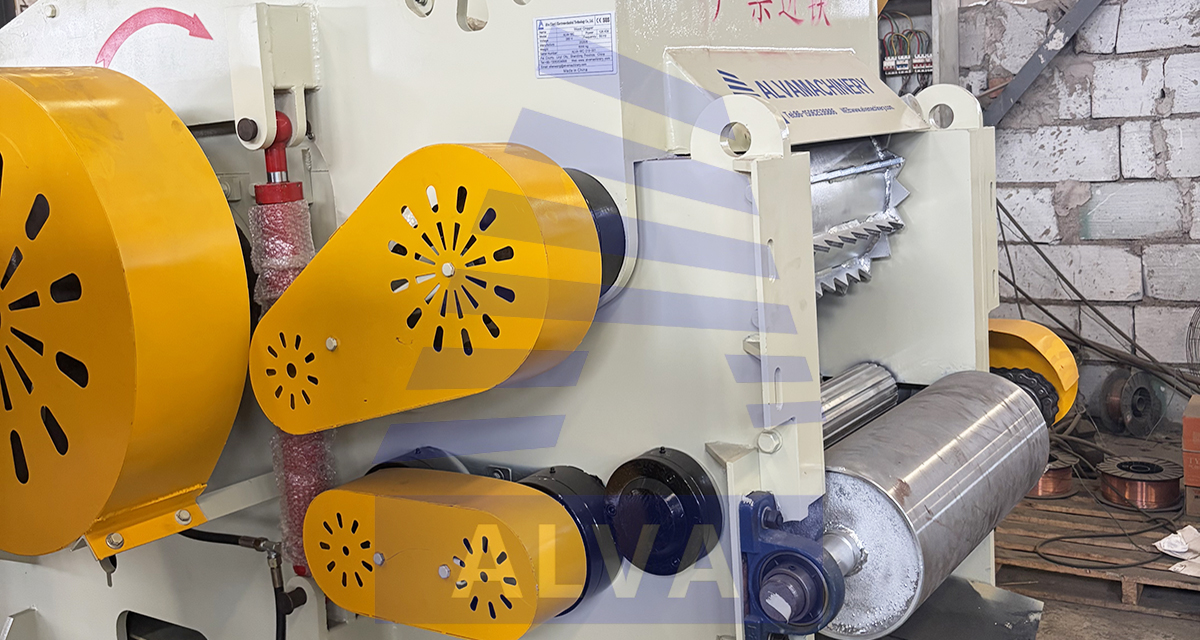
Shandong Alva Machinery Group’s Woodworking Machinery Division recently announced that the Alva Model 219 wood crusher has completed its entire trial-run procedure, with all performance indicators meeting design specifications. The equipment is scheduled to be loaded for shipment to a customer site in Southeast Asia in the near future. This marks another phased achievement in Alva Machinery’s market expansion in Southeast Asia and signifies a new level of capability in product delivery and after-sales service in the region.
I. Development Background and Product Positioning
The Alva Model 219 wood crusher is an upgraded product developed by Alva Machinery based on years of manufacturing experience in woodworking machinery, tailored specifically to the characteristics of timber resources and the processing industry demands in Southeast Asia. As a globally important region for timber processing and export, Southeast Asia possesses abundant tropical wood resources, and the forestry processing industry holds a significant position in the regional economy. However, wood processing enterprises in this area have long faced practical issues such as insufficient equipment adaptability and high maintenance costs. Drawing on in-depth research into local raw material properties, operating environments, and end‑use applications, the Alva technical team completed the systematic design and continuous refinement of the Model 219, building on the Group’s more than two decades of manufacturing expertise.
Throughout the development process, full consideration was given to the climatic conditions of Southeast Asia, the diversity of wood species, and the differentiated requirements of various application scenarios, striving for a balance between equipment applicability and operational stability. As one of the key models in Alva Machinery’s international product portfolio, the Model 219 embodies the Group’s strategic commitment to “driving product upgrades through technology and expanding overseas markets through quality.”
II. Trial‑Run Process and Quality Control
The trial run was carried out strictly in accordance with internationally accepted standards and the client’s specific technical requirements. During the trial, the Alva technical team conducted comprehensive, multi‑dimensional system tests, covering no‑load operation, load operation, continuous running stability, energy consumption levels, noise control, and safety performance.
During the no‑load phase, the team verified primary parameters such as main shaft rotation, bearing performance, and fit clearances of all components, ensuring that installation precision and operational smoothness met design criteria. In the load phase, typical timber materials from Southeast Asia were used for actual crushing operations, testing the equipment’s processing capability and crushing effect under different feed speeds and moisture content levels. The continuous running test simulated prolonged industrial production conditions, examining temperature behaviour, component wear, and operational stability under sustained high loads.
All trial data were systematically recorded and compared against benchmarks. Every indicator reached the preset standards. Key quality parameters such as particle size distribution and morphological consistency of the crushed output satisfied the client’s technical requirements for downstream applications. The equipment operated smoothly overall, with all subsystems cooperating well and safety devices responding effectively. The successful completion of the trial run validated the effectiveness of Alva Machinery’s full‑chain quality control system—from design to manufacturing.
III. Core Technical Advantages
The Alva Model 219 wood crusher demonstrates systematic advantages across multiple technical dimensions, which stem from the Group’s sustained investment and accumulated expertise in materials science, structural design, control systems, and manufacturing processes.
(1) Crushing Efficiency and Raw Material Adaptability
The equipment adopts an advanced crushing technology route that efficiently processes various types of woody raw materials, including logs, branches, board offcuts, and waste wood. In view of the wide variety of wood species and significant differences in material properties in Southeast Asia, the crushing chamber configuration, tool layout, and power matching have been specially optimised. This enables the equipment to maintain stable processing capability when handling materials with different hardness and moisture levels. The output particle size can be adjusted according to downstream application requirements, providing suitable feedstock for diverse uses such as biomass energy production, panel processing, and pulp manufacturing.
(2) Structural Strength and Operational Durability
The machine body is fabricated from thickened steel plates that are welded and heat‑treated, providing the structural rigidity essential for high‑intensity continuous operation. Key crushing components are manufactured from high‑strength wear‑resistant materials, with specific reinforcement against abrasive wear and impact loads commonly encountered in wood crushing. Critical moving parts such as bearings and transmission shafts are sourced from high‑quality industry suppliers, ensuring long‑term precision and reliability. The overall structural design also facilitates maintenance, with a rational internal layout that allows easy inspection and replacement of wear parts.
(3) Operational Stability and Safety Protection
Systematic design measures have been implemented to enhance operational stability. Dynamic balancing calibration, vibration‑damping structural improvements, and precise transmission system adjustments collectively reduce vibration and noise levels during operation. In terms of safety, the equipment is equipped with multiple protection devices, including overload protection, over‑temperature protection, and emergency stop functions. These respond promptly under abnormal conditions, safeguarding both operators and the machine itself. The feed inlet design incorporates adequate safety clearances and smooth material guidance, minimising operational risks from the source.
(4) Intelligent Control and User‑Friendly Operation
The equipment is fitted with an intelligent control system that enables real‑time monitoring and adjustment of key operating parameters. The user interface is designed with a focus on ergonomics, reducing the skill threshold for operators. The system allows setting and regulation of core parameters such as feed speed and output particle size, enabling rapid response to changes in raw material characteristics and production demands. Integrated features like one‑touch start/stop and fault self‑diagnosis reduce manual intervention, improving operational continuity and management efficiency.
(5) Environmental Design and Energy Performance
Environmental considerations have been systematically incorporated into the equipment design. Dust generation during operation is effectively controlled, meeting increasingly stringent environmental standards. Noise reduction measures are implemented comprehensively, allowing the equipment to operate even near residential or environmentally sensitive areas. In terms of energy consumption—through optimised motor selection, improved transmission efficiency, and intelligent speed regulation—the energy usage per unit of throughput is maintained at a reasonable level. These environmental and energy‑saving features align with the global trend toward green transformation in the wood processing industry.
(6) Specific Adaptations for the Southeast Asian Market
Given the hot, humid, and dusty climate of Southeast Asia, the Alva Model 219 incorporates several targeted protective measures. The electrical system is treated with moisture‑ and dust‑proof coatings to ensure insulation integrity and signal transmission stability under humid and hot conditions. The surface anti‑corrosion painting process has been optimised for tropical environments, extending the equipment’s service life and structural durability when operating outdoors or in semi‑open conditions. The cooling and heat‑dissipation system is designed with ambient temperature factors in mind, safeguarding continuous operation under high‑temperature conditions.
IV. Shipping Arrangements and Follow‑up Services
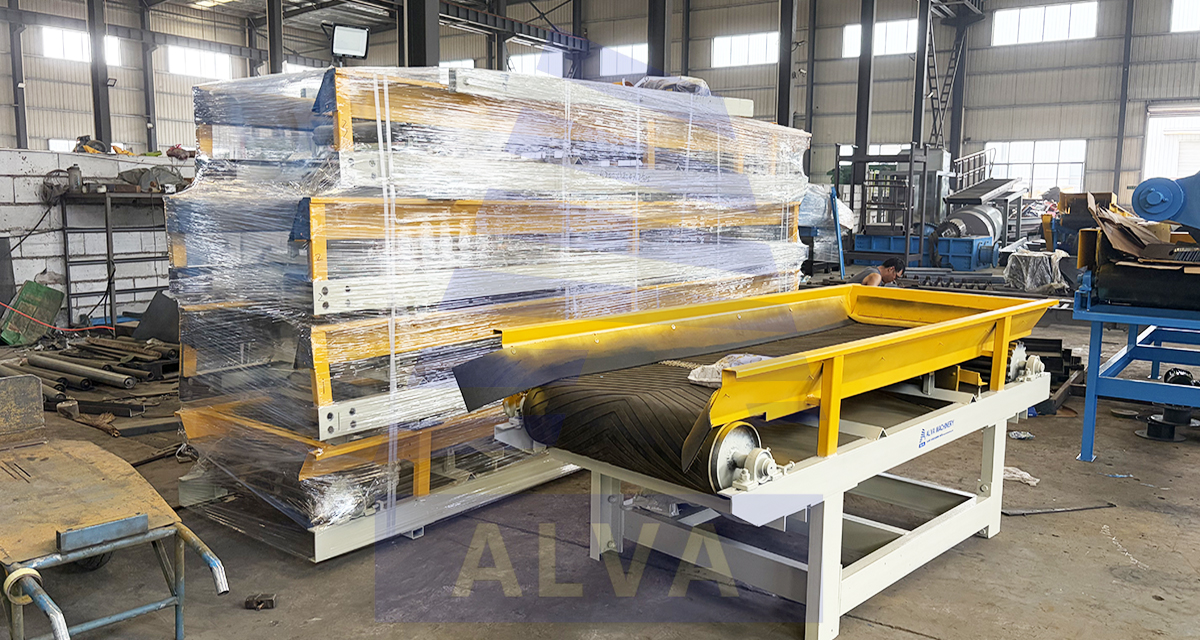
The Alva Model 219 wood crusher has now passed its final pre‑delivery inspection and packaging. The equipment will be transported by sea to the designated customer site in Southeast Asia. Alva Machinery will monitor the entire logistics process to ensure safe and timely arrival.
After delivery, Alva Machinery will dispatch a professional technical team to the customer’s site to oversee installation, commissioning, and operator training. A corresponding after‑sales service system in Southeast Asia is being established, covering spare parts supply, technical consultation, and fault response, aiming to provide full‑lifecycle technical support to customers. The Group’s local service capabilities in the Southeast Asian market are being steadily enhanced, with the goal of shortening response times and reducing customers’ operation and maintenance costs.
V. Market Significance and Development Outlook
The upcoming delivery of the Alva Model 219 wood crusher to a Southeast Asian customer represents another important step in Alva Machinery’s overseas market expansion strategy. As a major demand market for woodworking machinery, Southeast Asia places high requirements on technical sophistication, product quality, and service competence. The successful trial run and impending delivery not only confirm Alva Machinery’s comprehensive strength in R&D and manufacturing but also lay a foundation for brand recognition and deeper market penetration in the region.
Alva Machinery consistently adheres to the development philosophy of “ecology as the source, innovation as the soul,” and is committed to providing efficient, stable, and sustainable equipment solutions for the global wood processing industry. The Group will continue to increase R&D investment, closely monitor changes in international market demand, and persistently drive product iteration and upgrades, so as to repay the trust of global customers with better products and services.
VI. Conclusion
The successful completion of the trial run and the imminent shipment of the Alva Model 219 wood crusher mark another solid step forward in Alva Machinery’s internationalisation journey. From R&D and design to production and manufacturing, from trial verification to delivery and service—every stage reflects Alva Machinery’s relentless pursuit of quality and its high sense of responsibility toward customers. Going forward, Alva Machinery will continue to be driven by technological innovation and guided by customer needs, promoting Chinese‑made woodworking machinery to an ever‑broader international arena.For more information, please click this link:https://www.alvamachinery.com/Wood-Crusher-Machine-pl45406907.html

 English
 العربية
 Français
 Русский
 Español
 Português
 Deutsch
 italiano
 日本語
日本語 한국어
한국어 Nederlands
 Tiếng Việt
 ไทย
ไทย Polski
 Türkçe
 አማርኛ
አማርኛ ພາສາລາວ
 ភាសាខ្មែរ
 Bahasa Melayu
 ဗမာစာ
ဗမာစာ தமிழ்
தமிழ் Filipino
 Bahasa Indonesia
 magyar
 Română
 Čeština
 Монгол
 қазақ
қазақ Српски
 हिन्दी
 فارسی
فارسی Kiswahili
 Slovenčina
 Slovenščina
 Norsk
Norsk Svenska
 українська
 Ελληνικά
 Suomi
Suomi Հայերեն
 עברית
עברית Latine
 Dansk
Dansk اردو
اردو Shqip
Shqip বাংলা
বাংলা Afrikaans
 Māori
Māori অসমীয়া
 Беларуская мова
 Català


