1. Introduction
Plywood demand grows fast today. But wet veneers cause defects. Factories need reliable drying. A Veneer Dryer solves this challenge. It removes moisture quickly and evenly. In this article, you will learn how competitive hot press veneer dryers work and how they reduce production costs.
2. How a Competitive Price Hot Press Veneer Dryer Machine Works
Basic Working Principle of a Hot Press Veneer Dryer
A hot press Veneer Dryer operates by applying controlled pressure and heat through heated metal plates, which directly contact the veneer sheets during the drying process. This direct contact heating method allows thermal energy to penetrate wood fibers rapidly, accelerating the evaporation of moisture from the interior of the veneer while preventing excessive temperature fluctuations that might damage the material.
During operation, wet veneer sheets are loaded between heated plates, and the press system maintains a constant pressure that keeps the sheets flat while heat transfers evenly across the surface. As the temperature rises, water inside the wood cells begins to convert into vapor and gradually escapes from the veneer structure. Because the heat transfer occurs through direct contact instead of relying solely on airflow, drying cycles are often shorter and more energy efficient than many traditional drying technologies.
In plywood factories, this process is typically integrated directly after veneer peeling operations. Once the veneer sheets are produced by peeling machines, they can be transferred immediately to the hot press dryer, reducing material handling steps and maintaining stable moisture conditions before gluing and pressing.
Heat Transfer and Moisture Removal Mechanism
The effectiveness of a Veneer Dryer depends largely on how efficiently heat is transferred to the wood and how quickly moisture vapor can be removed from the drying chamber. In hot press dryers, thermal energy moves from the heated plates into the veneer sheets through conduction, which is one of the fastest heat transfer methods available in industrial drying.
As heat penetrates the veneer structure, the moisture inside the wood begins to evaporate, forming vapor that moves toward the surface of the sheet. Ventilation systems or small airflow channels help carry the vapor away from the veneer surface so that new moisture can continue to evaporate from deeper layers within the wood.
Because this process is highly controlled, operators can adjust parameters such as temperature, pressure, and drying time to match different veneer thicknesses and wood species. Proper control ensures that the veneer reaches a consistent moisture level without becoming brittle or developing internal stress that may lead to cracks.
Integration with Veneer Peeling and Plywood Hot Press Processes
Modern wood processing factories aim to create continuous production lines that reduce manual handling and increase efficiency. A hot press Veneer Dryer can easily integrate into such automated systems because it sits naturally between the veneer peeling stage and the plywood hot pressing stage.
After veneers are peeled from logs, they often have high moisture content and require immediate drying before they can be glued into plywood panels. By connecting the peeling machine, veneer dryer, and gluing equipment into a single production line, manufacturers can maintain stable moisture conditions and minimize the time veneers spend exposed to environmental humidity.
This integration reduces production delays, improves product consistency, and increases the overall output of the manufacturing line.
Key Differences Between Hot Press Drying and Traditional Veneer Dryer Systems
Traditional veneer dryers often rely on hot air circulation to remove moisture from veneer sheets, which can require longer drying times and larger equipment structures. In contrast, a hot press Veneer Dryer transfers heat directly through contact with heated plates, enabling faster drying cycles and more precise temperature control.
However, other modern technologies also exist to improve veneer drying performance. For example, mesh belt dryers use conveyor systems that allow hot air to penetrate veneers from both the upper and lower sides. This airflow-based method provides excellent drying uniformity and is widely used in large continuous production lines.
Drying Method | Heating Mode | Production Mode | Typical Application |
Hot Press Veneer Dryer | Contact heating | Batch production | Small and medium plants |
Roller Veneer Dryer | Hot air circulation | Continuous production | Large plywood factories |
Mesh Belt Veneer Dryer | Hot air penetration | Continuous production | High-end veneer drying |
3. Cost Advantages of a Competitive Price Veneer Dryer Machine
One of the most attractive features of a hot press Veneer Dryer is its competitive price compared with large industrial drying systems. Traditional continuous veneer dryers require extensive heating chambers, powerful fans, and large conveyor systems, which significantly increase equipment investment and installation costs. In contrast, hot press dryers use simpler mechanical structures and compact heating systems, making them more affordable for many wood processing companies.
In addition to lower initial investment, modern veneer drying technology also focuses on reducing energy consumption. Many manufacturers design their equipment with improved insulation materials and optimized heat transfer mechanisms so that less energy is required to achieve the same drying performance. In some cases, advanced drying systems can reduce energy usage by around 20–30 percent compared with older equipment, although actual savings may vary depending on operating conditions.
Lower operating costs also contribute to faster return on investment. When veneers are dried evenly and efficiently, the number of defective sheets decreases significantly, which reduces material waste and increases the overall yield of plywood production. These factors combine to make competitive price veneer dryers highly attractive for manufacturers seeking to balance performance and affordability.
Cost Factor | Traditional Large Dryer | Competitive Price Hot Press Dryer |
Equipment investment | High | Moderate |
Installation cost | High | Lower |
Energy consumption | Moderate–High | Lower |
Maintenance complexity | Complex | Simple |
4. Key Features of Modern Hot Press Veneer Dryer Machines
Modern hot press veneer dryers include several advanced features designed to improve efficiency and reliability. Precision temperature control systems allow operators to maintain consistent heating conditions throughout the drying cycle, ensuring that veneer sheets dry evenly without developing defects. Pressure control mechanisms also play a key role because they keep veneer sheets flat while preventing deformation during heating.
Uniform heat distribution is another essential feature, as uneven heating can lead to moisture differences within veneer sheets. High-quality heating plates and advanced control systems ensure that heat spreads evenly across the entire veneer surface, reducing the risk of cracking or warping.
Automation has also become a common feature in modern drying equipment. Sensors can monitor temperature and moisture levels in real time, allowing operators to adjust drying parameters automatically. This not only improves product consistency but also reduces the need for constant manual supervision.
5. Types of Veneer Dryer Machines Used in Plywood Production
Several types of veneer drying equipment are used in modern wood processing plants, each designed to meet specific production needs. Roller veneer dryers are widely used in large plywood factories because they allow continuous drying of large volumes of veneer sheets using hot air circulation. Mesh belt dryers, on the other hand, provide excellent airflow penetration and are especially suitable for decorative veneers that require high surface quality.
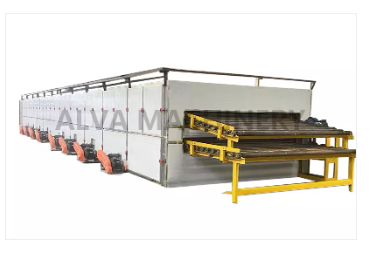
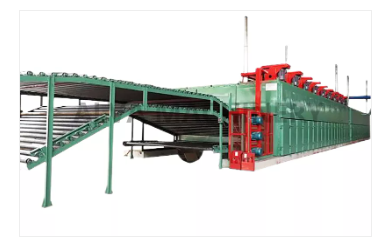
A notable example is the Mesh Belt Veneer Dryer developed by Alva Machinery Co., Ltd., which is designed specifically for veneers with thicknesses ranging from 0.2 to 5 millimeters. This system spreads veneer sheets flat on a stainless steel mesh conveyor belt while hot air flows simultaneously from the upper and lower sides of the drying chamber. This design ensures that every veneer sheet receives uniform heat and consistent moisture evaporation across its entire surface.
Because the veneers are fully spread on the mesh belt without stacking or squeezing, the drying process minimizes defects such as warping, shrinkage, or surface cracking. Moisture content deviation can be controlled within approximately ±1 percent, which helps preserve the natural texture and appearance of decorative veneers used in high-end furniture and interior design applications.
Another important advantage of the Alva mesh belt system is its ability to integrate seamlessly with other equipment in the plywood production line. The dryer can connect directly with veneer peeling machines at the front end and gluing or composing machines at the back end, enabling continuous and automated operation. This significantly shortens the production cycle while increasing hourly processing capacity.
6. Benefits of Using a Competitive Price Veneer Dryer in Wood Processing
Using an efficient Veneer Dryer offers several advantages for woodworking manufacturers. Faster drying cycles allow factories to increase production capacity while maintaining consistent product quality. Because moisture levels can be controlled precisely, veneers remain flat and stable during gluing and pressing operations.
Consistent drying also improves adhesive bonding performance, which is crucial for plywood manufacturing. Industry research indicates that veneer moisture content typically needs to remain between about 6 percent and 12 percent in order to achieve optimal bonding strength and product durability.
Another important benefit is the reduction of waste caused by moisture-related defects. When veneer sheets warp or crack during drying, they often cannot be used in plywood production, which results in higher material costs. Efficient drying systems significantly reduce this risk and improve overall production yield.
7. How to Choose the Right Hot Press Veneer Dryer Machine
Selecting the right veneer drying equipment requires careful evaluation of several factors, including production capacity, factory layout, and energy efficiency. Small factories may prefer compact hot press dryers because they require less installation space and lower investment, while large factories may benefit from continuous mesh belt or roller drying systems that support higher production volumes.
Manufacturers should also consider the type of wood being processed. Hardwoods often require slower drying schedules to prevent cracking, while softwoods may tolerate faster drying temperatures. Equipment with adjustable parameters and automated control systems provides greater flexibility for handling different wood species and veneer thicknesses.
8. Maintenance Tips for Long-Term Veneer Dryer Performance
Maintaining a Veneer Dryer properly is essential for ensuring long-term performance and minimizing downtime. Regular inspections should be performed on heating plates, press systems, and conveyor components to ensure that they remain in good condition. Sensors used to monitor temperature and moisture levels should also be calibrated periodically to maintain accurate readings.
Cleaning airflow channels and heat transfer components is another important maintenance practice because dust and debris can reduce drying efficiency over time. Preventive maintenance programs help detect potential issues early, allowing factories to repair equipment before serious problems occur.
9. Conclusion
Veneer drying plays a crucial role in plywood and wood panel manufacturing because it directly affects product quality, production efficiency, and overall operating costs. A competitive price hot press Veneer Dryer offers an effective solution for many manufacturers by combining fast drying performance with lower equipment investment.
At the same time, advanced technologies such as mesh belt drying systems from Alva Machinery Co., Ltd. demonstrate how modern equipment can further improve drying uniformity and support continuous production lines for medium and large woodworking enterprises. By selecting the right veneer drying technology, manufacturers can reduce waste, improve product consistency, and strengthen their competitiveness in the global wood processing industry.
FAQ
Q: What is a hot press Veneer Dryer machine?
A: A hot press Veneer Dryer removes moisture from veneers using heated plates, ensuring fast drying and stable veneer quality for plywood production.
Q: Why is a Veneer Dryer important in plywood manufacturing?
A: A Veneer Dryer controls moisture levels, prevents warping or cracking, and prepares veneers for gluing and pressing.
Q: How does a hot press Veneer Dryer reduce production costs?
A: A Veneer Dryer shortens drying cycles, lowers energy use, and reduces defective veneer waste.
Q: What moisture level should a Veneer Dryer achieve?
A: A Veneer Dryer typically dries veneers to about 6–12% moisture for stable bonding in plywood.
Q: How does a hot press Veneer Dryer compare with mesh belt dryers?
A: A Veneer Dryer with hot press plates suits compact factories, while mesh belt dryers support continuous large-scale drying.

 English
 العربية
 Français
 Русский
 Español
 Português
 Deutsch
 italiano
 日本語
日本語 한국어
한국어 Nederlands
 Tiếng Việt
 ไทย
ไทย Polski
 Türkçe
 አማርኛ
አማርኛ ພາສາລາວ
 ភាសាខ្មែរ
 Bahasa Melayu
 ဗမာစာ
ဗမာစာ தமிழ்
தமிழ் Filipino
 Bahasa Indonesia
 magyar
 Română
 Čeština
 Монгол
 қазақ
қазақ Српски
 हिन्दी
 فارسی
فارسی Kiswahili
 Slovenčina
 Slovenščina
 Norsk
Norsk Svenska
 українська
 Ελληνικά
 Suomi
Suomi Հայերեն
 עברית
עברית Latine
 Dansk
Dansk اردو
اردو Shqip
Shqip বাংলা
বাংলা Afrikaans
 Māori
Māori অসমীয়া
 Беларуская мова
 Català


