 | Product Introduction |
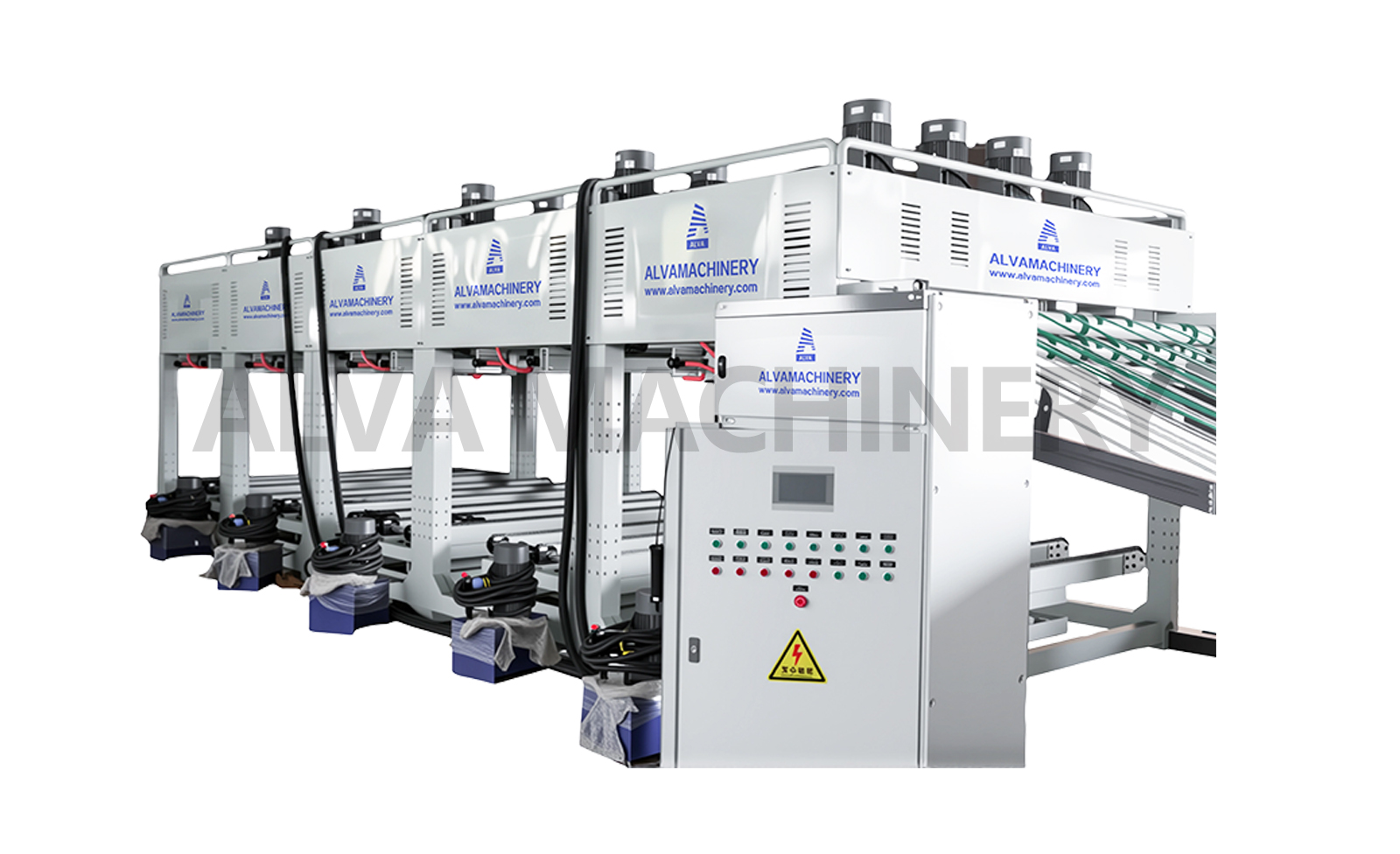
Alva Four-level Veneer Stacker is an indispensable automated auxiliary equipment in the plywood and veneer processing production lines. Its design goal is precisely oriented to the key processes of grading, sorting and stacking in the veneer (thin wood board) processing flow, and it is core-adapted to the "four-level grading" veneer quality standard commonly used in the plywood industry, providing important support for the standardized and efficient operation of the production line.
In the plywood production chain, after veneers are processed through pre-processes such as rotary cutting and drying, they need to be graded based on core indicators including thickness deviation, surface defects (such as wormholes, cracks, knots) and texture uniformity.
The "four-level grading" standard is widely adopted in the industry to define veneer quality, and veneers of different grades correspond to the production needs of plywood of different specifications — Grade 1 and Grade 2 veneers are mostly used for the surface layer of plywood, requiring flat surfaces and beautiful textures; Grade 3 and Grade 4 veneers are used for the inner layer or structural filling, focusing on physical strength and dimensional stability. The Four-level Veneer Stacker is developed specifically for this core demand, specially solving the pain points of low efficiency, large errors and irregular stacking in traditional manual sorting and grading.
| Product Display |
| Product Advantages |
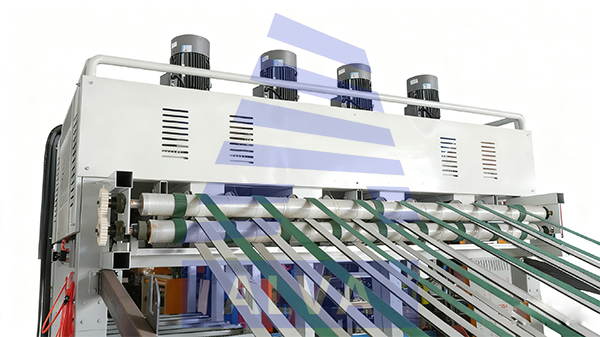
Multi-unit Drive for Accurate and Efficient Grading and Sorting
As can be seen from the multi-motor configuration in the first picture, the equipment adopts independent drive units, which can synchronously meet the sorting needs of four-level veneers. This design prevents veneers of different grades from mixing, ensuring grading accuracy. Meanwhile, the parallel operation of multiple units greatly improves sorting efficiency.
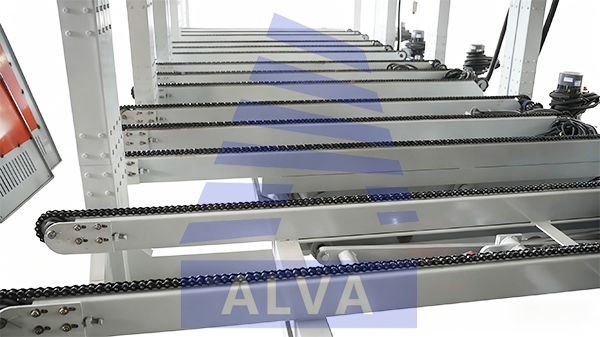
Chain Drive Conveying for Stable and Reliable Material Flow
The chain drive structure shown in the second picture enables veneers to bear uniform force and operate stably during the conveying process. It can adapt to veneers of different specifications (thickness/width), reducing problems such as conveying jams and deviations, and ensuring the continuity and stability of material flow.
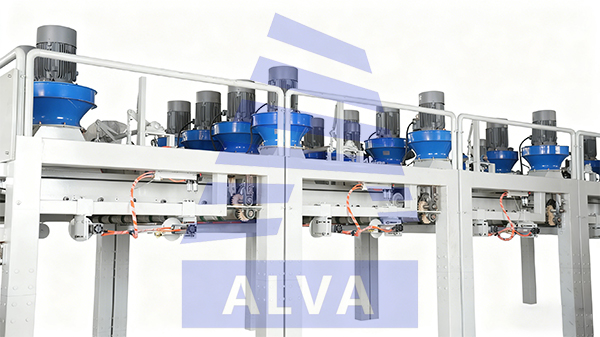
Modular Structure for Multi-scenario Production Adaptation
The modular layout of the equipment (multiple functional units + expandable structure) displayed in the third picture can flexibly adapt to plywood production lines with different capacities. It can not only meet the basic grading and stacking needs of small and medium-sized factories, but also connect with the joint operation of the full-process automated production lines in large factories.
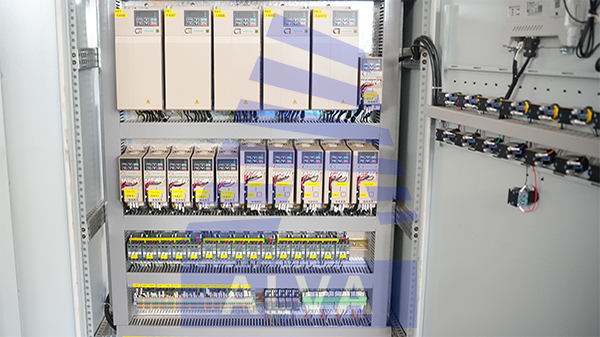
Modular Structure for Multi-scenario Production Adaptation
The modular layout of the equipment (multiple functional units + expandable structure) displayed in the third picture can flexibly adapt to plywood production lines with different capacities. It can not only meet the basic grading and stacking needs of small and medium-sized factories, but also connect with the joint operation of the full-process automated production lines in large factories.

 English
 العربية
 Français
 Русский
 Español
 Português
 Deutsch
 italiano
 日本語
日本語 한국어
한국어 Nederlands
 Tiếng Việt
 ไทย
ไทย Polski
 Türkçe
 አማርኛ
አማርኛ ພາສາລາວ
 ភាសាខ្មែរ
 Bahasa Melayu
 ဗမာစာ
ဗမာစာ தமிழ்
தமிழ் Filipino
 Bahasa Indonesia
 magyar
 Română
 Čeština
 Монгол
 қазақ
қазақ Српски
 हिन्दी
 فارسی
فارسی Kiswahili
 Slovenčina
 Slovenščina
 Norsk
Norsk Svenska
 українська
 Ελληνικά
 Suomi
Suomi Հայերեն
 עברית
עברית Latine
 Dansk
Dansk اردو
اردو Shqip
Shqip বাংলা
বাংলা Afrikaans
 Māori
Māori অসমীয়া
 Беларуская мова
 Català


