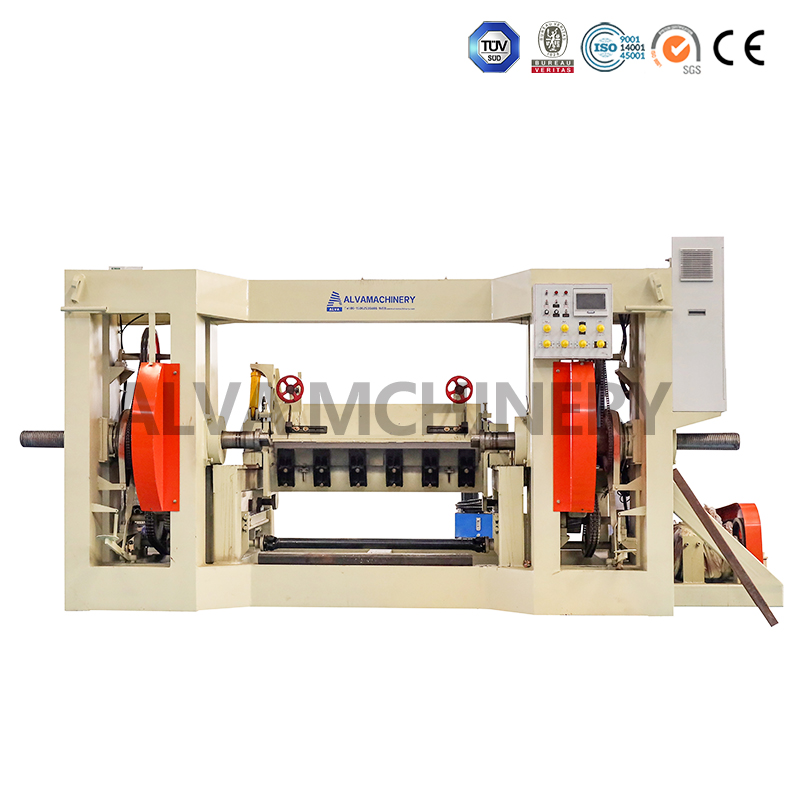
In high-volume plywood and veneer manufacturing, the mechanical stability of the peeling lathe directly dictates profitability and raw material utilization. A fraction of a millimeter in thickness variation can ruin an entire batch. You need equipment engineered for absolute consistency. The Gear Pressing Veneer Peeling Machine acts as a specialized mechanical solution designed to maintain continuous, uniform pressure. It operates flawlessly during rotary peeling to minimize thickness variations and eliminate log spin-outs. This design provides unwavering stability against dense wood blocks.
This guide deconstructs how gear-driven pressure mechanisms operate in modern mills. You will discover where they outperform standard hydraulic or friction-drive alternatives. Finally, we explore how to evaluate them accurately for your production line.
Key Takeaways
Mechanism: Gear pressing systems utilize mechanically synchronized gears to drive the pressure rollers, ensuring zero-slip traction during heavy-duty log processing.
Primary Benefit: Drastically improves the yield of precision veneer from both large-diameter and irregular logs by eliminating pressure fluctuations.
Implementation Risk: Mechanical gear wear and backlash over time require strict preventative maintenance and lubrication protocols compared to alternative drive systems.
Buying Criteria: Procurement should prioritize gear metallurgy (e.g., hardened alloy steel), synchronization software, and integration capabilities with downstream clipping lines.
The Mechanics of a Gear Pressing Veneer Peeling Machine
Technical Definition and Operation
A gear pressing system relies on mechanically synchronized gear sets to actuate pressure rollers against a wood block. These gears lock the pressure roller in a rigid position. This setup maintains an exact clearance between the roller and the peeling knife. We call this clearance the knife gap. Mechanical gears eliminate the flexing often seen in lighter machines. They hold the knife gap steady, even when encountering hard knots in the wood. It ensures the blade slices through the log without drifting.
The Role in Rotary Peeling
The gear drive system plays a crucial role as the log diameter shrinks. It synchronizes the feed rate of the knife carriage with the diminishing size of the wood block. Sensors communicate with servo motors to adjust the carriage speed in real time. The gears translate this motor torque into direct, slip-free movement. This continuous adjustment prevents the veneer ribbon from breaking. It maintains a constant peeling velocity from the bark down to the final core.
Mechanical vs. Hydraulic Pressure
Traditional lathes often use hydraulic cylinders to apply pressure. Hydraulics deliver massive force, but fluid compresses slightly under sudden loads. This elasticity causes the pressure roller to bounce when hitting irregular wood grain. The bounce creates micro-variations in sheet thickness. Gear pressing uses direct, unyielding mechanical force. Solid metal gears do not compress. They push through resistance and guarantee exact thickness consistency across the entire sheet.
| System Type | Force Application | Thickness Consistency | Rebound Risk |
| Hydraulic Pressing | Fluid compression via cylinders | Moderate to High | Prone to micro-bouncing on hard knots |
| Gear Pressing | Direct mechanical gear drive | Extremely High | Zero rebound due to rigid locking |
Core Business Problems Solved in Log Processing
Defeating Log Spin-Outs
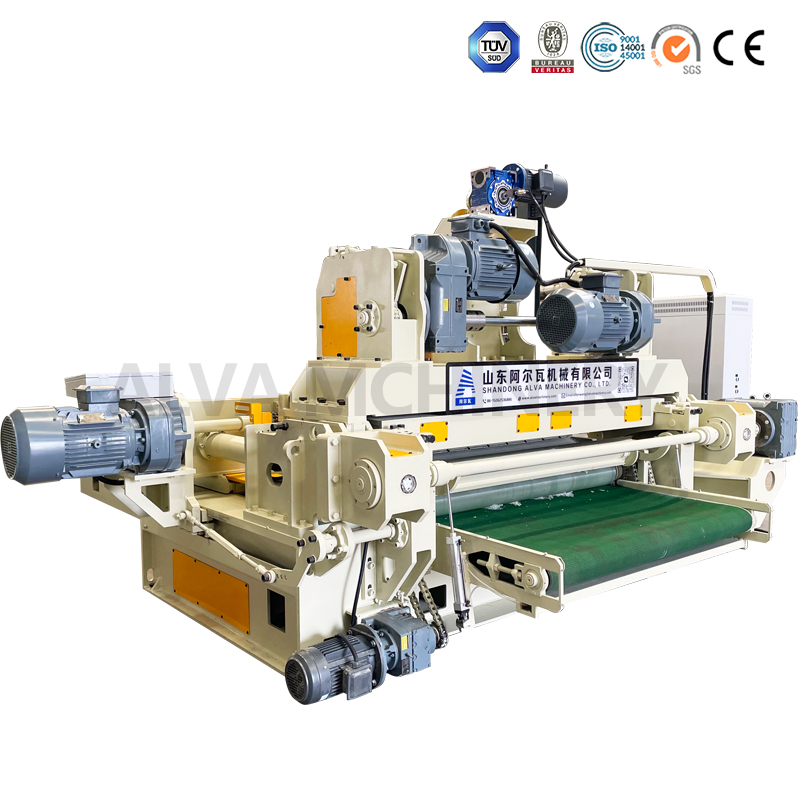
Spin-outs happen when pressure rollers lose grip on the wood block. Soft, wet, or heavily tapered wood often causes standard friction rollers to slip. The log stops spinning, but the blade keeps pushing. This ruins the block and halts production. Gear-driven traction prevents this entirely during heavy-duty log processing. The gears force the rollers to bite deep into the wood surface. They maintain positive traction. This steady rotation continues until the core drops, drastically reducing wasted materials and machine downtime.
Maximizing Veneer Recovery Rate (VRR)
Veneer Recovery Rate directly dictates a mill's profitability. Stable gear pressure allows operators to peel blocks down to a much smaller residual core diameter. A machine that drops a 40mm core wastes far less wood than one dropping a 60mm core. This small difference multiplies across thousands of logs daily. You extract more continuous ribbon from each block. Less high-quality wood ends up chipped for boiler fuel. This mechanical advantage directly increases your material return on investment.
Achieving Precision Veneer Tolerances
High-grade plywood faces require exact thickness tolerances, often around ±0.05mm. Slight variations cause massive problems downstream. Thin spots lead to delamination inside the hot press. Thick spots waste expensive face-grade timber. Gear rigidity prevents the blade from vibrating. It completely eliminates "chatter marks" and corrugated cuts on the wood surface. By maintaining absolute rigidity, you produce precision veneer that meets strict export standards. You get perfectly smooth, uniform sheets every single time.
Evaluation Criteria: Selecting the Right Gear Pressing Lathe
Component Metallurgy and Hardness
You must rigorously inspect the metallurgical properties of the machine's components. Primary drive gears require hardened alloy steel. Look for Rockwell hardness (HRC) specifications between 58 and 62. Pressure rollers need similar thermal treatments. Soft steel gears wear out rapidly under constant torque. They quickly introduce backlash into the cutting process. Backlash destroys thickness consistency. Always ask vendors to provide metallurgical certificates for their gear sets before purchasing.
Drive System Synchronization
A superior machine relies on flawless communication between its moving parts. You must evaluate how the equipment coordinates servo motors with the gear assembly.
Check the servo response time: Faster response times prevent the knife from lagging behind the log diameter changes.
Evaluate the peeling speed control: The system must manage speeds (m/min) seamlessly without tearing the delicate veneer ribbon.
Assess the software interface: Operators need clear digital readouts to monitor gear synchronization and adjust tension on the fly.
Structural Rigidity & Vibration Dampening
The frame of the lathe acts as its foundation. Gear pressing generates massive torque. Weak frames will twist and flex under this mechanical strain. You must assess the cast-iron or heavy-duty steel frame requirements. A heavier machine usually performs better. Massive weight dampens vibrations. It prevents harmonic distortions from traveling through the frame and reaching the knife. If the frame vibrates, the veneer surface will show visible chatter marks.
Safety and Compliance
Industrial peeling machines pose severe safety risks if not properly shielded. You must verify the presence of emergency mechanical overrides. The gears must stop instantly if an operator hits the emergency shutoff. Ensure proper operator guarding encases all exposed gear sets. Verify compliance with regional industrial safety standards. Look for CE marks if operating in Europe or OSHA compliance for North American facilities. You must protect your workers from heavy, fast-moving metal parts.
Implementation Realities: Maintenance, Risks, and Adoption
The Reality of Mechanical Wear
You must acknowledge the skeptical reality of mechanical systems. Gears are highly susceptible to wear and tooth pitting. Backlash develops naturally if you operate the machine continuously at maximum load. You cannot ignore this mechanical degradation. Hydraulic systems leak, but gear systems wear down. Regular visual inspections are mandatory. Maintenance teams must measure gear teeth clearance weekly. Catching early signs of wear prevents sudden, catastrophic gear failures during peak production shifts.
Lubrication and Environmental Challenges
Veneer mills present a brutal operating environment. Wood dust, sticky sap, and high moisture levels are highly abrasive. They act like sandpaper on exposed gears. Automated lubrication systems are an absolute necessity. They use distribution blocks to pump precise amounts of grease onto gear teeth. This constant flow of lubrication flushes out abrasive debris. It protects the metal surfaces from scoring. Manual greasing is rarely sufficient because operators often miss hidden gear tracks.
Operator Training Requirements
Operators face a steep learning curve. Transitioning from standard spindleless lathes to gear-pressing models takes structured time. The mechanics behave differently. You must prioritize specific training areas:
Knife gap calibration: Operators must learn how gear rigidity affects the blade pitch and micro-adjustments.
Backlash management: Staff must understand how to detect slight gear delays and recalibrate the digital sensors.
Emergency protocols: Teams need drills on mechanical override systems to prevent major machine crashes.
Shortlisting Logic and Next Steps for Procurement
Defining Success Metrics
Establish strict baseline requirements before initiating vendor outreach. Do not browse catalogs blindly. Know your target log diameter ranges. A lathe built for 800mm logs operates differently than one built for 300mm cores. Understand your wood species density. Hardwoods require drastically different gear ratios than softwoods. Calculate your required output volume in cubic meters per shift. Clear internal metrics prevent you from buying an underpowered machine or overspending on unnecessary features.
Factory Acceptance Testing (FAT)
Never sign off on equipment delivery without proof of performance. Advise your procurement team to mandate live Factory Acceptance Testing. You must bring your own specific wood species to the manufacturer's facility. Eucalyptus behaves entirely differently than Birch or Pine under a peeling knife. Run live peeling tests. Measure the output sheets with digital calipers. Verify the thickness tolerances in person. If the machine cannot hold a ±0.05mm tolerance during the FAT, reject it.
Vendor Support Validation
Machine downtime costs thousands of dollars per hour. Require documented service level agreements (SLAs) from your shortlisted vendors. Check their spare gear availability. Do they hold replacement gears in local warehouses, or do they ship them overseas? Ask for documented Mean Time Between Failures (MTBF) data for their gear assemblies. Rapid, reliable technical support minimizes costly production halts. Choose a vendor who acts as a long-term operational partner.
Conclusion
Audit your waste: Calculate your current core waste percentages and spin-out frequency to justify the upgrade.
Request capability studies: Ask shortlisted machine builders for data proving their gear rigidity on your specific wood species.
Prioritize maintenance protocols: Budget for automated lubrication systems immediately to protect your mechanical investment.
Evaluate the long-term yield: Remember that a gear pressing veneer peeling machine delivers a measurable increase in high-quality veneer yield, outweighing initial setup hurdles.
Upgrade strategically: This machinery is highly effective for operations actively struggling with traction loss and thickness variations.
FAQ
Q: What log diameters are best suited for gear pressing peeling machines?
A: These machines excel in medium to large diameter ranges, typically between 300mm and 800mm. The mechanical gears provide the massive torque required to spin heavy logs without slipping. They ensure continuous traction as the large block diminishes down to a small residual core.
Q: How does a gear pressing system handle hardwood versus softwood?
A: Hardwoods require significantly higher torque and steeper knife angles to prevent blade deflection. Gear systems handle this effortlessly because the rigid mechanical drive does not compress under the intense resistance of dense hardwood grain, unlike hydraulic alternatives.
Q: How often do the primary gears need to be replaced under continuous operation?
A: Primary gears typically last 3 to 5 years under continuous heavy operation. However, this lifespan depends entirely on the effectiveness of your automated lubrication system and the abrasiveness of the wood species you process daily.
Q: Can gear pressing mechanisms be retrofitted onto existing spindleless lathes?
A: It is rarely feasible. Gear pressing systems require a highly rigid, purpose-built cast-iron chassis to handle the torque. Existing spindleless frames usually lack the structural integrity and servo synchronization capabilities required for a successful retrofit.

 English
 العربية
 Français
 Русский
 Español
 Português
 Deutsch
 italiano
 日本語
日本語 한국어
한국어 Nederlands
 Tiếng Việt
 ไทย
ไทย Polski
 Türkçe
 አማርኛ
አማርኛ ພາສາລາວ
 ភាសាខ្មែរ
 Bahasa Melayu
 ဗမာစာ
ဗမာစာ தமிழ்
தமிழ் Filipino
 Bahasa Indonesia
 magyar
 Română
 Čeština
 Монгол
 қазақ
қазақ Српски
 हिन्दी
 فارسی
فارسی Kiswahili
 Slovenčina
 Slovenščina
 Norsk
Norsk Svenska
 українська
 Ελληνικά
 Suomi
Suomi Հայերեն
 עברית
עברית Latine
 Dansk
Dansk اردو
اردو Shqip
Shqip বাংলা
বাংলা Afrikaans
 Māori
Māori অসমীয়া
 Беларуская мова
 Català


