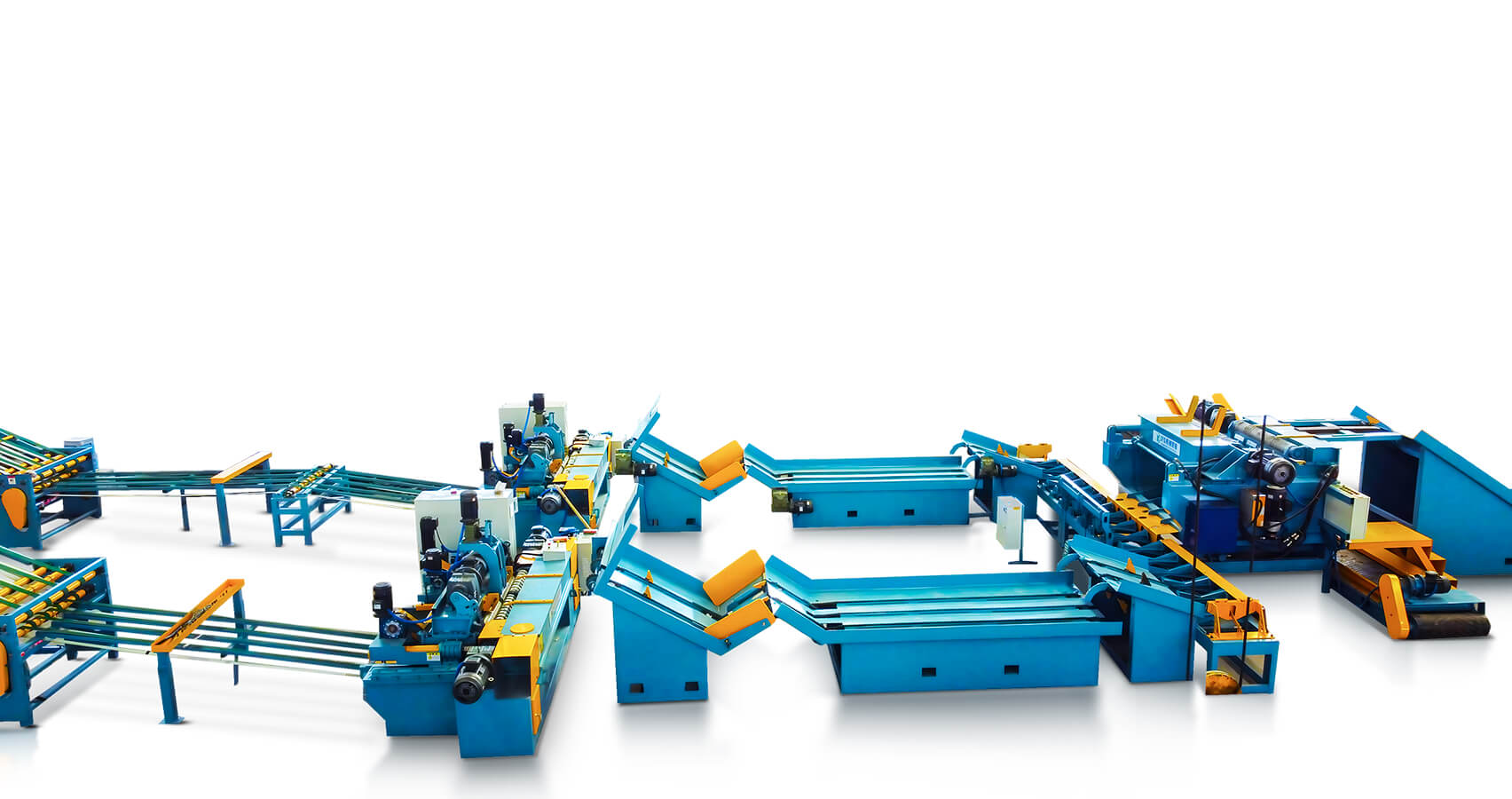
Transitioning a traditional facility to an automated model demands significant capital investment. Modern manufacturers face intense operational pressure today. Labor costs keep rising steadily across global markets. Raw material prices remain highly volatile. Furthermore, international buyers demand increasingly strict quality tolerances. You need a reliable, efficient solution to stay competitive.
Upgrading to an automatic Plywood Production Line provides exactly this advantage. It represents far more than a simple equipment upgrade. It signals a strategic shift toward programmable, flexible automation. This comprehensive guide breaks down the verifiable benefits of automated machinery. We carefully contrast modern setups against traditional manual processes. You will discover actionable strategies for optimizing daily throughput. Finally, we provide a structured framework for evaluating vendor solutions and mitigating implementation risks.
Key Takeaways
Process Optimization: Upgrading to automated gluing and board laying drastically reduces material waste and labor dependencies while ensuring predictable daily output.
Quality Consistency: Programmable logic controllers (PLCs) in cold and hot press stages eliminate human error, ensuring uniform thickness, density, and bonding strength.
Risk Mitigation: Successful deployment relies on rigorous Factory Acceptance Testing (FAT) and modular mechanical-electrical integration to minimize onsite downtime.
Vendor Evaluation: Selecting a production line requires auditing the supplier’s parts availability, software support, and capacity to handle multiple veneer dimensions and glue types (UF, MUF, PF).
The Business Case for Upgrading Your Plywood Factory
Upgrading your traditional plywood factory fundamentally changes your operational economics. Manual handling creates severe production bottlenecks. Human fatigue inevitably slows down daily output. Programmable automation solves this dependency immediately. It stabilizes your cost-per-board metric efficiently. You protect profit margins regardless of local labor market shortages.
Consider the massive material yield improvement. Manual operations naturally waste valuable core veneer. Workers often over-apply expensive industrial adhesives during rushed shifts. Automated lines utilize precise, sensor-driven measurements. They apply exact glue volumes consistently across every single panel. You recover costly material waste quickly. Better yield translates directly into higher factory profitability.
Modern manufacturing relies heavily on flexible automation. Older fixed automation limits your product range severely. Conversely, programmable lines adapt swiftly to changing market demands. Operators can seamlessly switch between different standard sizes. Adjusting production for 1220mm x 2440mm dimensions takes mere minutes. You can easily modify settings for board thicknesses ranging from 3mm to 18mm. Prolonged equipment downtime disappears completely.
| Operational Metric | Fixed Machinery Automation | Flexible Programmable Automation |
| Product Changeover | Slow. Requires extensive physical retooling. | Fast. Digital adjustments execute via control panels. |
| Batch Flexibility | Poor. Strictly suited for massive single-product runs. | Excellent. Seamlessly handles variable thicknesses (3mm-18mm). |
| Long-term Adaptability | Low. Difficult to upgrade for new market standards. | High. Software updates and modular parts ensure longevity. |
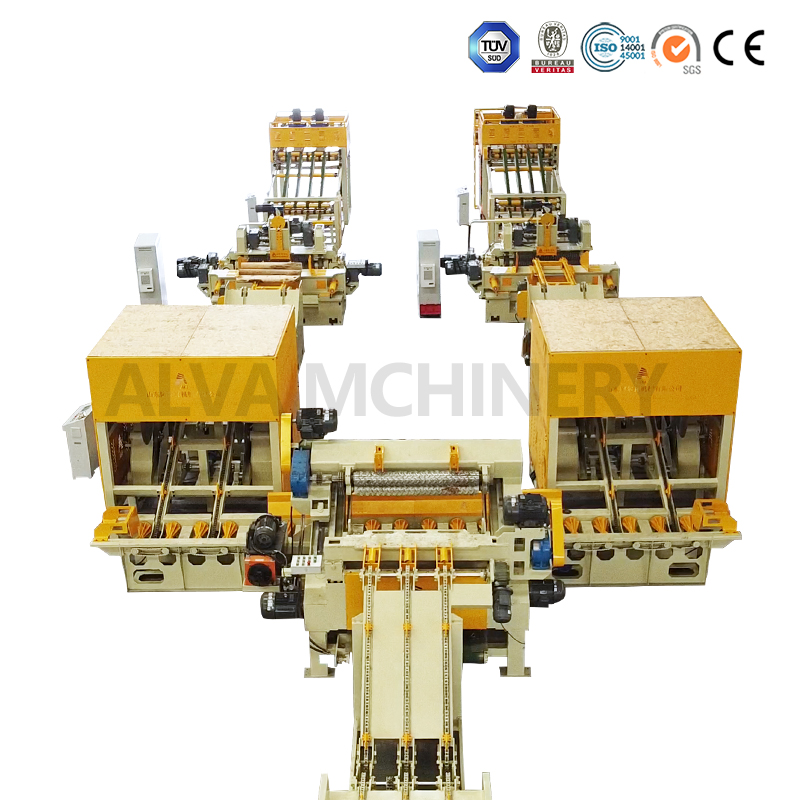
How Automation Transforms Core Manufacturing Bottlenecks
Automated Gluing for Precision and Waste Reduction
Compare a manual roller application against precision-controlled spreaders. Manual application routinely creates uneven glue distribution. Some panel areas receive too much adhesive. Other vital spots remain dangerously dry. Upgrading to automated gluing solves these critical inconsistencies permanently. Precision rollers apply an exactly calculated microscopic layer.
Compatibility variables play a massive role here. High-end spreaders offer immediate adjustability on the factory floor. You can calibrate them for varying veneer thicknesses easily. Furthermore, they integrate perfectly alongside different industrial adhesives. Urea-formaldehyde (UF), melamine-urea-formaldehyde (MUF), and phenol-formaldehyde (PF) resins all require highly specific handling. Automated spreaders maintain optimal spread rates for each distinct chemical composition.
Automated Board Laying (Veneer Paving) vs. Manual Assembly
Contrast traditional manual stacking against modern automated systems. Manual stacking requires intense physical labor. It moves slowly and exhausts your workforce. Workers frequently misalign inner core layers. This flawed manual process often traps destructive air pockets inside the panel. Automated board laying eliminates these exact operational pain points.
Sensor-driven alignment systems provide highly repeatable stacking continuously. Automated feeding mechanisms position each veneer sheet perfectly. This precision directly prevents internal core gaps. It strictly eliminates overlapping edges. Consistent layer alignment guarantees a structurally superior final product.
Advanced Pressing: Synchronizing Cold and Hot Press Stages
Synchronizing your pressing stages determines ultimate panel durability. The cold press serves a vital preparatory role in this sequence. First, it completely stabilizes the newly assembled veneer stack. The machine actively expels trapped air bubbles before the final heating phase. Finally, it provides the crucial initial adhesive tack.
Following this preparation, panels enter the hot press. You must evaluate thermal oil heating against traditional steam heating systems carefully. Thermal oil generally delivers more uniform temperature distribution. Intelligent PLC-driven controls strictly manage both temperature and hydraulic pressure. These digital safety nets prevent disastrous delamination. They significantly reduce surface defects and stop over-curing entirely. Precise thermal management ultimately defines the board's structural integrity.
Downstream Efficiency: Trimming, Sanding, and Defect Reduction
Integrated conveyors create a highly efficient continuous product flow. They move hot panels seamlessly away from the press area. Panels travel directly into rough edge trimming saws without human intervention. Next, they automatically enter fine trimming stations. Automation keeps panels moving constantly. This eliminates hazardous manual forklift transport between processing stations.
Surface finishing heavily dictates your final market price. Automated pre-milling machines prepare the rough edges perfectly. Calibration sanding machines smooth the top and bottom faces simultaneously. They remove microscopic surface imperfections instantly. You achieve premium export-grade surface finishes consistently. International buyers demand this exact level of aesthetic perfection.
Quality control integration represents a dominant emerging industry trend. Manufacturers now frequently install automated scanning modules. Inline thickness monitoring identifies production issues immediately. You receive real-time defect diagnosis directly on the main control screen. Operators can adjust upstream settings instantly. This proactive operational approach drastically reduces post-production scrap.
Implementation Realities and Deployment Risks
You must acknowledge potential deployment risks honestly. Facility footprint planning requires meticulous attention before purchasing. Customizing the line layout guarantees safe daily operation. You must fit new heavy equipment into existing factory dimensions properly. Emergency stop protocols demand strict adherence across the entire floor. Rigorous regulatory compliance keeps your workforce safe.
Factory Acceptance Testing (FAT) holds massive verifiable value. We strongly advise buyers to insist on full mechanical pre-testing. Demand comprehensive electrical trials at the manufacturer’s facility prior to shipping. This true plug-and-play approach minimizes nasty onsite surprises. It significantly shortens site deployment timeframes. Months of chaotic onsite assembly quickly shrink into manageable weeks.
Consider your long-term maintenance strategy carefully. Physical labor decreases significantly upon successful deployment. However, your need for highly skilled electrical technicians increases proportionally. Standardized spare parts ensure quick mechanical repairs. Accessible diagnostic software empowers your localized maintenance team.
Common Implementation Mistakes to Avoid
Ignoring overhead clearances: Failing to measure ceiling heights before installing multi-daylight hot press units leads to severe installation delays.
Overlooking power constraints: Proceeding without auditing your current electrical grid causes frequent breaker trips.
Skipping the FAT phase: Refusing factory pre-testing often results in complex PLC programming bugs appearing during live onsite production.
Vendor Evaluation Framework: Shortlisting the Right Manufacturer
Selecting the right equipment manufacturer requires strict evaluation criteria. Capacity matching forms your baseline metric. Align the quoted equipment throughput specs strictly to your factory output goals. Overbuying wastes precious operational capital unnecessarily. Underbuying heavily restricts your future revenue growth.
Component sourcing requires deep technical scrutiny. Evaluate the exact origin of critical internal parts. Ensure the manufacturer uses globally recognized electrical components. Pneumatic cylinders should come from established international brands. This strategic sourcing guarantees easier local replacement. You avoid waiting weeks for proprietary replacement components arriving from overseas.
Service Level Agreements (SLAs) strongly determine your long-term success. Assess the absolute reality of their 24/7 technical support. Evaluate their actual on-site installation commitments transparently. Inquire about long-term software machinery updates. A reliable manufacturing partner supports you long after initial commissioning ends.
Conclusion
An automated plywood processing facility represents a necessary industrial evolution. You must modernize core infrastructure to scale operations effectively. It remains the most reliable way to meet strict international quality standards.
We recommend three actionable next steps before initiating vendor discussions:
Audit your current manual bottlenecks carefully to identify exact areas of material loss.
Measure the direct labor hours spent weekly in manual veneer assembly and stacking.
Calculate your monthly adhesive waste to build an accurate internal performance baseline before issuing any formal Request for Proposal.
FAQ
Q: How long does it typically take to install and commission a complete plywood production line?
A: Installation timelines vary based on equipment complexity and site readiness. A standard automated line typically requires four to eight weeks for complete onsite commissioning. Conducting a rigorous Factory Acceptance Test (FAT) beforehand significantly reduces this timeframe. Site preparation, including leveled foundations and proper electrical routing, must finish prior to initial delivery.
Q: Can an automated line easily switch between different plywood dimensions and thicknesses?
A: Yes. Modern programmable automation systems offer high operational flexibility. Operators use digital control panels to adjust physical settings. Tool changeover times drop significantly compared to traditional fixed machinery. You can switch between standard lengths and vary board thicknesses from 3mm to 18mm with minimal production downtime.
Q: What is the ROI timeframe for upgrading from manual board laying to automated paving?
A: The return on investment depends heavily on your local labor rates and daily throughput. Most modern facilities see full capital returns within 18 to 24 months. Automated paving sharply reduces direct labor overhead. It also drastically lowers the structural reject rate by preventing core gaps. Increased daily throughput further accelerates this financial recovery.
Q: What types of glue are compatible with automatic gluing spreaders?
A: High-quality automated spreaders accommodate varied chemical viscosities seamlessly. You can successfully utilize urea-formaldehyde (UF), melamine-urea-formaldehyde (MUF), and phenol-formaldehyde (PF) resins. Advanced mechanical roller systems allow precise adjustments. This functional flexibility ensures optimal spread rates regardless of the specific industrial adhesive formula you choose to apply.

 English
 العربية
 Français
 Русский
 Español
 Português
 Deutsch
 italiano
 日本語
日本語 한국어
한국어 Nederlands
 Tiếng Việt
 ไทย
ไทย Polski
 Türkçe
 አማርኛ
አማርኛ ພາສາລາວ
 ភាសាខ្មែរ
 Bahasa Melayu
 ဗမာစာ
ဗမာစာ தமிழ்
தமிழ் Filipino
 Bahasa Indonesia
 magyar
 Română
 Čeština
 Монгол
 қазақ
қазақ Српски
 हिन्दी
 فارسی
فارسی Kiswahili
 Slovenčina
 Slovenščina
 Norsk
Norsk Svenska
 українська
 Ελληνικά
 Suomi
Suomi Հայերեն
 עברית
עברית Latine
 Dansk
Dansk اردو
اردو Shqip
Shqip বাংলা
বাংলা Afrikaans
 Māori
Māori অসমীয়া
 Беларуская мова
 Català


