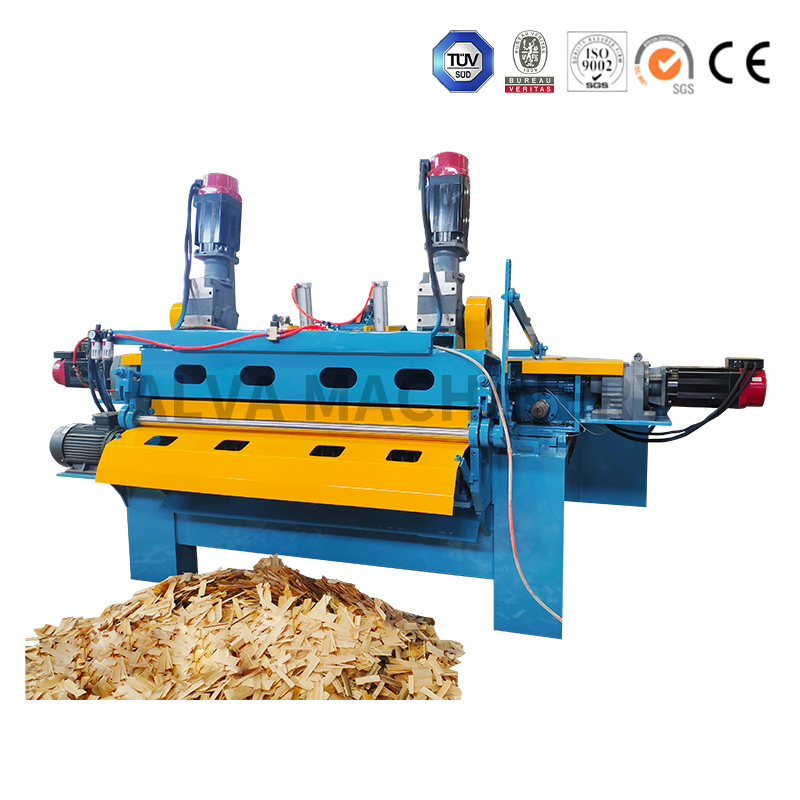
In a modern plywood factory, the veneer peeling phase acts as the ultimate bottleneck for both quality and profitability. The efficiency of this single operation heavily dictates overall material utilization and output volume.
Moving beyond basic definitions, plant managers and procurement teams must evaluate peeling technology based on log diameter, species hardness, and automation capabilities. Choosing the wrong machine configuration leads to excessive core waste. It produces rough surface finishes and ultimately diminishes face-grade yields.
This guide breaks down the mechanical principles, core components, and critical evaluation criteria for selecting industrial rotary peeling equipment. You will discover exactly how precise log centering maximizes yield. You will also learn how proper blade angles dictate the final surface quality of your wood products.
Key Takeaways
Yield is determined early: Poor log centering permanently destroys potential yield before the peeling knife even makes contact.
Configuration matters: Spindle machines are optimized for large-diameter logs and premium face veneer, while spindleless machines maximize yield from small-diameter logs (down to a ~30mm core).
Precision dictates quality: Knife grinding angles must be strictly calibrated (typically between 18.5° and 23°) based on wood species, temperature, and moisture content.
Automation limits bottlenecks: A modern veneer peeling line integrates machine vision, optimal peeling geometry (OPG), and automatic clipping to eliminate manual handling errors.
The Core Mechanism of Rotary Peeling in Wood Processing
Industrial wood processing relies heavily on efficient raw material conversion. The baseline definition of a peeling machine involves a highly mechanized process. A log rotates clockwise while a cutting blade advances linearly. Manufacturers use hydraulic cylinders or precision screw feeds to drive this linear motion. The blade unravels the solid wood into a continuous, uniform sheet.
The production workflow follows four highly synchronized steps to achieve this unraveling effect:
Block Centering: Automated scanners map the log geometry. They align the block to its true geometric center rather than its physical center.
Clamping and Driving: Heavy-duty chucks or textured rollers secure the log. They apply immense rotational torque to overcome cutting resistance.
Adaptive Cutting: The rotary peeling blade constantly adjusts its feed rate. The machine must advance the knife faster as the log diameter shrinks to maintain a uniform veneer thickness.
Downstream Analyzing: High-speed automated sensors continuously scan the exiting ribbon. They detect thickness variations and natural defects before the material reaches the clipping and stacking phases.
The implementation reality is often harsh. Advanced machinery cannot mathematically compensate for a misaligned log. If initial block centering is flawed, the initial rotations produce fragmented pieces. Operators call this "fish-tailing." These uneven ribbons result in immediate material waste. Flawed centering ruins potential yield regardless of lathe sophistication.
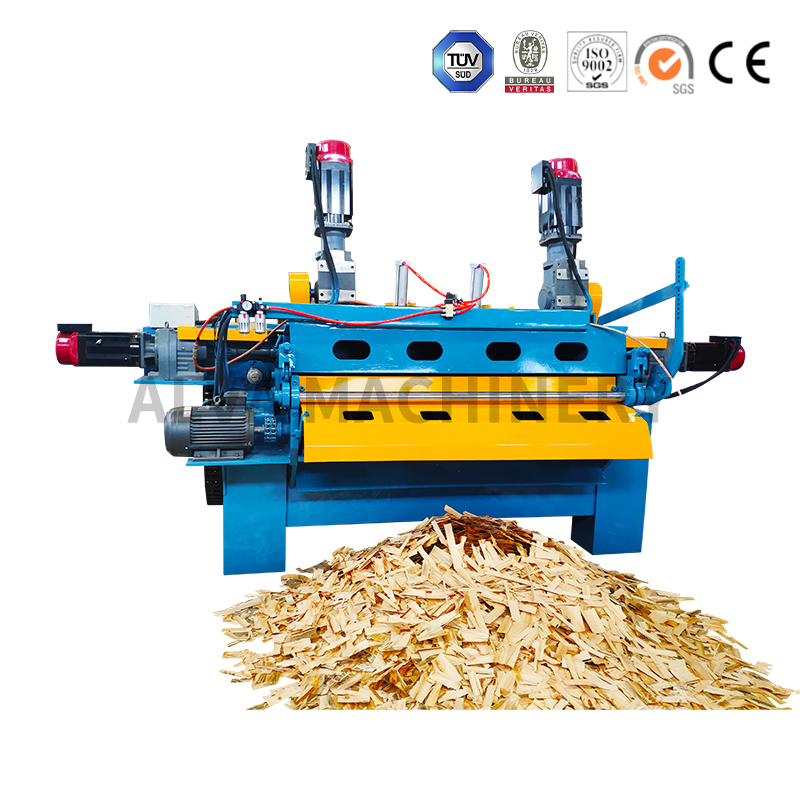
Spindle vs. Spindleless: Choosing the Right Architecture
Plant managers must apply a strict decision framework when purchasing a new Veneer Peeling Machine. The primary differentiator between machine types involves the drive mechanism and log diameter thresholds. The industry standard crossover point usually sits around 500mm to 600mm.
Spindle peeling lathes represent the traditional workhorse of the industry. These machines secure logs at both ends using large metal chucks, known as spindles. High-torque motors located in the headstock and tailstock drive the rotation. This architecture is ideal for processing large-diameter logs exceeding 600mm. Operators rely on spindle machines to produce high-grade, blemish-free face veneer. However, a significant commercial trade-off exists. The physical chucks require space. The cutting blade cannot pass through the metal spindles. Therefore, the machine cannot peel all the way to the geometric center. This limitation leaves a larger residual wood core, resulting in a lower overall material yield.
Spindleless peeling machines serve as the ultimate yield optimizer. This architecture eliminates physical chucks entirely. Instead, the machine uses textured friction rollers to rotate the log. Drive rollers and a top pressure roller push the timber against the stationary blade. This setup excels at processing small-diameter timber. Factories use them for Sengon, Eucalyptus, and Rubberwood. They also effectively re-peel the leftover cores generated by spindle machines. The commercial benefit is exceptional raw material yield. Spindleless systems reduce the final residual core to as little as 30mm. The main trade-off requires highly uniform roller pressure. Uneven pressure causes immediate veneer thickness deviations.
Machine Architecture Comparison
| Feature Category | Spindle Peeling Lathes | Spindleless Peeling Machines |
| Drive Mechanism | End-mounted metal chucks (spindles). | Textured friction rollers and pressure rollers. |
| Ideal Log Diameter | Large logs (Greater than 600mm). | Small timber or residual cores (Under 600mm). |
| Primary Output | Premium, blemish-free face veneer. | High-volume core veneer. |
| Residual Core Size | Large (Limited by chuck diameter). | Extremely small (Down to roughly 30mm). |
| Key Challenge | Lower raw material utilization rate. | Requires perfectly calibrated roller pressure. |
Critical Hardware Components to Evaluate in a Veneer Peeling Line
A procurement lens requires buyers to look far beyond simple motor horsepower. You must evaluate the rigidity and precision of all moving parts. Flimsy hardware leads to vibration-induced "chatter marks" on the finished wood sheets.
Modern equipment relies on specific hardware configurations to maintain high tolerances. Evaluating these components carefully ensures long-term operational stability.
Headstock, Tailstock, and Carriage: These structural pillars must feature heavy-duty cast iron construction. Cast iron absorbs high-frequency vibrations far better than welded steel. They must utilize precision linear bearings. Any micro-deflection during high-speed cutting instantly ruins thickness consistency.
Peeling Guides and Sensors: Standard machines often use basic mechanical roller guides. High-end equipment requires a more sophisticated approach. Decision-stage evaluations should look for laser sensors and machine vision systems. These tools dynamically adjust the Optimal Peeling Geometry (OPG) in milliseconds to prevent surface tearing.
Knives and Blades: Manufacturers typically craft peeling knives from High-Speed Steel (HSS) or solid Carbide. You should assess the tool holder for ease of access. Cumbersome blade changes cause major factory downtime. Quick-release hydraulic clamps keep production moving smoothly.
Dust Collection and Safety Systems: High-speed continuous cutting generates immense particulate volume. Integrated dust extraction acts as more than just a regulatory compliance feature. It prevents optical sensors from blinding mid-operation. It also drastically reduces severe factory fire risks.
A poorly built veneer peeling line will struggle to hold tolerances after the first year of operation. Investing in heavy-duty cast components guarantees a longer lifecycle and fewer maintenance shutdowns.
Engineering Factors: Blade Angles and Material Compatibility
Operational expertise reveals that knife preparation dictates final output quality. The blade grinding angle represents a highly delicate compromise. A thinner angle provides excellent cutting sharpness but weakens the edge. A thicker angle increases structural durability but increases cutting resistance. Ignoring these fundamental metrics leads to rapid blade fracture or a fuzzy veneer finish.
Different wood species require specific geometric approaches. The cellular density of the timber dictates how the knife edge interacts with the wood fibers.
Industry Benchmarks for Grinding Angles
| Wood Classification | Example Species | Recommended Blade Angle |
| Soft Hardwoods | Poplar, Basswood | 18°30′ — 19°30′ |
| Standard Hardwoods | Birch, Maple | 19° — 21° |
| Softwoods / Conifers | Pine, Spruce | 20°30′ — 21° |
| Extremely Hard Woods | Masson Pine, Oak | 21° — 23° |
Risk mitigation requires proper maintenance infrastructure. Buyers must ensure their internal maintenance teams utilize precise CNC knife grinders. Manual grinding introduces human error into the blade geometry. A premium lathe paired with an improperly ground knife will perform exactly like a cheap, entry-level machine. Consistent, data-driven knife preparation prevents unexpected production halts.
Automation Integration and Scalability Risks
Moving from a standalone machine setup to a fully integrated layout transforms factory economics. However, this transition introduces distinct technical challenges.
Agile setups rely on standalone lathes. These machines require manual log loading and manual off-bearing. They feature lower initial capital expenditure. Conversely, they demand a high degree of labor dependency. Production speed relies entirely on operator stamina and manual coordination.
Maximum efficiency lines utilize fully automated loops governed by Programmable Logic Controllers (PLCs). These advanced systems include 3D log scanning and automated pressure adjustments. They support continuous peeling and in-line defect clipping without human intervention. The entire log transitions from raw timber to stacked veneer seamlessly.
Adoption risks accompany high automation. Highly automated systems require stringent environmental controls. Factories must supply clean, stable power to prevent PLC logic errors. Strict dust mitigation prevents sensor failures and electrical overheating. Furthermore, factory owners must upskill their workforce. Operators must learn to troubleshoot complex PLC faults rather than simply clearing mechanical jams.
Conclusion
The right peeling equipment is rarely the most expensive model on the market. The best machine aligns mathematically with your average log supply diameter and end-product targets. Spindle machines secure premium face veneer, while spindleless models maximize total yield.
Before contacting vendors, take immediate action to audit your current operations. Measure your existing residual core waste sizes precisely. Calculate your average log input diameter. Identify your primary timber species.
Use this collected data to demand guaranteed yield metrics from equipment manufacturers. Insist on seeing specific blade-angle compatibility charts for your exact wood types. Preparing this data ensures you procure machinery designed for your unique production environment.
FAQ
Q: What is the minimum core size a spindleless veneer peeling machine can achieve?
A: Modern, well-calibrated spindleless machines can peel logs down to a residual core diameter of approximately 30mm. This significantly maximizes the overall yield from small-diameter timber compared to traditional spindle lathes.
Q: Why is log centering so critical before the peeling process?
A: If a log is not perfectly centered on the lathe axis, the initial rotations produce fragmented, unusable pieces called fish-tails rather than a continuous sheet. Accurate centering ensures you recover the maximum volume of high-quality veneer.
Q: Can a single factory use both spindle and spindleless machines?
A: Yes. This represents a common and highly efficient configuration. Large logs process first on a spindle machine to harvest premium face veneer. The remaining smaller core transfers to a spindleless machine to peel core veneer, minimizing wood waste.

 English
 العربية
 Français
 Русский
 Español
 Português
 Deutsch
 italiano
 日本語
日本語 한국어
한국어 Nederlands
 Tiếng Việt
 ไทย
ไทย Polski
 Türkçe
 አማርኛ
አማርኛ ພາສາລາວ
 ភាសាខ្មែរ
 Bahasa Melayu
 ဗမာစာ
ဗမာစာ தமிழ்
தமிழ் Filipino
 Bahasa Indonesia
 magyar
 Română
 Čeština
 Монгол
 қазақ
қазақ Српски
 हिन्दी
 فارسی
فارسی Kiswahili
 Slovenčina
 Slovenščina
 Norsk
Norsk Svenska
 українська
 Ελληνικά
 Suomi
Suomi Հայերեն
 עברית
עברית Latine
 Dansk
Dansk اردو
اردو Shqip
Shqip বাংলা
বাংলা Afrikaans
 Māori
Māori অসমীয়া
 Беларуская мова
 Català


